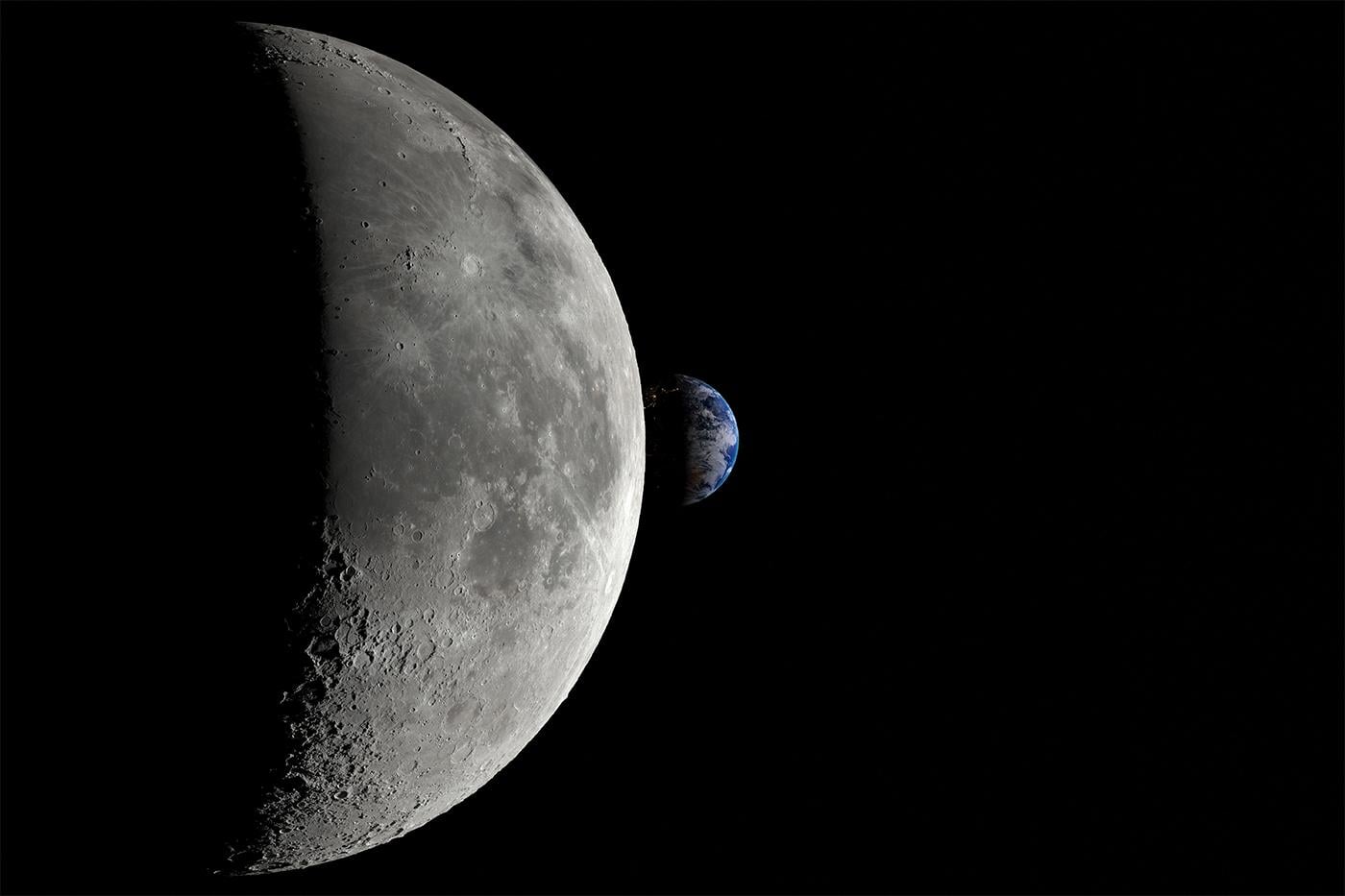
Astrophysicists say there’s ‘at least six other quasi-moons’ like 2025 PN7 in loose orbit around Earth
https://news.northeastern.edu/2025/10/22/earth-second-moon-astrophysicists-talk-discovery/

Astrophysicists say there’s ‘at least six other quasi-moons’ like 2025 PN7 in loose orbit around Earth
https://news.northeastern.edu/2025/10/22/earth-second-moon-astrophysicists-talk-discovery/
1 Comment
Worth mentioning, they’re called “quasi-moons” (actually “quasi-satellites”) because when you look at their orbit in a locked frame of reference that rotates with the solar system (specifically the Earth-Sun line) they appear to orbit the Earth, however they’re actually orbiting the sun and are WAAAAY further away than Earth’s moon. It’s more like they’re in a synchronous orbital resonance that’s locked to Earth’s own orbit of the sun. That’s why they’re called “quasi-moons”/”quasi-satellites”. No one thinks we have any other real moons than the one Moon.
Theres a list of them here: https://en.wikipedia.org/wiki/Quasi-satellite#Earth
There have been discoveries of asteroids that briefly started actually orbiting the Earth, but these are very unstable and usually last less than a year. A notable one that lasted for many orbits and several years was 2020 CD3 which Wikipedia has some nice gifs of the chaotic orbit: https://en.wikipedia.org/wiki/2020_CD3
[Gif](https://upload.wikimedia.org/wikipedia/commons/5/54/Animation_of_2020_CD3%27s_orbit_around_Earth.gif)