
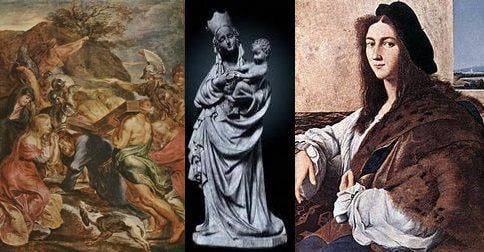
A small fragment from Rzeczpospolita paywalled article about difficulty of recovery polish art. In my opinion this js the most important fragment in the article. Rest is about:
* complications because german Ministry of Culture don’t exist, it’s land’s competence so Poland have to argue with land’s goverments instead federal,
* examples of a few successful recoveries,
* mention that many items were also sold abroad or burned during Soviet and American attacks of Nazi Germany,
* estimated number of stolen art from Poland is 500 000. Poland still looking for 60 000 of them.
The original author is Antoni Kwiatkowski. Link to the article:
https://www.rp.pl/plus-minus/art43327641-czemu-niemcy-nie-zwroca-polsce-skradzionych-dziel-sztuki-nie-ma-jednej-przyczyny
EN: If the object came to a German museum during the war and is there to this day, the chances of its recovery are greatest, although still small. Formally, such cases have a statute of limitations in Germany after a maximum of 30 years, but in the case of state museums, German courts rarely consider the statute of limitations alone to be a sufficient defense. The matter can therefore be pursued in civil proceedings, most often through arbitration. Until recently, however, initiating arbitration required the consent of both parties, and its provisions were not legally binding. In this respect, the situation has improved this year – under the new regulations, a request from one party is sufficient, and the decision of the German arbitration court is legally binding. This does not mean that it will be beneficial for Poland. If the museum acquired the object after the war, it will probably argue that the work was purchased "in good faith"without knowing that it came to Germany illegally. This will most likely be an effective defense because the acquisition of the facility "in good faith" legalizes it under German law. The statute of limitations will further strengthen the museum’s position. If the object was purchased at a public auction, the museum will not even have to prove its good will. Objects sold at public auction become the legal property of the buyer at the time of sale and their recovery in court is impossible. Someone could say that this is the legalization of stolen goods and they would not be far from the truth.
ENG:
If an object was acquired by a German museum during the war and remains there to this day, the chances of its recovery are the highest, though still small. Formally, such cases in Germany are subject to a maximum statute of limitations of 30 years, but in the case of state museums, German courts rarely recognize the statute of limitations alone as a sufficient defense. Therefore, cases can be pursued through civil proceedings, most often through arbitration. Until recently, initiating arbitration required the consent of both sides, and its decisions were not legally binding. In this regard, the situation has improved this year – under new regulations, a single side’s application is sufficient, and the decision of the German arbitration court is legally binding. This does not mean however that it will be favorable to Poland.
If a museum acquired an item after the war, it will likely argue that the work was purchased "in good faith"unaware that it had been brought to Germany illegally. This will likely be a valid defense, as acquiring an item "in good faith" legalizes it under German law. The statute of limitations will further strengthen the museum’s position. If the object was purchased at public auction, the museum won’t even have to prove its good faith. Objects sold at public auction become the legal property of the buyer upon sale, and their recovery through legal action is impossible. Some might say this is legalizing fencing, and they wouldn’t be far from the truth.
https://i.redd.it/0ea7e5str62g1.jpeg
Posted by chinkalichaczapuri
5 Comments
TLDR English: by German law you can ask to get stolen art back only from original person who stolen it. If it ever got sold, buyer can claim “I was sure it was his to sell” and at that point you’ll never getting your things back.
That is ALOT of stolen art. Dang. We really got wiped out back then…
Germany taking care itself of returning that stolen art, even if it means paying the current owners for it for me would be enough to stop bothering them for reparations. They can throw in some proper monument as a bonus.
If UE wanted to show that it is for all, not for Germs they would change UE law to have goods stollen during war by aggressor returned to original countries. To show that rule of law is for all, not for VW and Siemens to have place to sell their shit to
I wonder how many pictures russkie have