
10 years ago, many people would have thought 2026 would see widespread use of VR, but we're still waiting. Oddly, just as the tech to support already exists. 2026's top-of-the-line VR headsets are technically impressive. However, they are still expensive and headache-inducing after extended periods of use.
It's odd. The many possible useful applications for VR still exist. When will the tech finally take off? What will it take? I suspect that if someone could make a great headset that was in the $100 range, that might do the trick. Perhaps that is in the near future.
Will Virtual Reality ever take off? After spending $73 billion, Meta has abandoned its metaverse VR efforts.
byu/lughnasadh inFuturology
26 Comments
Will never happen. What complex tech item today costs $100 when it use to cost $1000+? We’re on the trajectory of making everything more expensive not accessible.
That’s why they pivoted so hard into LLMs and AI – _this_ moonshot **NEEDS** to hit.
I think the execution was a bigger issue for meta than the concept. they made some odd design choices and the whole thing felt like a thinly-veiled vehicle for advertisement.
virtual reality will likely take off and become mainstream, just not in the way zuck imagined it.
Eventually it will happen — the technology (both in bulky/expensive headsets, and the ability to create truly photorealistic immersive worlds) just isn’t there yet.
No. VR is pretty cool but most people don’t want to wear a screen on their face.
It’s never going to go mainstream. But I think it’ll continue to enjoy its niche with some people.
Its not going to take off at any point, because the better and more capable the technology gets, the clearer it becomes that the number of things people actually like, let alone prefer, to do in VR via hand gestures and controller pads is narrow and limited, and if we leave out purely recreational uses the list becomes negligible.
I became biased a little thanks to the early-days notion of a few years ago, heavily pushed by Meta and the like, that people would eventually come to prefer putting on a virtual headset and doing actual work on a virtual monitor at a virtual desk in virtual reality rather than just using the real ones sitting right in front of them. That seemed so utterly ridiculous to me that it became hard for me to take VR/Metaverse hype seriously after that.
The biggest (I would say “only”, though again bias) angle the Metaverse had going for it was the potential for collaboration – within the limitations imposed by the nature of the tech itself of course. The pandemic served up an opportunity to capitalize on that angle on a golden gem-encrusted platter, and they still couldn’t convert. Zoom just added video feeds to a conference call, and VR collaboration was instantly dead in the water.
I was hoping to play my games in vr where i can run on one spot but move and jump in the vr world… get fit, and have fun at the same time. Maybe a haptic and force feedback suit so I can feel when being hit with something, or strain when climbing up an obsticle in vr oroving through water being tougher.
Instead, they try to give us floating screens and shitty low poly environments where we can do nothing.
No.
It’s generally annoying.
It’s a novelty that really doesn’t have every day use value. Video games are more fun. Simple texting is better. Rather open a laptop.
We thought it’d be so cool to go anywhere react with anyone and create this world. Turns out, it’s not lol.
I worked for a VR company in the early 90’s. Everyone thought it was going to be huge immediately. Over three decades later I am still waiting for the promise we saw back then to be fulfilled.
They have to get rid of the head sets before it will become bigger imho.
No, because there’s not a market for it. We have *plenty* of data to show that it’s just not something that the average person wants. No matter how good it gets, it will always be a niche, tech-enthusiast product.
I still think the technology has potential for significant growth. The hardware still needs to be be reduced in size and weight by at least half, preferably more. I think comfort and appearance are still two of the most significant obstacles.
Beyond that though, over the last decade I’ve really tempered by overall expectations and accepted that making compelling VR content is really, really hard and the boost in visual immersion by itself doesn’t offset a lot of the downsides. So I think there remains a problem of ‘what is it for?’ that has not yet been totally solved.
Games often feel more limited due to being physically embodied in your avatar, traditional media is not really better than a traditional display and worth wearing a headset, and Apple-style ‘spatial computing’ so far is limited to floating app windows that are perfectly usable on other devices we already own.
Still though, once the comfort issue is solved, combined with adequate fidelity, I can see a more significant market where a lot of people use VR headsets as their primary device for computing/media and the escapist entertainment only VR can really deliver. When it’s done right, the experience of being transported to another world from your living room is super compelling.
VR and Grok depend on loners addicted to porn, but the white power fascist fantasies of Zuck and Musk depend on angry uneducated breeders. Conflicts of interest and cognitive dissonance. Divest in fascist tech
YES and NO.
So VR has major potential in Education, Entertainment, and Ideation.
Think the TV show The Magic School bus, and being able to take students for a trip inside things like that. Think in Healthcare being able to be inside VR while using the micro/nano articulating tools. These spaces VR will become beneficial and their purchase will benefit for years.
In Entertainment, VR like with Education can take people on adventures. Think the Avatar Ride at Disney going a step further. In the home gaming space it needs to be at the pricepoint a minimum wage worker could buy it for a weeks earnings, remember the Wii when it launched it changed how people played with games, but it was the pricepoint that made it attainable, VR isn’t there yet, but as computer power gets cheaper every year as it has the price relative to median incomes will become attractive enough for it to become part of the home entertainment space much like the Wii did.
Ideation is the space I really would have loved for VR to exist a decade ago affordable for small start ups. Designing in 3D a massive piece of equipment and being able to VR interact with it instead of just through the keyboard and mouse would help address ergonomic things you don’t think about, walking paths you don’t think about and how humans might actually interact with a space before you physically produce things. Could really shorten development time for specialty equipment being able to rent out VR computing power to model ideas.
VR will stay where it is, until these 3 things happen:
– It has to be completely flawless, wireless and almost weightless
– Solve all comfort issues so people can actually use it for more than 30 minutes at a time.
– Software developers actually make good VR games that people would like to play.
So in 10 years, maybe?…
No. Maybe for gaming and some niche use cases.
I think AI Smart glasses will be huge though. Think they’ll be very useful.
Google Glasses were too early. The ones coming will be a hit.
It’s a divisive topic. There are ALWAYS “visionaries” who believe that 3D is going to be a thing. It existed in film before the 80’s, returned to film in 2010, was picked up in computers around Oculus and continued largely due to the work of extremely smart people. No doubt in 10 to 20 years someone will try again believing someone didn’t get something right.
The real question is, once the technical work is done is it a format that people actually enjoy and can spend 8+ hours doing? That’s the thing about TV or a computer screen. People can just sit. Often VR is pushed as more experiential than that.
I also tend to wonder if given the target audience often being glasses dependent works against it. Wearing glasses on top of glasses is a bad experience period, even if it works.
Playing Gran Turismo 7 on the PSVR2 & PS5 Pro – the only true “next gen” gaming experience, I’ve had. It’s simply game changing & it’s killed “flat” racing games for me for ever.
Bad for the eyes, difficult to use when you need corre tion, headache inducing
I think it would require a consistent pipeline of quality content like Half Life Alyx
The biggest barrier to VR is that it’s too much of an “experience” ironically. It’s really cool to try out, but once the novelty wears off the reality is you need to be in the right mindspace to be immersed fully in a game with a bright screen around your eyes fully. It’s very stimulating, even when you’re in the mood for gaming.
I personally think that the problem is with presenting VR as a replacement for monitor applications / gaming, when I think it will always be it’s own unique interface. I’ve found the VR games that were the most entertaining were those that embraced the differences of VR vs trying to make a holodeck like ultrareal experience. Similarly I don’t think people will ever want to work long hours in VR, but collaborating in VR could be super handy for certain jobs with spread out workforces. Hardware becoming cheap and having better quality but I think companies to commit further to understanding VR will be it’s own thing that you should try to pitch to customers as a different way to game and socialize, not a replacement. Emphasizing the differences is key VS Apple’s “it’s just like having an iPhone on your face!!”.
The biggest opportunity for VR in my opinion is education. The #1 most impactful experience for me, that easily beat every VR game I played, was using Google Earth VR. Even as an adult, its a spiritual experience, floating in space looking down at the planet, then spinning the globe and picking any random place to soar down to and survey from an airplane view, and then when you find somewhere interesting, pick out random Google Street View points and see 360 degree immersive photos from the ground view, either from a Google car or a person’s tagged photos. Words cannot describe how much this will open your mind and imagination to the world, even if you’re already a worldly person. If you have VR and haven’t tried Google Earth VR, get it out and do it now. Even more importantly get your kids trying it because it will really help them understand their place in the world and the opportunities and different sorts of people out there.
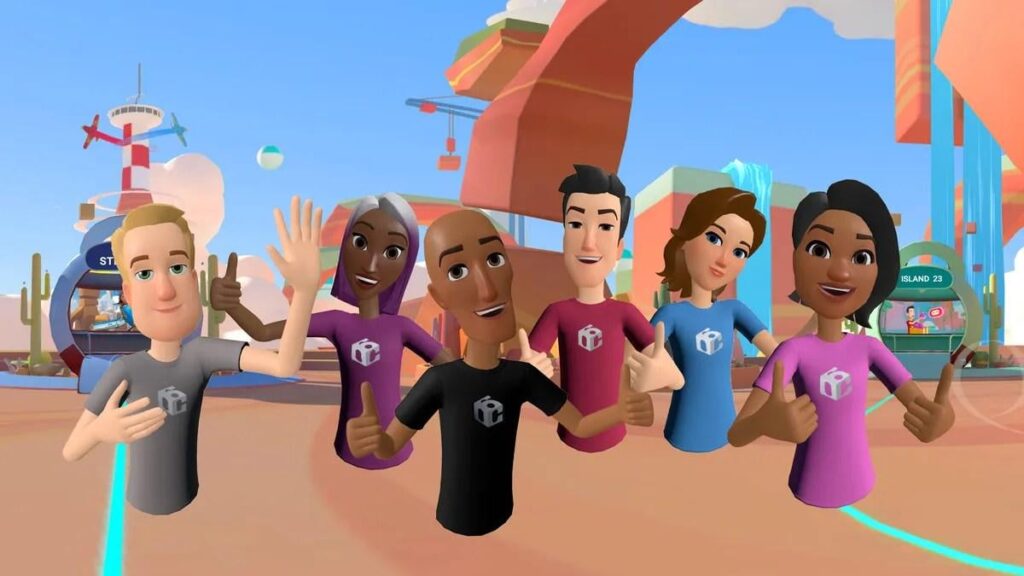
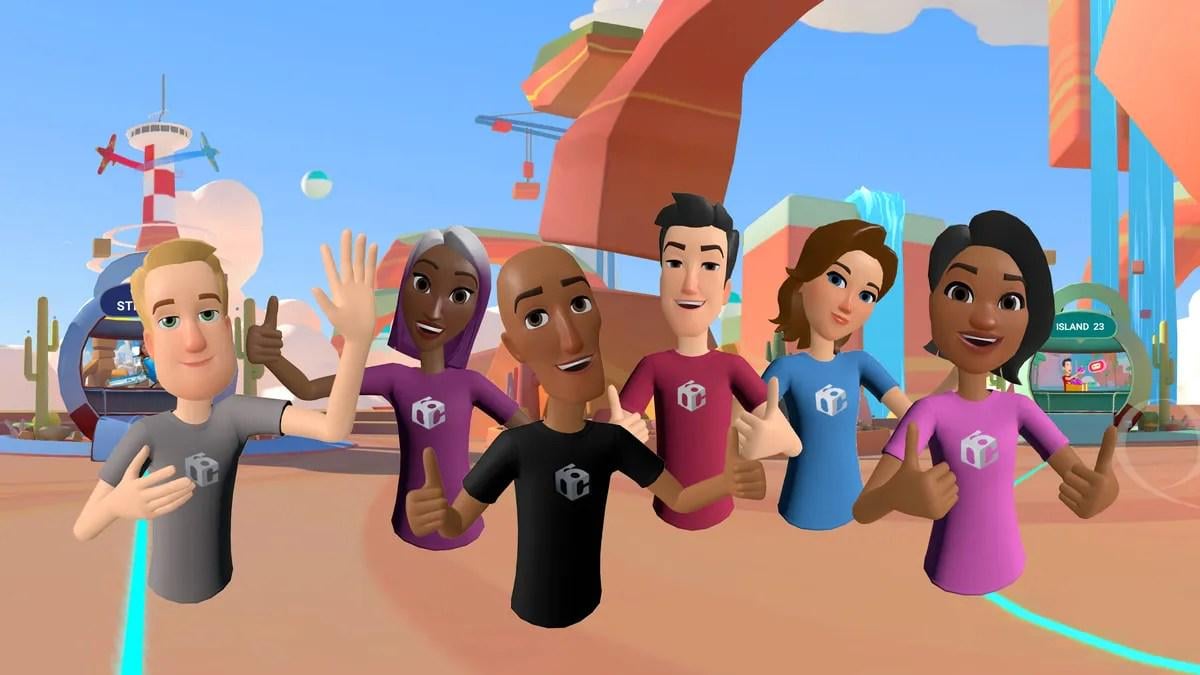
Look at the graphics in this virtual reality. Its bland and no style at all. I’m not saying it has to be life-like but some sense of uniqueness. Not interactive emjoii.
Was excited about the newest Wii coming out until I found out this was Zuck’s newest pet project.
No. I truly believe that only viable product for VR to do any sort of business is porn and industrial design.
This too a solitary product and nobody looks cool using it.
There must be a reason that not even gamers, the most solitary of creatures haven’t embraced it yet.
Meta really kinda killed vr imo. Set progress back quite a few ways. I ordered an HTC vive pro for pcvr back at the beginning of covid. Got my kids through the lock down pretty well. When I went to go update it this year, the market had largely collapsed except for meta pushing half baked, slightly evil, things. I ended up buying a headset that still uses some of the infrastructure from my old HTC stuff, and is in some ways a step back from what was available in 2020.
Wild that they’ve spent $73B and killed a nascent technology.
So is VR real estate basically worthless? I can’t imagine losing millions on this concept. (Almost as bad as the crypto Trump coins. Trumpcoin down 90% in a year while the Melania coin has lost 98%.)
VR just feels like an old person’s idea of the future. When I was a kid I fully expected the future of online communication to be based around headsets and virtual environments. But I’ve never tried a set of modern VR googles that didn’t give me a terrible headache.
Maybe that’ll change, maybe meta verses will be all the rage, but that’ll probably be more for my grandkids than me.