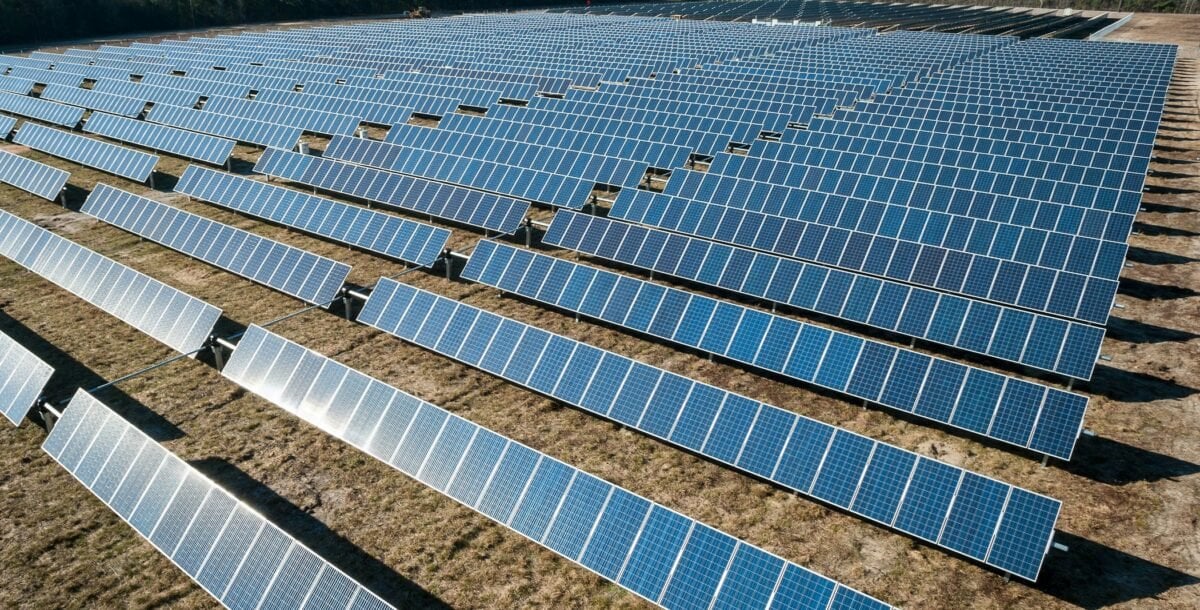
Researchers propose circular recycling approach for solar panels – making new solar panels from old
Circular recycling approach aims for ‘perpetual utility’ of PV materials

Researchers propose circular recycling approach for solar panels – making new solar panels from old
Circular recycling approach aims for ‘perpetual utility’ of PV materials
1 Comment
It is estimated that by 2050, we will need to produce 3.3 TW of solar panels each year. According to a German research team, the best way to achieve this is by recycling older panels. This approach addresses potential supply problems and is economically sustainable.
The researchers from the Helmholtz Institute Erlangen-Nürnberg for Renewable Energy, Jülich Institute for Energy and Climate Research, and Friedrich-Alexander University analyzed future material consumption in the crystalline silicon PV industry, including materials like glass, aluminum, silver, copper, ethylene-vinyl-acetate (EVA), and silicon. They advocate for a circular recycling approach to tackle supply chain and waste issues, presenting a detailed vision of a “perpetual utility” cycle for solar panels. Europe is expected to lead this initiative due to its robust regulatory framework.
Research leader Ian Marius Peters highlighted the potential of circular recycling to make PV even more sustainable by recovering valuable resources such as glass and land. He noted that although economic incentives are currently weak, recycling is propelled by policies and regulations. The study, based on a scenario by PV scientist Pierre Verlinden, projects a cumulative capacity of 80 TW by 2050 and a steady-state manufacturing value of about 3.3 TW/year by 2033.
Key materials targeted for recycling include silver, glass, and silicon. The study emphasizes the necessity to replace or reduce silver due to competition from other industries, which could outbid the PV industry because of its narrow margins. If silver is replaced, recycling silicon, copper, and aluminum becomes essential. Aluminum, in particular, is highlighted as a valuable recycling product whose importance will increase as silver is replaced. Glass recycling is deemed crucial, especially by the mid-2030s, when retired panels will generate tens of millions of tons of glass, which only the PV module manufacturing market can absorb.
To retain the value of recycled components, the study underscores the importance of efficient recycling processes. Silicon recycling, for instance, could reduce projected energy demand and shorten the energy payback time of modules made with recycled silicon, potentially becoming the main economic driver for module recycling.
Future PV module designs are being developed to facilitate easier dismantling. Peters mentioned prototypes with solution-processed solar cells that demonstrated the ability to restore all materials to the quality of virgin components. Further research is needed to improve the quality of recycled silicon, eliminate impurities, and reduce the required energy.
The researchers conclude that circular recycling is essential for managing the significant material flows required for a global PV module fleet in the multi-terawatt range. While mass recycling of PV modules is still years away, preparation for circular recycling is crucial to avoid dealing with millions of tons of low-value waste in the future. The perspective paper detailing this vision is published in “Cradle-to-cradle recycling in terawatt photovoltaics: A vision of perpetual utility” in the journal Joule.
The study has received positive feedback, particularly for its contextualization of projected material flows and exploration of circular recycling implications.