
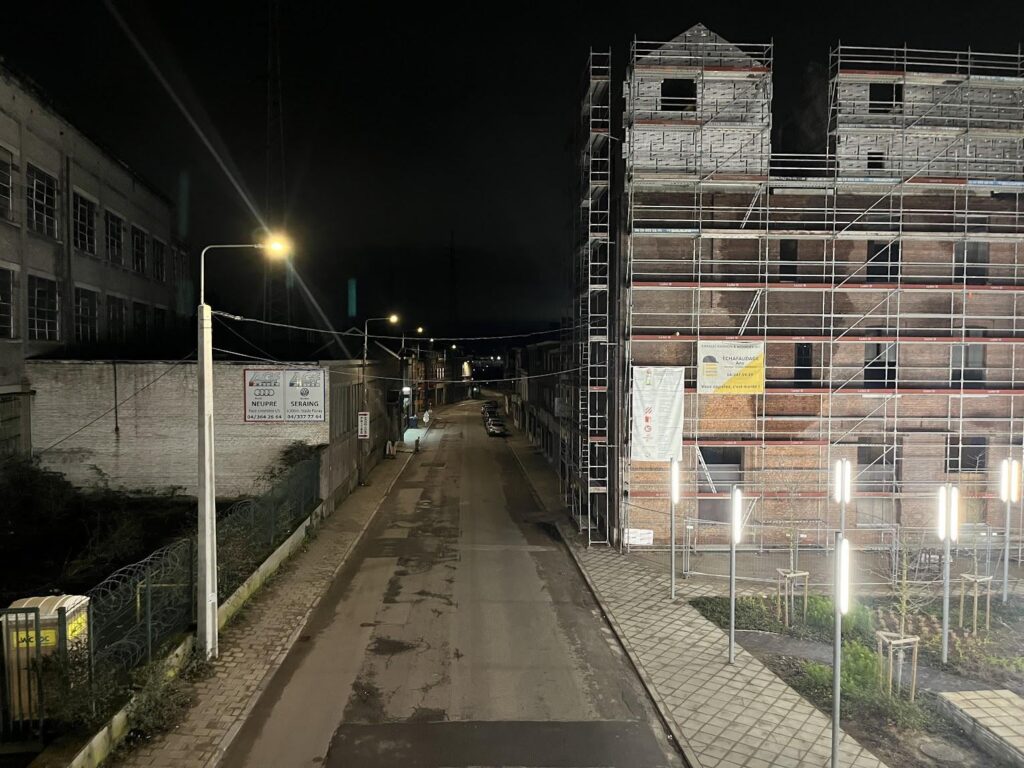
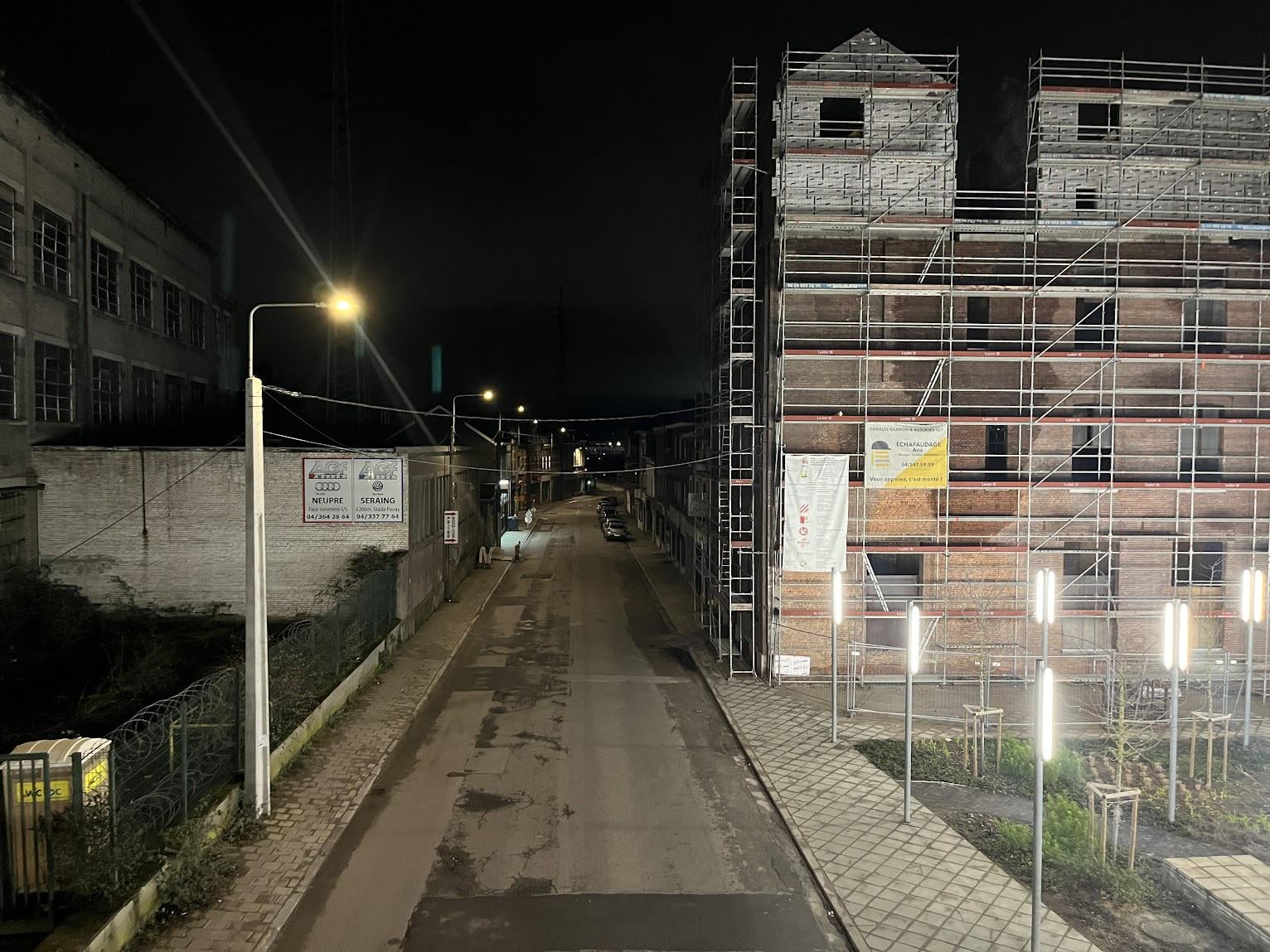
Yesterday I brought my girlfriend to the Brussels airport (Security was super fast) and decided to take a walk in Seraing & Liège (where the book I’m writing takes place) on the way back. Next to the Gare d’Ougrée, they are renovating and building houses next to abandoned houses. Ougrée probably has one of the lowest real estate prices in Belgium. How does this pay off? How are permits obtained so fast? In my country, new construction is almost non existant and extremely expensive. Construction companies say it’s almost impossible. I live next to some abandoned factories in one of the most expensive cities and IF something happens, they build some small apartment cubes which sell for €8k/m2. Also the tram comes every 10 minutes even at midnight.
https://i.redd.it/gq0kuezi2mlg1.jpeg
Posted by KevinKowalski
12 Comments
It’s called the “bestendige deputatie”.
It’s a weird one.
Small projects get done fast.
Big ones get blocked immediately; Eg. New Club Brugge Stadion, New ‘Boerentoren’.
Belgians hate large scale projects unless it benefits them directly.
Belgians like real estate, a lot of them see it as a ‘solid investment’, often local developers have good ties with local politicians who give them good deals. There is nobody who wants to be the official ‘permit’ functionary because they basically are not allowed to do their job by the politicians (making them go into burn-out or change to other jobs). This is a big issue in the municipal governments and is leading to the job now being outsourced mostly to consultants as they are less exposed to the ‘local’ pressures of politician A wanting to do his neighbour a favor and politician B promising developer Z to get him his permit approved and what not…
Also cheap (illegal) labor by eastern-European and ‘Portuguese’ (= Brazilian/Mozambique) workers makes that you can easily skimp on production price while ‘selling price’ remains relatively high as a lot of people want a ‘new/renovated’ house instead of living in the old, unrenovated houses that are on the market.
There was a Pano on the issue about the impact it has on the local construction sector: [https://www.vrt.be/vrtmax/a-z/pano/2025-nj-/pano-s2025-nj-a5/](https://www.vrt.be/vrtmax/a-z/pano/2025-nj-/pano-s2025-nj-a5/) Insurance, health care wise it’s a nightmare as these ‘detached’ people are supposed to pay taxes and get health care and insurance in the country the company is operating from but in these countries there are no checks whatsoever and their governments ‘profit’ from getting extra tax income without incurring any costs… It’s one of the silent bombs under EU cooperation I think and it got worse after Brexit as they were the ‘main’ destination before but after Brexit all these companies just shifted their work terrain to Benelux I think :’)
We don’t build enough. I’m from Ghent and I think we should build semi-high rising appartment buildings any chance we get. Get rid of the neighbourhood complaints, just fucking build it.
Everyone constantly complains about high real estate prices, but nobody wants to actually solve the issue.
That is Wallonia, proices are much lower there than in Flanders and Brussels. Seraing is an old steel town so not aa lot of employment opportunities there.
Fun Fact: One of the main antagonists in my book “Stranded in Seraing” is a family of developers. They try to destroy Outremeuse for a shopping mall.
Start building first, comply with regulations never.
And if someone files a lawsuit, that’s because there are too many laws, not because you willfully ignored to look them up.
Also, the politicians that are handing out the permits don’t respect the laws that are there
That’s how
Focus on buildings, neglect the roads
Because nothing ever finishes. It’s all slow as shit, nothing ever gets done. In other countries they finalize all paperwork and the building part is done in 6-12 months. Here they put up the scaffolding before any paperwork (because that too takes too long to wait on)
Besides that, the tax system forces companies to constantly reinvest without pause
For Flanders it’s a very private-market steered thing. There exist a long-term zoning plan. If you have property that is zoned as housing zone, you have to ask a permit. There is a limited time (75 working days) for the government to answer to this permit request. This means that eternal waiting for permits like some countries doesn’t happen. Normally there are clear rules about what is required to ask a permit in a specific municipality or zone, so if you have a good architect that does the permitting, you should get it after one or two tries (you get feedback after first try). There are always legal procedures possible to stall permit delivery, especially if neighbours are not happy, but for smaller projects this is not very common (because it costs money).
One major disadvantage: because it is maket driven, there are limited leverages by the government. People tend to speculate on land that is zoned for housing. So it is not easy for a government to get more houses build.
I mean, the abandoned houses you mention are probably 100 year old with all kinds of mold and basically unsuited for modern living.
So it’s cheaper to just build new housing instead.
Renovations are expensive and there are always unexpected extra costs involved.
But you are correct that regulations make things expensive.
Take Japan for example, long considered to be very expensive but they have almost no zoning laws. You can build a high apartment tower next to bungalows in most Japanese cities.
So the cost of housing has come down considerably in the last decades.
But cities look chaotic. Brussels also had this problem for a long time and still has many hastily put up eye sores that replaced beautiful art deco buildings that were tragically lost in the 1970s…
Abandoned factories in expensive areas are one of the best places for urban renewal. The factories are often ugly so it doesn’t matter if new housing isn’t that aesthetically pleasing.
There is probably some rich family blocking redevelopment of the abandoned factories near you that is waiting for prices to go even higher…
Lack of urban planning strict rules. A house or a building can be built pretty much anywhere and they don’t need to follow any “aesthetic” rules to have consistent streets. On the opposite end of the spectrum you have the Netherlands where the rules are too strict and for that reason you see no construction next to train lines or areas not meant for construction, you see often a care to maintain a certain aesthetic on the streets, etc..
In my opinion a middle ground would be ideal: not as strict as the Netherlands (as they *need* more houses and buildings to get away of this awful housing crisis) and not the shitshow you see in Belgium.