
Hello, I’m from Canada and visiting Europe right now for work. I have been in Norway for a few months now and I was shocked by how different the weather is considered to mainland Europe. It has been raining nonstop everyday. In Canada we get most of our rain in the summer same as most of Europe as land gets warmer, but its the opposite for Norway, why?
https://i.redd.it/51jmkd4l31pg1.jpeg
Posted by batukaming
25 Comments
Because of [The Gulf Stream](https://en.wikipedia.org/wiki/Gulf_Stream)
Short answer: Mountains.
Gulf brotha gulf stream
Atlantic ocean with gulf stream meets coastal climates and mountains. Just like iceland, ireland, britain
Precipitation means rain now?
Canadian shield
We need to pay the labour government more taxes to stop the rain.
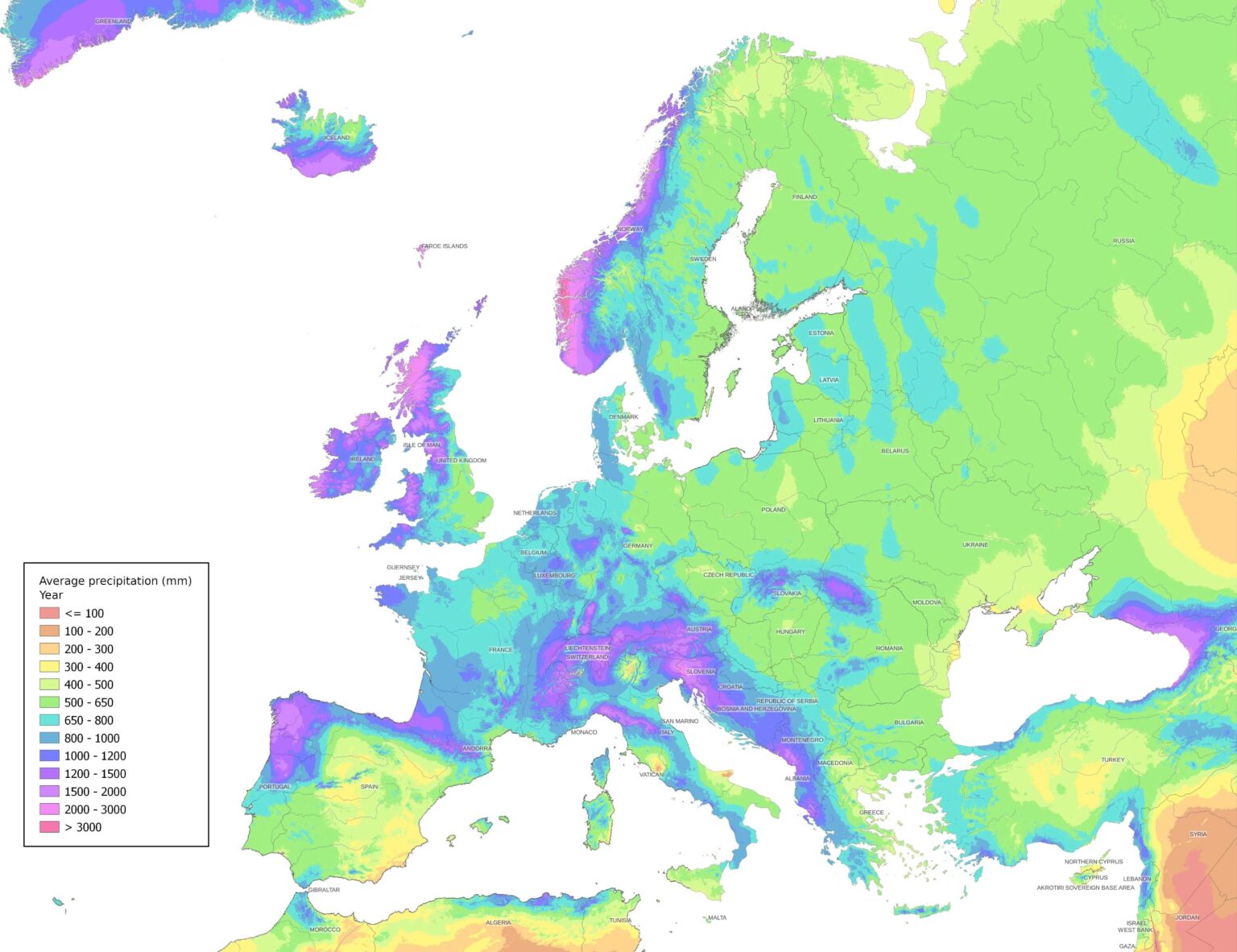
If you look at the map, the majority of the rain comes where the continent meets the atlantic ocean.
The ocean air is asked to leave its humidity at the door when it visits europe. (The rain map is also a pretty good elevation map).
Just like your British Columbia its because of warm ocean and mountains.
You weren’t able to deduct any commonality of the rainy areas by looking at the map colors there?
What part of Canada you’re from? If you’re from East or central Canada, Continental climate is dominant there. If it’s British Colombia which gets the western winds most of the time, it’s oceanic climate and it’s pretty identical to western Norway, nothing to shock as to how north are they. They are on the same latitude and located on the western part of the huge land masses.
Very dependent on where in Norway you are. Bergen and Stavanger are dreadful. Rainy and windy. Oslo and the areas around have very nice, dry climate.
The gulf stream as has been written before + the mountains, without the gulf stream we would be colder then most of Canada
It’s so we can turn the snow into death trap ice
The gulf stream keeps Northern Europe much warmer than all of Canada.
The west coast is basically the north seas toilet
If you overlay the average temperature, you will see that the wet regions are also very warm (for its latitude). What happens is that warm but wet air from further south meets the cold in the Norwegian mountains, so the air has to cool down to pass the mountains, thus creating rain. Since the temperature difference is the driver of this rain, most of it comes in winter.
Western Norway is warmer than northern Italy in winter, for instance.
It is not just how warm the Norwegian Sea is, it also is a bit of the tradewinds blowing mostly from West or North-West. Beyond the Scandinavian Mountains lies the is the Golf of Bothnia, Northern Sweden and Finland which are very cold therefore creating an area of Lower Pressure. Only Lappland alone is enough cold to draw air over those mountains.
Several things.
The gulf stream and AMOC transport warm water northward, heating the region and causing more evaporated water.
It is also at a latitude where the winds bring air from north and south, which then rises at that latitude, causing clouds. (the same happens at 0° latitude, which is why there are rainforests there.)
The mountains cause the air to rise and cool, which condenses the water into clouds. This leads to much more rain on the side facing the wind.
All of this together makes it incredibly rainy, Bergen actually being the rainiest city in europe.
Western Norway is a very mountanous area. I was taught as a child that rain clouds have to empty themselves to pass the mountains.
I’m sure there are other factors, but I never bothered to look into it as the theory makes sense :p
In Europe, most of the rain doesn’t fall in summer.
Where are you? It’s much more rain in the west of Norway, because the Atlantic and the mountains.
See all that white space? That’s water.
I mean Thor is the god of thunder, there’s usually rain with thunder. So it makes sense. The Norwegian government has asked him to provide a lot of rain, so we can fill our hydro dam reservoirs. Most of our electricity is generated by hydro power.
All wrong answers; it’s due to the Bergen, they like to share the pissy weather.