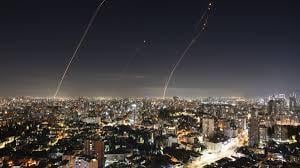
Europe’s ‘Iron Dome’ spots missile threats 5000km away
https://aseannow.com/topic/1390224-europes-iron-dome-spots-missile-threats-5000km-away/
Posted by MARTINELECA

Europe’s ‘Iron Dome’ spots missile threats 5000km away
https://aseannow.com/topic/1390224-europes-iron-dome-spots-missile-threats-5000km-away/
Posted by MARTINELECA
9 Comments
Romanian airspace breaches have occurred multiple times, with Russian drones entering during attacks on Ukraine.
Detection is very nice, but looking at Israel, it seems the bigger concern is the ability of interceptor batteries to deal with cluster munitions, and of course the operating costs of the interceptors themselves.
Israel does seem to be testing a new laser-based interception solution, hopefully this is something European countries are also developing or at least considering to acquire.
Сuсk chаіr now with the binосular!
Am I missing something or is SkyDefender just a rebranding of existing capabilities?
Really???
That sounds like an early warning system…
**Europe is racing to build a new kind of air defence — less a wall of missiles than a continent-wide digital shield.**
**French defence giant Thales Group has unveiled** ***SkyDefender*****, a layered system designed to track and intercept threats ranging from cheap drones to hypersonic weapons. At full capability, the network can detect missile launches from as far as 5,000 kilometres away, dramatically expanding Europe’s reaction time.**
**The project reflects a stark reality confronting NATO governments: modern attacks are faster, cheaper and increasingly coordinated.**
**Air Defence Is No Longer About One Missile**
The age of single-purpose air defence systems is fading fast.
Today’s battlefields can unleash drone swarms, cruise missiles and hypersonic weapons simultaneously, arriving from multiple directions at vastly different speeds. Traditional defences struggle when overwhelmed by sheer volume.
*SkyDefender* flips the model. Instead of relying on isolated radars or interceptors, the system connect satellites, sensors, radar and missiles into a single command network, allowing threats to be detected, tracked and countered in real time.
In effect, air defence becomes a data and coordination problem as much as a military one.
**The Fight Starts in Space**
The system’s biggest advantage is how early it sees danger coming.
Infrared satellites built by *Thales Alenia Space* can detect the heat plume of a missile launch almost instantly — often before ground radars can even see the object.
Tracking is then handed off to long-range radar systems such as SMART-L, capable of monitoring targets at distances approaching 5,000 kilometres.
Those extra minutes matter. In missile defence, reaction time can determine whether an interceptor is launched — or whether a target is hit.
**Layered Defences Close the Gaps**
*SkyDefender* is designed as a tiered shield rather than a single barrier.
At the short-range level, the ForceShield air defence system protects bases and infrastructure from drones and low-flying threats.
Further out, the SAMP/T NG system — supported by the Ground Fire radar — can intercept aircraft or missiles at ranges of roughly 150km.
Each layer overlaps with the next. If one system fails or is saturated, others step in.
The result is not a single dome, but a distributed defensive grid stretching across multiple countries.
**Artificial Intelligence Becomes the Nerve Centre**
At the heart of the system sits cortAIx AI platform, the artificial intelligence engine built by Thales.
Its job is to digest huge streams of sensor data, identify genuine threats and prioritise responses — tasks far beyond what human operators could manage alone.
The AI also helps maintain operations during cyber attacks, an increasingly likely component of modern conflict.
Speed of analysis, defence planners say, is now as critical as the interceptor missile itself.
**A NATO Network in the Making**
*SkyDefender* is designed to plug directly into allied command structures.
Through the SkyView command platform, national systems can connect into a shared defence network across NATO territory rather than operate as isolated silos.
The architecture is also modular — meaning new sensors, interceptors or software layers can be added as threats evolve.
For European defence planners, the message is clear: the next generation of missile defence will depend as much on data, networks and AI as on rockets in the sky.
How much of the system relies on American technology?
Why does everyone keep using the name “Iron Dome” incorrectly? Iron Dome is just one system, and not the most relevant one here. What they describe is multi-layered anti-air defense. Israel has a structure like that, with several layers: Arrow for high-altitude and space intersception, THAAD and David’s Sling for mid-range ballistic missiles, and Iron Dome for short-range missiles, rockets and drones. Maybe the laser-based Iron Beam will be added as the lowest level in the future. All the layers are integrated with all the early warning and radar detection systems and with complex target prioritization, which makes them work very effectively together.