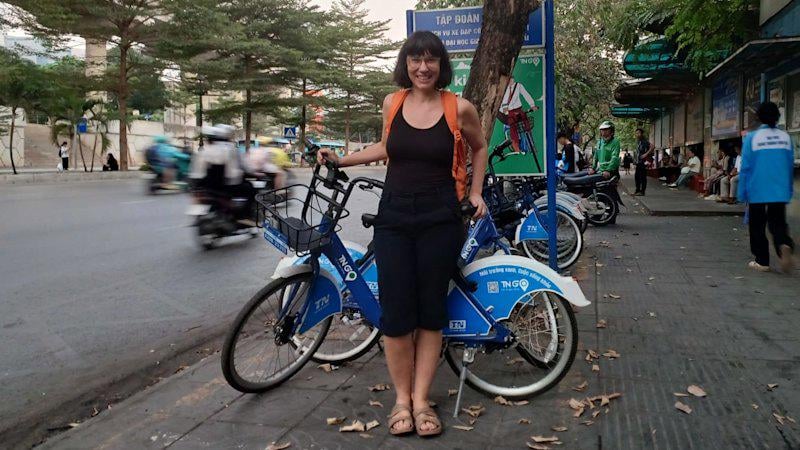
None wanted to continue what? Going car free or using cars?
Apprehensive_BongRip on
Being car free is easy! Just look at all those EU countries where the temperature never goes above 20C
I can rug up – I can’t cycle naked. This shit seems obvious.
Reverse-Kanga on
Paywalled trash
Red_St3am on
I live pretty much car free here in brisbane. Wouldn’t be hard to make the jump and sell the car… which 20 people did they ask?
frequentflyerpharaoh on
Using my uni’s database to get around the paywall for anyone that wants to read:
Almost a dozen regular Brisbane people took on a challenge to give up their car for 20 days, but by the end of the experiment, they decided it was unrealistic for them to go totally car-free.
Urban planners from The University of Queensland recruited 10 car-owning Brisbane residents – five men and five women.
They were asked to follow their regular schedules, but use public transport, walk or ride instead.
They were given public transport cards and offered reimbursement if taxis, Ubers or shared e-bikes or e-scooters were needed in an emergency.
The average claim per person for all their travel expenses during the experiment in Brisbane was $125 – but they saved $300 in car costs.
“I hadn’t realised how much money my car eats up,” a 43-year-old man from Brisbane said.
However, Associate Professor Dorina Pojani said participants were relieved when the experiment was over, and would not consider a permanent switch.
“The overwhelming feedback was that it’s just too hard to live without a car in Brisbane,” she said.
“It’s ultimately a sprawling, low-density city with a lack of integrated transport options – obstacles that have been shaped by historic planning decisions.”
The study, conducted by Dr Pojani and PhD scholar Sufian Almubarak, examined the experiences of people in Brisbane and another city of comparative urban sprawl, Al-Ahsa in Saudia Arabia.
All but one of the 10 Brisbane participants was working or studying and most lived within two kilometres of the city centre, with outliers at Manly in the east, Indooroopilly in the west, and Oxley in the south-west.
Pojani said participants were initially enthusiastic but that waned, and most found it disorienting, facing difficulties getting around.
Although people had spent weeks preparing, many were surprised by how much they needed to adjust when they could no longer rely on a private car.
Pojani said experiences with public transport in Brisbane varied due to major service gaps outside the inner-city, even though 50¢ fares made public transport more accessible and increased patronage.
“Our study indicates that even with cheaper travel, many people feel they can’t rely on public transport alone and continue to depend on their cars,” she said.
Instagram link
Only people who lived very close to a station caught the train.
One woman said she liked to travel outside the inner-city, and she had to change her activities because of limited public transport, while a 33-year-old man said he missed many weekend get-togethers with his friends.
“This new lifestyle makes me relatively isolated from my social circle,” he said.
However, a few Brisbane participants had an increase in social interactions, as they actively engaged in friendly conversations with others while riding buses and bicycles.
A 38-year-old woman said riding a bike was a great way to travel a short distance.
“I have made many new friends because of the bike,” she said.
Parents said who needed to take their children to school or to extracurricular activities said this was hard without a car, and they ended up delegating it to someone with car access.
Family outings and out-of-town trips, which were previously done by car, were put on hold.
Pojani said, at the end of the project, four Brisbane participants pledged to use public transport for short trips within the inner-city.
“But all emphasised it was not realistic to give up their cars,” she said.
“It demonstrates that in low-density, sprawling cities like Brisbane, people cannot be expected to permanently give up driving unless there is significant investment in public transport.”
However, researchers found given participants were likely to slightly reduce their reliance on cars, it showed experiencing car-free living, even briefly, could help people break away from automobility.
In Brisbane, 89 per cent of households own at least one car and 48 per cent of commuters drive to work.
jhau01 on
In Brisbane, it’s very, very location dependent.
If you live in a relatively inner suburb, particularly near a train station and shops, it’s entirely possible to be car free.
If you live further out, it’s very difficult.
Where I grew up, it was a 40-minute walk to the nearest bus stop and the bus ran every 30 minutes in peak hour and every hour outside peak hour. And, of course, the bus only ran inwards, to the city centre, so if you wanted to go to another suburb that wasn’t on that route in-between the origin point and the city centre, you had to go in to the city and then catch another route out to your destination. Of course, unfortunately, a lot of Brisbane’s public transport is still like that – it’s a very “hub and spoke” system that is designed to transport people into the city centre rather than around the city.
MousseSuspicious930 on
According to the article –
“Car-free trial in Brisbane
– Researchers from the University of Queensland asked 10 Brisbane car owners to give up their cars for 20 days to see if they could adopt a car-free lifestyle.
– None of the participants wanted to stay car-free long-term after the trial ended. The experience showed how strongly people rely on cars in a low-density, sprawling city like Brisbane where distances are large and alternatives can be inconvenient.
– During the trial, participants used public transport, walking, cycling and ride-share but many found this difficult due to:
– Time pressures
– Poor connectivity or limited transport options
– Challenges transporting groceries, kids or bulky items
– Hot weather and safety concerns
Even though most participants didn’t want to permanently give up their cars the study still found some positive outcomes:
– People became more aware of how often they automatically drive
– Some said they might reduce car use slightly in the future
– Short trials can help people rethink habits and consider alternatives
Researchers concluded that fully car-free living isn’t realistic for most residents right now but improving infrastructure and services could gradually reduce dependence on cars over time.
Overall takeaway:
The experiment showed that while short-term car-free living is possible, most Brisbane residents still see a car as essential though experiences like this can encourage small behaviour changes rather than total lifestyle shifts.”
w8watm8 on
This kind of study feels a bit pointless because it tests the most extreme version of the idea with no realistic middle ground.
Of course people don’t want to go fully car-free in a city like Brisbane. That’s not surprising at all. You’re basically asking people to give up flexibility, time, and convenience overnight while offering a system that isn’t built to replace it. That’s not an experiment, that’s setting it up to fail.
Public transport here just isn’t strong enough yet. Trains don’t cover enough areas, buses can be slow, indirect, and inconsistent, and you’re locked into timetables. For a lot of people, especially working full-time or with commitments, that’s a massive downgrade in quality of life.
A more interesting and useful study would be something realistic like reducing car usage instead of eliminating it. For example:
• car + public transport mix
• switching short trips to walking or cycling
• or even comparing petrol vs EV adoption
Going from a car to no car at all isn’t a transition, it’s a cliff. And unsurprisingly, most people don’t want to jump off it.
Zeophyle on
10 people total. I’m sure this study will hold up to peer review.
Sgt_Splattery_Pants on
Impossible in Brisbane for the majority of people. Too much urban sprawl and far too little infrastructure/planning. Plus the climate is oppressive for half the year, that requires a certain efficiency in your public transport to make it viable.
NecessaryUsername69 on
The convenience – or inconvenience – of being car-free in Brisbane depends entirely on where you are. In some suburbs you’re right on the train line or near a bus stop; in others, you’re nowhere near either and commuting without a car is a massive pain in the arse.
Australia is not nearly as bad as the US – Dallas, for example, is an asphalt nightmare where no-one walks anywhere – but we’re also a huge, sprawling country with huge (size-wise), sprawling cities. We don’t have the compact, cycle-friendly cities of Europe – the distance means cars are generally the most desirable way to get from A to B.
Shi-Stad_Development on
Does anyone know why the sample size is so small? Was this paid or were they the only people to sign up?
grismar-net on
Asking people to go car free in a city whose infrastructure is still openly hostile to cyclists is a bit of a mission.
Don’t get me wrong, it’s gotten a lot better in the past 10 years, but shops rarely have a decent place to park your bike, many suburbs have little or no cycling lanes, intersections often force cyclists to either get onto pedestrian infrastructure or in risky positions among traffic, and if you have mechanical trouble you’re on your own. And then there’s the legacy issues like cyclists in Brisbane just generally not being very good, resulting in behaviour that aggravates other traffic, causing both defensive and aggressive manoeuvring.
Brisbane has plenty of space and with the political will and some budget it could be as cycling-friendly as many European and Asian cities. It would be transformative and I’d welcome it with open arms. But right now, as a Dutch citizen living in Brisbane for over 10 years, even I don’t go car-free – and for 40 years I never owned a car before I came to Australia.
cacioepepecarbonara on
Where I live it’s not even possible to drive into the cbd without going down 2-3 major roads that are scattered with small memorials for cyclists soooooo.
Otherwise I would consider riding instead of driving. Too dangerous for my location though.
Sweaty_Condition4555 on
This will depend entirely on geography. If you live in Brisbane metro and work close to where you live you’ll be fine but if you live anywhere in the northern suburbs life will be harder without a car
PWG_Galactic on
As much as the participants were given time to prepare for the experience, if a person/family were to properly go car free in Brisbane, that preparation would realistically go all the way to where they choose to live.
I think a good follow up study would be comparing the experience of these 10 people with those who already are car free and live in walkable, well PT and bike connected parts of Brisbane. Hence finding what makes going car free easier and what needs to be rolled out more across the board.
South_Treacle_5033 on
One major thing I notice that makes me sad is most bus stops in my area don’t have seating or shelter. The buses in the area only run every hour so I see people sitting on the ground in qld sun? We have some of the highest cancer rates in the world and no shelter 🫠
Every-Citron1998 on
I went a year without a car in Brisbane but was living in Spring Hill with good access to the trains and would rent a car whenever I wanted a trip to the beach. Got in great shape carrying groceries up the hill.
The biggest negative was the impact on dating with difficulties reaching many areas of Brisbane and some women finding it strange for a man to not own a car.
cactusgenie on
Things don’t have to be binary.
You can use PT when it makes sense, and use your car when it makes sense.
Everyone seems to think it needs to be one or the other, but you can do both and it’s still beneficial.
tiera-3 on
I know someone who has been going car-free longterm. He’s fine with walking or catching a bus to work or other regularly scheduled activities. The point he notices it is that it is not easy to duck up to the shops. For example, he’ll complain about not having cheese, but not wanting to walk up the shops to buy cheese.
When a friend offers to drive him to the shops, he’ll take the opportunity to do a big shop, because that’ll save him 3-4 smaller shopping trips where he needs to walk. He’s also had the occasional time where … oops left it too late, missed the last bus, I’ll just walk (2+ hours home). Or to attend a New Years Eve party with his friends, he walks 3 hours to get to the hosts house. Usually someone will offer him a lift back home, but he is fully prepared to walk home afterwards also. These are not everyday occurrences, but he seems less bothered by them than having to frequently walk to the shop to buy food.
——————-
Also, many years ago when my children were in primary school, there was a family that chose not to have a car. They had too many children to fit into a regular car and instead of getting a van, they opted for no car instead. I wasn’t closely associated with this family so cannot give details about how it worked for them. Just pointing out that there are some people that make that choice.
There are also some people with medical reasons (eg epilepsy) that prevent them from driving. Those people have no choice. I know someone in this category and whilst he was able to use public transport to get around, he said that not owning a car impacted his ability to get a job – to the point that he bought a car just so that he could tick the box that he owned his own vehicle. (He would then ask friends to drive him places in his car, so it wasn’t being completely wasted and unused.)
ThinkProfessor6166 on
We live in an amazing city that is always at the pointy end of the world’s best. One downside is that it’s spacious and tough without a car. We might all need to cut back on non-essential travel for a short while but it’s a non-issue, tiny bump in an otherwise great lifestyle
MontasJinx on
I would love to go car free to get to the office. However I have a 20 minute drive be a 1 hour bus ride. It’s even worse in the arvo. So yeah what I gain in dollars I lose a lot in time. So until BCC gets me where I need to go faster I shall continue to drive. Unless the powers that be realise that wfh is an even better solution.
CheeeseBurgerAu on
Ever gone grocery shopping on a bike?
LetsCutHimLoose on
“examined the experiences of people in Brisbane and another city of comparative urban sprawl, Al-Ahsa in Saudi Arabia”
10 people is a small sample to go by for any study. I understand there’s limited funding to dish out to those involved. Comparing against a city in Saudi Arabia is strange. As far as I can tell the place is nothing like SEQ:
– 1.3 million people there vs 4.1 here.
– Residential foot print of only 330km2. SEQ is 3350km2. So 10% of what Brisbane is.
– Agricultural hub with oil industry influence that’s high per capita.
– Often exceeds 45 degrees. and less than half our annual rainfall.
– Their public transport is bus only, and doesn’t look to service all residential areas. It also only started running 8 months ago.
It’s no coincidence that the phd candidate is from, you guessed it, Saudi Arabia. Surely they could have found a more comparable city.
GustavSnapper on
We don’t have a car and haven’t had one. 2 kids. We obviously plan our housing around distance to PT. Live in pine rivers. Wife works at Chermside. I’m in Brendale. It’s easy for her, one bus. Brendale is a wasteland so I escoot. Kids get a school bus.
Only times it’s a genuine real chore is when it rains, but I can wfh on the days it’s yeeting down. Fortunate to have a couple supermarkets in reasonable walking distance for milk and sugar urgently needed stuff, otherwise groceries get delivered once a week.
Our hobbies are obviously based around this, but I also golf a couple times a month, so it’s not like you miss out on everything entirely. You become pretty good at planning and time management.
We were planning on getting a car later this year. Another Middle East war is going to delay those plans.
At least this current fuel crisis has no impact on our work lives, only other ancillary costs like food etc. others aren’t so fortunate.
I have no doubt it can be massively inconvenient for a whole heap of people who live somewhere poorly serviced by PT or they are just busy people who have their entire calendar booked out with random shit.
But it can be done without a huge amount of change too, so I feel either the people were cherry picked or they just have little resolve.
Awiergan on
I am car free. I wouldn’t recommend it. Brisbane has the worst public transport of any city I’ve ever visited.
InnerSongs on
I lived car-free for more than a decade before getting a car again in the last two years and I don’t think I could go without having a car again now. I live inner-city and use PT to get to and from work, but the freedom and flexibility having a car offers just can’t be matched with PT and rideshares/taxis.
ausbirdperson on
Can’t get from where I live (southside, only a 20 min drive from CBD) to where I work in the city without at least a 20 minute walk. Cooler months that’s fine, but when it’s 35c outside or pouring with rain not ideal. Driving to a busway or train station also saves me about 20 mins of public transport.
This-Cartoonist9129 on
I was car-free for 8 months in Townsville and somehow managed. Wasn’t great, but
Ornery-Ad-7261 on
Yep. It’s easy to go without a car if you live in Spring Hill. Not so easy if you live a 45 min walk from public transport
dick_schidt on
Now try a similar experiment but in addition to the public transport option, give each participant the use of a cargo ebike.
Normal_Ad8139 on
I live 9km away from my work, it’s a 20 minute drive either way if the traffic is really bad. Both northside… I just looked at public transport for the trip each way.
Going there to arrive by 8:30AM, I’d have to take 2 buses and a train with 14 minutes of walking between stops for a total of 1hr 3 minutes.
To get home however, the buses don’t align, so I’d have to catch a train to the city and a bus all the way out again, for a total trip time of 1hr 12 minutes.
I mean, yeah, it only costs $1. But then I lose almost 2 hours every day.
Also, and this is a kicker… when I have my kids, I pick them up and drop them to school, sports, work, etc… none of which is on a direct transport route.
Kids sport would take 2 buses and 1hr 20 to get there by 5pm, then 2 buses, 2hrs and 18 minutes including 40 minutes of walking to get home leaving there after 6.
Its just not viable… I really wish it was, the fuel for all this is going to be a killer in the next few months.
alt-0191 on
I’ve never owned a car and I live in the Sydney CBD but that’s because I can walk everywhere I need to
ciknay on
I’d love to use more public transport, but it turns a 30 minute commute into an hour minimum. I just hate losing that much of my day
pizzadoitbetter on
I have been carfree for 32 years 😂
BadgerBadgerCat on
Some great responses here making most of the points I would, especially around the whole “It’s viable if you live in the inner city, and not really if you’re anywhere else”.
One that hasn’t come up is that some recreational activities need a vehicle too – for example, I’m a clay target shooter. I can’t take a shotgun on the bus, even if there was a bus stop near my house and another one near the range.
Obviously that’s a fairly niche use case, but there’d be plenty of other people doing things like kayaking or archery or other activities involving large/heavy/unwieldy sporting/recretion equipment.
The more pressing issue is the unreliability of buses in Brisbane – in my experience they often show up when they show up, and that’s fine somewhere that has a c.5min service frequency, but when there’s 30min between buses, not being able to rely on the timetables is a serious issue.
Damthemalltohelp on
I have been going car free all my life.
Nahmateyeahmate on
I live a 16 minute drive from my work (airport). Google maps says it’s 1 hour 19 on public transport with a bus, train and nearly an hour of walking. Brisbane’s public transport just isn’t there yet unless you live and work in/near the city
HotWheelsUpMyAss on
Our public transport is good but it’s got a fair ways to go. I don’t blame people outside the cbd in preferring their car over the logistical pain in the arse it is in taking multiple modes of transport + walking for their daily commute
WombatRustler on
I couldn’t imagine not having a car tbh. I sweat like crazy and can’t walk or ride anywhere important without having a shower to freshen up. I walk for groceries and whatever else at the local shops but beyond that it’s not an option.
pondly_57 on
Brisbane is too hot to walk any sort of distance for things like shopping etc. Could be improved with more shaded seating.
Roads are too dangerous for cycling and again the heat makes it troublesome.
Many people make multi use car trips eg drop kids off go to work. That’s a functionality that is difficult to replace.
Some partial solutions include – shift to small EVs, more shade and seating to support walking, urban design for 15minute living, dedicated low speed transport lanes that allow both bikes, electric bikes and mobility vehicles. Reduction in hours, restricted corridors, for large commercial transportation.
Acrobatic_Dark212 on
Our family had to go car free for a bit in 2022 after we lost our car to the floods. I think we were without for 5-6 months.
I also had a newborn baby at the time. I lived in an area which was good for PT access – train, bus and ferry (when they were back up and running) but doing things like a full grocery shop, getting to certain doctor/hospital appointments for myself or the baby, swim lessons, playgroup etc required way more planning and mucking around to make connecting services, or more money for taxis with a pram and baby in tow was not pleasant.
And I didn’t realise this, but some uber or taxi services would cancel or be really unhappy with me if I indicated in the booking I would be bringing a baby! I’d have to leave mention of the baby off the booking otherwise no one would accept.
As soon as our insurance paid out and we found an available car in our price range we got one.
OutrageousWinner1968 on
We moved to a cheap unit in an inner city suburb as a single parent I wanted walkability. We use the car on weekends only, and even that would be eliminated if the dog could come on the bus . Eg if we wanted to get the bus to kedron dog walkway we have to leave her behind – so of course we drive there. I think if you have dogs you end up wanting a car
Delicious-Today-6113 on
Brisbane people are not built for this, thats why. I moved from Melbourne where Public Transport was used heavily and you would just adjust.
People would pack the trains to go to work in the CBD and catch it home. My trip was a hour train ride and a 10 minute walk to the train station.
Lots of people would get a 2 hour Vline from Ballarat to the CBD for work everyday and then 2 hours back home.
The government just needs to train young Brisbane people to use public transport.
Brisbane public transport is not much worse than Melbourne public transport.
PootisdoX_Trilogy on
Yea this does feel like an experiment design to get a specific result, seems like some dumbass journo or the LNP will pick it up to promote cutting public transport funding etc
clout4bitches on
The 10 people were from Logan reserve that’s why
j_ved on
I’ve always felt like the solution reducing car dependency is to remove mandatory parking minimums. Developers will jump at the opportunity to have more GFA for rent-generating spaces, and as proven in the study, people can work their lives around public transit options.
Natural development (medium/high residential) plus less parking options will naturally over time reduce the carpark to person ratio; and at the same time PT options will develop further.
If a bus trip takes 30 minutes to get to the city, and a car trip is only 15 minutes but you need to spend another 20 minutes finding a car park, people will naturally adjust to the fastest transit option. The solution to car dependency is just make parking expensive and hard.
birdsmell on
Probably doesn’t help that e-bikes are currently being demonised in the media and the gov wants to push through age and licensing restrictions for them. They should be doing the opposite and making them more desirable not less when petrol prices are so high.
48 Comments
None wanted to continue what? Going car free or using cars?
Being car free is easy! Just look at all those EU countries where the temperature never goes above 20C
I can rug up – I can’t cycle naked. This shit seems obvious.
Paywalled trash
I live pretty much car free here in brisbane. Wouldn’t be hard to make the jump and sell the car… which 20 people did they ask?
Using my uni’s database to get around the paywall for anyone that wants to read:
Almost a dozen regular Brisbane people took on a challenge to give up their car for 20 days, but by the end of the experiment, they decided it was unrealistic for them to go totally car-free.
Urban planners from The University of Queensland recruited 10 car-owning Brisbane residents – five men and five women.
They were asked to follow their regular schedules, but use public transport, walk or ride instead.
They were given public transport cards and offered reimbursement if taxis, Ubers or shared e-bikes or e-scooters were needed in an emergency.
The average claim per person for all their travel expenses during the experiment in Brisbane was $125 – but they saved $300 in car costs.
“I hadn’t realised how much money my car eats up,” a 43-year-old man from Brisbane said.
However, Associate Professor Dorina Pojani said participants were relieved when the experiment was over, and would not consider a permanent switch.
“The overwhelming feedback was that it’s just too hard to live without a car in Brisbane,” she said.
“It’s ultimately a sprawling, low-density city with a lack of integrated transport options – obstacles that have been shaped by historic planning decisions.”
The study, conducted by Dr Pojani and PhD scholar Sufian Almubarak, examined the experiences of people in Brisbane and another city of comparative urban sprawl, Al-Ahsa in Saudia Arabia.
All but one of the 10 Brisbane participants was working or studying and most lived within two kilometres of the city centre, with outliers at Manly in the east, Indooroopilly in the west, and Oxley in the south-west.
Pojani said participants were initially enthusiastic but that waned, and most found it disorienting, facing difficulties getting around.
Although people had spent weeks preparing, many were surprised by how much they needed to adjust when they could no longer rely on a private car.
Pojani said experiences with public transport in Brisbane varied due to major service gaps outside the inner-city, even though 50¢ fares made public transport more accessible and increased patronage.
“Our study indicates that even with cheaper travel, many people feel they can’t rely on public transport alone and continue to depend on their cars,” she said.
Instagram link
Only people who lived very close to a station caught the train.
One woman said she liked to travel outside the inner-city, and she had to change her activities because of limited public transport, while a 33-year-old man said he missed many weekend get-togethers with his friends.
“This new lifestyle makes me relatively isolated from my social circle,” he said.
However, a few Brisbane participants had an increase in social interactions, as they actively engaged in friendly conversations with others while riding buses and bicycles.
A 38-year-old woman said riding a bike was a great way to travel a short distance.
“I have made many new friends because of the bike,” she said.
Parents said who needed to take their children to school or to extracurricular activities said this was hard without a car, and they ended up delegating it to someone with car access.
Family outings and out-of-town trips, which were previously done by car, were put on hold.
Pojani said, at the end of the project, four Brisbane participants pledged to use public transport for short trips within the inner-city.
“But all emphasised it was not realistic to give up their cars,” she said.
“It demonstrates that in low-density, sprawling cities like Brisbane, people cannot be expected to permanently give up driving unless there is significant investment in public transport.”
However, researchers found given participants were likely to slightly reduce their reliance on cars, it showed experiencing car-free living, even briefly, could help people break away from automobility.
In Brisbane, 89 per cent of households own at least one car and 48 per cent of commuters drive to work.
In Brisbane, it’s very, very location dependent.
If you live in a relatively inner suburb, particularly near a train station and shops, it’s entirely possible to be car free.
If you live further out, it’s very difficult.
Where I grew up, it was a 40-minute walk to the nearest bus stop and the bus ran every 30 minutes in peak hour and every hour outside peak hour. And, of course, the bus only ran inwards, to the city centre, so if you wanted to go to another suburb that wasn’t on that route in-between the origin point and the city centre, you had to go in to the city and then catch another route out to your destination. Of course, unfortunately, a lot of Brisbane’s public transport is still like that – it’s a very “hub and spoke” system that is designed to transport people into the city centre rather than around the city.
According to the article –
“Car-free trial in Brisbane
– Researchers from the University of Queensland asked 10 Brisbane car owners to give up their cars for 20 days to see if they could adopt a car-free lifestyle.
– None of the participants wanted to stay car-free long-term after the trial ended. The experience showed how strongly people rely on cars in a low-density, sprawling city like Brisbane where distances are large and alternatives can be inconvenient.
– During the trial, participants used public transport, walking, cycling and ride-share but many found this difficult due to:
– Time pressures
– Poor connectivity or limited transport options
– Challenges transporting groceries, kids or bulky items
– Hot weather and safety concerns
Even though most participants didn’t want to permanently give up their cars the study still found some positive outcomes:
– People became more aware of how often they automatically drive
– Some said they might reduce car use slightly in the future
– Short trials can help people rethink habits and consider alternatives
Researchers concluded that fully car-free living isn’t realistic for most residents right now but improving infrastructure and services could gradually reduce dependence on cars over time.
Overall takeaway:
The experiment showed that while short-term car-free living is possible, most Brisbane residents still see a car as essential though experiences like this can encourage small behaviour changes rather than total lifestyle shifts.”
This kind of study feels a bit pointless because it tests the most extreme version of the idea with no realistic middle ground.
Of course people don’t want to go fully car-free in a city like Brisbane. That’s not surprising at all. You’re basically asking people to give up flexibility, time, and convenience overnight while offering a system that isn’t built to replace it. That’s not an experiment, that’s setting it up to fail.
Public transport here just isn’t strong enough yet. Trains don’t cover enough areas, buses can be slow, indirect, and inconsistent, and you’re locked into timetables. For a lot of people, especially working full-time or with commitments, that’s a massive downgrade in quality of life.
A more interesting and useful study would be something realistic like reducing car usage instead of eliminating it. For example:
• car + public transport mix
• switching short trips to walking or cycling
• or even comparing petrol vs EV adoption
Going from a car to no car at all isn’t a transition, it’s a cliff. And unsurprisingly, most people don’t want to jump off it.
10 people total. I’m sure this study will hold up to peer review.
Impossible in Brisbane for the majority of people. Too much urban sprawl and far too little infrastructure/planning. Plus the climate is oppressive for half the year, that requires a certain efficiency in your public transport to make it viable.
The convenience – or inconvenience – of being car-free in Brisbane depends entirely on where you are. In some suburbs you’re right on the train line or near a bus stop; in others, you’re nowhere near either and commuting without a car is a massive pain in the arse.
Australia is not nearly as bad as the US – Dallas, for example, is an asphalt nightmare where no-one walks anywhere – but we’re also a huge, sprawling country with huge (size-wise), sprawling cities. We don’t have the compact, cycle-friendly cities of Europe – the distance means cars are generally the most desirable way to get from A to B.
Does anyone know why the sample size is so small? Was this paid or were they the only people to sign up?
Asking people to go car free in a city whose infrastructure is still openly hostile to cyclists is a bit of a mission.
Don’t get me wrong, it’s gotten a lot better in the past 10 years, but shops rarely have a decent place to park your bike, many suburbs have little or no cycling lanes, intersections often force cyclists to either get onto pedestrian infrastructure or in risky positions among traffic, and if you have mechanical trouble you’re on your own. And then there’s the legacy issues like cyclists in Brisbane just generally not being very good, resulting in behaviour that aggravates other traffic, causing both defensive and aggressive manoeuvring.
Brisbane has plenty of space and with the political will and some budget it could be as cycling-friendly as many European and Asian cities. It would be transformative and I’d welcome it with open arms. But right now, as a Dutch citizen living in Brisbane for over 10 years, even I don’t go car-free – and for 40 years I never owned a car before I came to Australia.
Where I live it’s not even possible to drive into the cbd without going down 2-3 major roads that are scattered with small memorials for cyclists soooooo.
Otherwise I would consider riding instead of driving. Too dangerous for my location though.
This will depend entirely on geography. If you live in Brisbane metro and work close to where you live you’ll be fine but if you live anywhere in the northern suburbs life will be harder without a car
As much as the participants were given time to prepare for the experience, if a person/family were to properly go car free in Brisbane, that preparation would realistically go all the way to where they choose to live.
I think a good follow up study would be comparing the experience of these 10 people with those who already are car free and live in walkable, well PT and bike connected parts of Brisbane. Hence finding what makes going car free easier and what needs to be rolled out more across the board.
One major thing I notice that makes me sad is most bus stops in my area don’t have seating or shelter. The buses in the area only run every hour so I see people sitting on the ground in qld sun? We have some of the highest cancer rates in the world and no shelter 🫠
I went a year without a car in Brisbane but was living in Spring Hill with good access to the trains and would rent a car whenever I wanted a trip to the beach. Got in great shape carrying groceries up the hill.
The biggest negative was the impact on dating with difficulties reaching many areas of Brisbane and some women finding it strange for a man to not own a car.
Things don’t have to be binary.
You can use PT when it makes sense, and use your car when it makes sense.
Everyone seems to think it needs to be one or the other, but you can do both and it’s still beneficial.
I know someone who has been going car-free longterm. He’s fine with walking or catching a bus to work or other regularly scheduled activities. The point he notices it is that it is not easy to duck up to the shops. For example, he’ll complain about not having cheese, but not wanting to walk up the shops to buy cheese.
When a friend offers to drive him to the shops, he’ll take the opportunity to do a big shop, because that’ll save him 3-4 smaller shopping trips where he needs to walk. He’s also had the occasional time where … oops left it too late, missed the last bus, I’ll just walk (2+ hours home). Or to attend a New Years Eve party with his friends, he walks 3 hours to get to the hosts house. Usually someone will offer him a lift back home, but he is fully prepared to walk home afterwards also. These are not everyday occurrences, but he seems less bothered by them than having to frequently walk to the shop to buy food.
——————-
Also, many years ago when my children were in primary school, there was a family that chose not to have a car. They had too many children to fit into a regular car and instead of getting a van, they opted for no car instead. I wasn’t closely associated with this family so cannot give details about how it worked for them. Just pointing out that there are some people that make that choice.
There are also some people with medical reasons (eg epilepsy) that prevent them from driving. Those people have no choice. I know someone in this category and whilst he was able to use public transport to get around, he said that not owning a car impacted his ability to get a job – to the point that he bought a car just so that he could tick the box that he owned his own vehicle. (He would then ask friends to drive him places in his car, so it wasn’t being completely wasted and unused.)
We live in an amazing city that is always at the pointy end of the world’s best. One downside is that it’s spacious and tough without a car. We might all need to cut back on non-essential travel for a short while but it’s a non-issue, tiny bump in an otherwise great lifestyle
I would love to go car free to get to the office. However I have a 20 minute drive be a 1 hour bus ride. It’s even worse in the arvo. So yeah what I gain in dollars I lose a lot in time. So until BCC gets me where I need to go faster I shall continue to drive. Unless the powers that be realise that wfh is an even better solution.
Ever gone grocery shopping on a bike?
“examined the experiences of people in Brisbane and another city of comparative urban sprawl, Al-Ahsa in Saudi Arabia”
10 people is a small sample to go by for any study. I understand there’s limited funding to dish out to those involved. Comparing against a city in Saudi Arabia is strange. As far as I can tell the place is nothing like SEQ:
– 1.3 million people there vs 4.1 here.
– Residential foot print of only 330km2. SEQ is 3350km2. So 10% of what Brisbane is.
– Agricultural hub with oil industry influence that’s high per capita.
– Often exceeds 45 degrees. and less than half our annual rainfall.
– Their public transport is bus only, and doesn’t look to service all residential areas. It also only started running 8 months ago.
It’s no coincidence that the phd candidate is from, you guessed it, Saudi Arabia. Surely they could have found a more comparable city.
We don’t have a car and haven’t had one. 2 kids. We obviously plan our housing around distance to PT. Live in pine rivers. Wife works at Chermside. I’m in Brendale. It’s easy for her, one bus. Brendale is a wasteland so I escoot. Kids get a school bus.
Only times it’s a genuine real chore is when it rains, but I can wfh on the days it’s yeeting down. Fortunate to have a couple supermarkets in reasonable walking distance for milk and sugar urgently needed stuff, otherwise groceries get delivered once a week.
Our hobbies are obviously based around this, but I also golf a couple times a month, so it’s not like you miss out on everything entirely. You become pretty good at planning and time management.
We were planning on getting a car later this year. Another Middle East war is going to delay those plans.
At least this current fuel crisis has no impact on our work lives, only other ancillary costs like food etc. others aren’t so fortunate.
I have no doubt it can be massively inconvenient for a whole heap of people who live somewhere poorly serviced by PT or they are just busy people who have their entire calendar booked out with random shit.
But it can be done without a huge amount of change too, so I feel either the people were cherry picked or they just have little resolve.
I am car free. I wouldn’t recommend it. Brisbane has the worst public transport of any city I’ve ever visited.
I lived car-free for more than a decade before getting a car again in the last two years and I don’t think I could go without having a car again now. I live inner-city and use PT to get to and from work, but the freedom and flexibility having a car offers just can’t be matched with PT and rideshares/taxis.
Can’t get from where I live (southside, only a 20 min drive from CBD) to where I work in the city without at least a 20 minute walk. Cooler months that’s fine, but when it’s 35c outside or pouring with rain not ideal. Driving to a busway or train station also saves me about 20 mins of public transport.
I was car-free for 8 months in Townsville and somehow managed. Wasn’t great, but
Yep. It’s easy to go without a car if you live in Spring Hill. Not so easy if you live a 45 min walk from public transport
Now try a similar experiment but in addition to the public transport option, give each participant the use of a cargo ebike.
I live 9km away from my work, it’s a 20 minute drive either way if the traffic is really bad. Both northside… I just looked at public transport for the trip each way.
Going there to arrive by 8:30AM, I’d have to take 2 buses and a train with 14 minutes of walking between stops for a total of 1hr 3 minutes.
To get home however, the buses don’t align, so I’d have to catch a train to the city and a bus all the way out again, for a total trip time of 1hr 12 minutes.
I mean, yeah, it only costs $1. But then I lose almost 2 hours every day.
Also, and this is a kicker… when I have my kids, I pick them up and drop them to school, sports, work, etc… none of which is on a direct transport route.
Kids sport would take 2 buses and 1hr 20 to get there by 5pm, then 2 buses, 2hrs and 18 minutes including 40 minutes of walking to get home leaving there after 6.
Its just not viable… I really wish it was, the fuel for all this is going to be a killer in the next few months.
I’ve never owned a car and I live in the Sydney CBD but that’s because I can walk everywhere I need to
I’d love to use more public transport, but it turns a 30 minute commute into an hour minimum. I just hate losing that much of my day
I have been carfree for 32 years 😂
Some great responses here making most of the points I would, especially around the whole “It’s viable if you live in the inner city, and not really if you’re anywhere else”.
One that hasn’t come up is that some recreational activities need a vehicle too – for example, I’m a clay target shooter. I can’t take a shotgun on the bus, even if there was a bus stop near my house and another one near the range.
Obviously that’s a fairly niche use case, but there’d be plenty of other people doing things like kayaking or archery or other activities involving large/heavy/unwieldy sporting/recretion equipment.
The more pressing issue is the unreliability of buses in Brisbane – in my experience they often show up when they show up, and that’s fine somewhere that has a c.5min service frequency, but when there’s 30min between buses, not being able to rely on the timetables is a serious issue.
I have been going car free all my life.
I live a 16 minute drive from my work (airport). Google maps says it’s 1 hour 19 on public transport with a bus, train and nearly an hour of walking. Brisbane’s public transport just isn’t there yet unless you live and work in/near the city
Our public transport is good but it’s got a fair ways to go. I don’t blame people outside the cbd in preferring their car over the logistical pain in the arse it is in taking multiple modes of transport + walking for their daily commute
I couldn’t imagine not having a car tbh. I sweat like crazy and can’t walk or ride anywhere important without having a shower to freshen up. I walk for groceries and whatever else at the local shops but beyond that it’s not an option.
Brisbane is too hot to walk any sort of distance for things like shopping etc. Could be improved with more shaded seating.
Roads are too dangerous for cycling and again the heat makes it troublesome.
Many people make multi use car trips eg drop kids off go to work. That’s a functionality that is difficult to replace.
Some partial solutions include – shift to small EVs, more shade and seating to support walking, urban design for 15minute living, dedicated low speed transport lanes that allow both bikes, electric bikes and mobility vehicles. Reduction in hours, restricted corridors, for large commercial transportation.
Our family had to go car free for a bit in 2022 after we lost our car to the floods. I think we were without for 5-6 months.
I also had a newborn baby at the time. I lived in an area which was good for PT access – train, bus and ferry (when they were back up and running) but doing things like a full grocery shop, getting to certain doctor/hospital appointments for myself or the baby, swim lessons, playgroup etc required way more planning and mucking around to make connecting services, or more money for taxis with a pram and baby in tow was not pleasant.
And I didn’t realise this, but some uber or taxi services would cancel or be really unhappy with me if I indicated in the booking I would be bringing a baby! I’d have to leave mention of the baby off the booking otherwise no one would accept.
As soon as our insurance paid out and we found an available car in our price range we got one.
We moved to a cheap unit in an inner city suburb as a single parent I wanted walkability. We use the car on weekends only, and even that would be eliminated if the dog could come on the bus . Eg if we wanted to get the bus to kedron dog walkway we have to leave her behind – so of course we drive there. I think if you have dogs you end up wanting a car
Brisbane people are not built for this, thats why. I moved from Melbourne where Public Transport was used heavily and you would just adjust.
People would pack the trains to go to work in the CBD and catch it home. My trip was a hour train ride and a 10 minute walk to the train station.
Lots of people would get a 2 hour Vline from Ballarat to the CBD for work everyday and then 2 hours back home.
The government just needs to train young Brisbane people to use public transport.
Brisbane public transport is not much worse than Melbourne public transport.
Yea this does feel like an experiment design to get a specific result, seems like some dumbass journo or the LNP will pick it up to promote cutting public transport funding etc
The 10 people were from Logan reserve that’s why
I’ve always felt like the solution reducing car dependency is to remove mandatory parking minimums. Developers will jump at the opportunity to have more GFA for rent-generating spaces, and as proven in the study, people can work their lives around public transit options.
Natural development (medium/high residential) plus less parking options will naturally over time reduce the carpark to person ratio; and at the same time PT options will develop further.
If a bus trip takes 30 minutes to get to the city, and a car trip is only 15 minutes but you need to spend another 20 minutes finding a car park, people will naturally adjust to the fastest transit option. The solution to car dependency is just make parking expensive and hard.
Probably doesn’t help that e-bikes are currently being demonised in the media and the gov wants to push through age and licensing restrictions for them. They should be doing the opposite and making them more desirable not less when petrol prices are so high.
