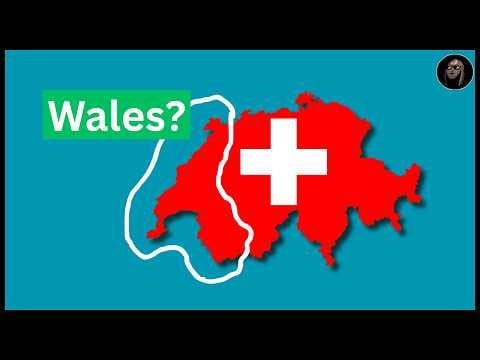
Video: Why is there a “Wales” in Switzerland? (aka, why do some Swiss-Germans call Romandie “Welschland”?)
Posted by jeanpauljh

Video: Why is there a “Wales” in Switzerland? (aka, why do some Swiss-Germans call Romandie “Welschland”?)
Posted by jeanpauljh
6 Comments
This video shows the linguistic link between *Welschland*, Wales, Wallonia and Wallachia. An interesting bit of trivia for your Sunday!
interesting, the Swiss sheep-shaggers!
The truthfulness of the video is roughly on par with its professional presentation: it mixes everything up.
*Disclaimer: I have no background in history and/or linguistics.*
Very interesting video, thanks.
“Welsch/Walsch” to denote latin people used to be a lot more popular among all German speakers. You can see this in anachronistic placenames for Verona (Welschbern) and Trentino (Welschtirol) or the lyrics for “Die Wacht am Rhein”; “Und ob mein Herz im Tode bricht/ Wirst du (the Rhine) doch drum ein Welscher (here used for the French) nicht.”
Wer wälscht, der fälscht ( frei nach den Schmirinskis ) 😁