
I would like to make this post to try, in my small way, to contribute to the public discourse on the topic of the invasion of Ukraine, which is too often forgotten or downgraded to a secondary issue (Wide field, I say to you!).
In my opinion, the issue of Ukraine is often seen as an ideal battle, a stance taken by bored centrists, with no impact on people’s lives or the economy.
And it is certainly true that supporting Ukraine also derives from choices of value and respect for international law. However, it is not just this: the point is that after 4 years the Ukrainians are the only ones in the West who really know how to fight a modern war.
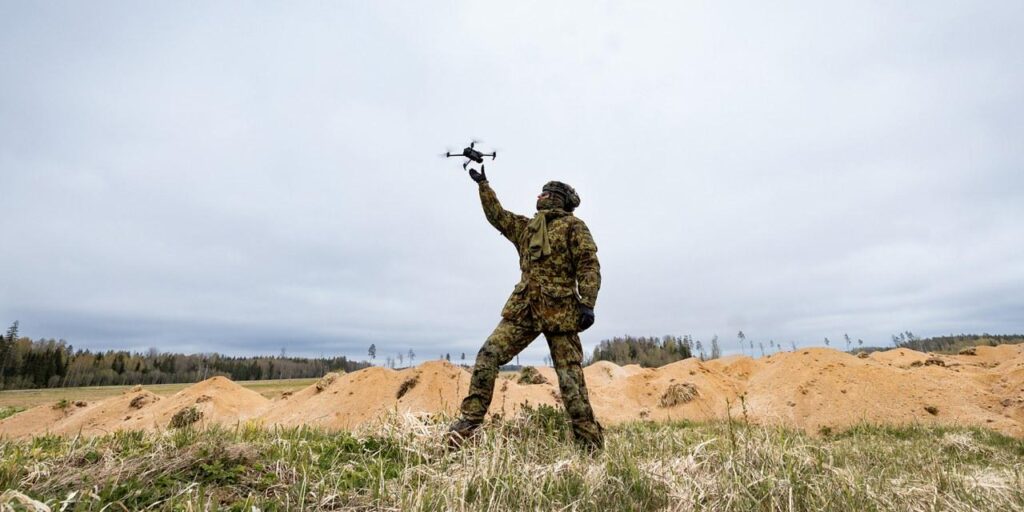
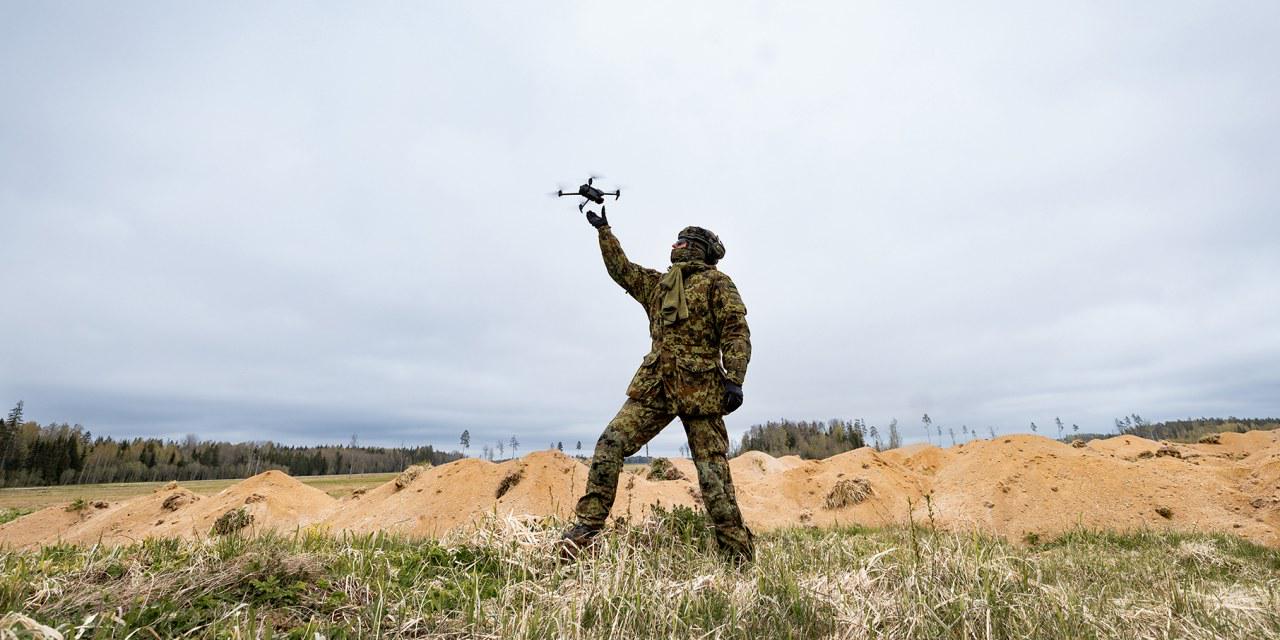
This emerges not only from the fact that Zelensky was the first to go to the Gulf countries to stipulate cooperation agreements, but also, more banally, from the results obtained by the Ukrainians in NATO simulations and exercises. In particular, the WSJ in the linked article recounts the details of Hedgehog 2025, a NATO exercise in Estonia, in which 16,000 soldiers from 12 countries participated, supported by Ukrainian drone operators taken from the front.
In half a day, a team of 10 Ukrainians in the adversary role destroyed 17 armored vehicles and hit 30 targets. Next, a unit of about 100 people (Estonians and Ukrainians) has knocked out two battalions on a day with just over 30 drones.
This is a nice summary of the situation:
Multiple sources told the story of one commander, who observed the drill and concluded, “We are f—.”
From this point of view, therefore, aid to Ukraine is neither humanity nor charity, as happens with other, laudable and shareable, battles. It’s about having access to skills that we don’t have and that we can’t develop on our own, in the face of an adversary – the Russian army – which is unfortunately also accumulating experience
Full text of the article in the comments
https://www.wsj.com/opinion/nato-has-seen-the-future-and-is-unprepared-887eaf0f?st=FEqx9T&reflink=desktopwebshare_permalink
Posted by Sea_Let_300
12 Comments
NATO Has Seen the Future and Is Unprepared
A simulation of drone warfare shows how far the alliance has to go to learn the lessons of Ukraine.
Russia and Ukraine have shown the world the future of warfare—and America and its allies aren’t ready for it. That’s the lesson of a major exercise that North Atlantic Treaty Organization members conducted in Estonia last May. What transpired during the exercise, with the details reported here for the first time, exposed serious tactical shortcomings and vulnerabilities in high-intensity drone combat.
The exercise, known as Hedgehog 2025, involved more than 16,000 troops from 12 NATO countries who drilled alongside Ukrainian drone experts, including soldiers borrowed from the front line. It simulated a “contested and congested” battlefield with various kinds of drones, says Lt. Col. Arbo Probal, head of the unmanned systems program for the Estonian Defence Forces. “The aim was really to create friction, the stress for units, and the cognitive overload as soon as possible,” he says. That tests the soldiers’ ability to adapt under fire.
In Ukraine the front line is largely frozen, but Hedgehog envisioned a battlefield where tanks and troops still have some ability to move. During one scenario, a battle group of several thousand troops, including a British brigade and an Estonian division, sought to conduct an attack. As they advanced, they failed to account for how drones have made the battlefield more transparent, several sources say.
The NATO battle group was “just walking around, not using any kind of disguise, parking tents and armored vehicles,” recalls one participant, who played an enemy role. “It was all destroyed.”
During Hedgehog Ukrainians used Delta, their sophisticated battlefield-management system. It collects real-time battlefield intelligence, uses artificial intelligence to analyze huge amounts of data, identifies targets, and coordinates strikes across command and units. That enables a fast “kill chain”: See it, share it, shoot it—all within minutes or less.
A single team of some 10 Ukrainians, acting as the adversary, counterattacked the NATO forces. In about half a day they mock-destroyed 17 armored vehicles and conducted 30 “strikes” on other targets.
Aivar Hanniotti, an Estonian Defense League unmanned aerial systems coordinator, led an adversary unit of about 100 that included Estonians and Ukrainians. Mr. Hanniotti, who has since left the regular military, describes how they deployed more than 30 drones against NATO troops in an area of less than 4 square miles. That’s only about half the drone saturation Ukrainians currently see at the front, though Col. Probal says the Hedgehog umpires sometimes offset that discrepancy by recording the drone strikes as twice as damaging or more. But even with less reconnaissance than in real life, “there was no possibility to hide,” Mr. Hanniotti says. “We quite easily found cars and mechanized units, and we were able to take them out quite fast with strike drones.”
Overall, the results were “horrible” for NATO forces, says Mr. Hanniotti, who now works in the private sector as an unmanned systems expert. The adversary forces were “able to eliminate two battalions in a day,” so that “in an exercise sense, basically, they were not able to fight anymore after that.” The NATO side “didn’t even get our drone teams.”
Credit the Estonians for forcing NATO partners to confront these weak spots. Hedgehog was also an example of how Ukrainians can contribute to overall European security. There’s only so much you can learn from watching online footage or reading about what’s transpiring in Ukraine, says Sten Reimann, a former commander of Estonia’s Military Intelligence Center who helped bring in Ukrainian drone experts for Hedgehog. He said the results of this exercise were “shocking” to military officials and troops on the ground.
Hedgehog didn’t deal with political or strategic issues like drone procurement. Estonia is small, and land-use limitations sometimes constrained how troops could move. No single exercise can reflect how quickly drone technology evolves during an actual war. Still, Hedgehog showed how visible the battlefield has become—and how vulnerable that makes anyone or anything moving on it. NATO will need to adjust its tactics and find better ways to protect its tanks and armored vehicles.
Another lesson is the need for a faster kill chain, which requires more efficient cooperation on strikes. During a future war game, NATO might consider pitting Delta against a similar battlefield-management platform developed by the U.S. to see how they stack up. There’s also room to improve communication and coordination between units. Ukrainians accelerate attacks by sharing large amounts of data between command and units. But that runs counter to NATO’s instinct to restrict sensitive information.
“Lessons are not learned when they are identified,” says retired Gen. David Petraeus. “Rather, they are only learned when you develop new concepts, write new doctrine, change organizational structures, overhaul your training, refine leader development courses, set out new materiel requirements that drive the procurement process, and even make changes to your personnel policies, recruiting, and facilities.”
Estonia is trying to implement such major changes. It has updated its training, tactics and military doctrine for the drone era. It is also increasing defense spending and building deeper relationships with its vibrant private tech industry to work on drones and other military innovations.
Yet too many NATO members continue to show “a fundamental lack of understanding of the modern battlefield” and train their soldiers “based on doctrines and manuals that are not adapted to today’s realities,” says Maria Lemberg of the Ukrainian nonprofit Aerorozvidka, which supported Delta’s development. She helped coordinate Ukraine’s participation in Hedgehog and hopes it can serve as a wake-up call and basis for more knowledge-sharing between Kyiv and its partners.
Multiple sources told the story of one commander, who observed the drill and concluded, “We are f—.” I asked Estonia’s Col. Probal about this reaction. He said that one aim of the exercise was to help participants “think more, to make them critical toward themselves, to make sure they are not complacent in what they are doing right now.” Was it a success? “From my point of view, mission accomplished.”
E voi cosa ne pensate?
Per inciso, credo che questo sia anche un fattore che distingue nettamente la questione ucraina da quella palestinese: nel secondo caso si tratta di una battaglia etica e morale, nel primo invece oltre a ciò si somma anche un importante fattore strategico. Sostanzialmente ad oggi l’Ucraina dipende da noi ma noi dipendiamo dall’Ucraina
Questo non vuole in nessun modo sottovalutare l’importanza della questione palestinese, ma solo evidenziare come nel caso ucraino ci siano in gioco nostri interessi diretti e concreti, non solo ideali
Come rilevato dall’ottimo Puck Nielsen, l’Europa e la Nato hanno bisogno dell’Ucraina tanto quanto (se non di più) l’Ucraina abbia bisogno di Europa e Nato.
Se gli ucraini dovessero cedere, loro che sono l’esercito europeo più grosso e meglio addestrato, nonché profondo conoscitore delle tattiche russe, chi sarà pronto per la prossima escalation di Putin e soci? Aggiungendo il fatto che come spesso accade, le forze del paese conquistato confluiscono in un modo o nell’altro nelle file dell’aggressore
L’esperienza al Contrasto dei droni è do grande valore ma ci sono 2 punti da considerare.
1-È possibile che nel breve periodo si sviluppino tecnologie laser in grado di abbaterli economicamente.
2-In uno scenario di Guerra dove gli Europei Sono direttamenti coinvolti non vi è garanzia che I droni Siamo prevalenti come in Ucraina
Detto questo, senza ingigantire la cosa, bisogna riconoscere I meriti Ucraini e scambiare know how il piú possibile.
Tutte le guerre e chi le pratica portano immensi passi avanti a livello tecnologico e soprattutto tattico-militare. Nel 1914 i francesi andarono all’attacco delle linee tedesche con tattiche ottocentesche, alla fine della guerra carri armati ed aerei erano già divenuti arma cruciale ed indispensabile. Le ridotte forze tedesche che da anni combattevano gli inglesi in nordafrica durante il secondo conflitto, inflissero pesanti perdite nei primi scontri con forze americane da poco sbarcate in marocco e di lì giunte in Tunisia. Truppe che non avevano visto ancora un campo di battaglia.
>Si tratta di avere accesso a competenze che non abbiamo e che non possiamo sviluppare da soli, di fronte a un avversario – l’esercito russo – che sta purtroppo accumulando anch’esso esperienza
Da qui la tua conclusione, a mio avviso errata.
Durante il secondo conflitto la Werhmacht raggiunge un livello tattico-operativo altissimo, ma nulla poté fare contro la strapotenza industriale nemica. Ieri come oggi, la Russia non è che l’ombra della potenza militare che era un tempo e la sua capacità economico-industriale è comunque limitata. La NATO la supera 25:1 quanto a PIL. Senza contare l’atomica, motivo per il quale mai è scoppiato un conflitto URSS-NATO.
Putin non è interessato ad aggredire altri paesi europei, a meno che la Russia non venga provocata (ad esempio UK ha dichiarato che sequestrerà petroliere russe in acque internazionali. Immaginiamo la reazione di UK se un altro Paese sequestrasse le sue navi). La Russia ha iniziato la guerra per difendere i diritti degli ucraini filo russi e per impedire che l’Ucraina entrasse nella NATO. Vi ricordate il supporto austriaco al terrorismo in alto Adige negli anni ’50? E la crisi di Cuba Ve la ricordate? Stesse logiche dell’intervento russo in Ucraina. Gli Stati uniti hanno supportato un golpe pro occidentale in Ucraina per indebolire la Russia, e poi il riarmo ucraino. Gli europei stupidamente si sono fatti coinvolgere nella guerra che ne è seguita. Risultato: tensione con la Russia, milioni di euro spesi in riarmo invece che in istruzione e sanità, costi di energia alle stelle. Noi abbiamo bisogno del gas e del petrolio russo molto di più che dei droni ucraini. Al diavolo il nazionalismo ucraino e chi lo supporta. Per l’Fmi l’Italia tra i più esposti alla crisi https://www.repubblica.it/economia/2026/03/30/news/giorgetti_misure_mirate_contro_caro_energia_fmi_italia_esposta_gas-425253943/
Grazie per aver doverosamente condiviso l’ovvio. Per chiunque non sia filorusso, sostenere l’Ucraina è una necessità, se non per ideali sicuramente per interesse.
Assurdo, un paese che è in guerra da 4 anni sa fare la guerra a differenza di paesi a cui non gli cade addosso una bomba dal 1945.
https://preview.redd.it/x2xjwawx38sg1.jpeg?width=294&format=pjpg&auto=webp&s=3df49343cdddc4fc869d1177e93e9f2463a44f76
Penso che alla facciazza dei vari pacifinti, mollati dalla “”leggerissima”” volubilità di Trump, l’Ucraina serve molto a noi, fondamentalmente hanno epurato i russi della stragrande maggioranza degli stock di armamenti ex guerra fredda (ormai davvero andranno a tirare fuori i T34), e sono gli unici a saper combattere una guerra moderna a furia di droni.
Basta vedere cosa sta succedendo adesso con l’Iran, che guarda caso è uno dei principali fornitori di droni ai Russi.. i danni ricevuti alle basi del golfo da qualche shaded non ha insegnato assolutamente nulla agli americani..
Insomma chi all’inizio diceva che era una guerra proxy allungata apposta per indebolire la Russia e migliorare il nostro know how militare aveva ragione?
Assurdo…
Come è normale che sia, la prova del campo fa la differenza rispetto agli scenari teorici
>Ed è vero, sicuramente, che supportare l’Ucraina deriva anche da scelte di valore e di rispetto per il diritto internazionale
Quindi immagino tu sia contrario alla guerra in Iran e per sanzionare usa e israele a armare l’Iran, corretto?
>il punto è che dopo 4 anni gli ucraini sono gli unici in Occidente che sanno davvero combattere una guerra moderna.
Il punto è che questa è una stronzata, l’idiozia del wargaming come prova è la ciliegina sulla torta