
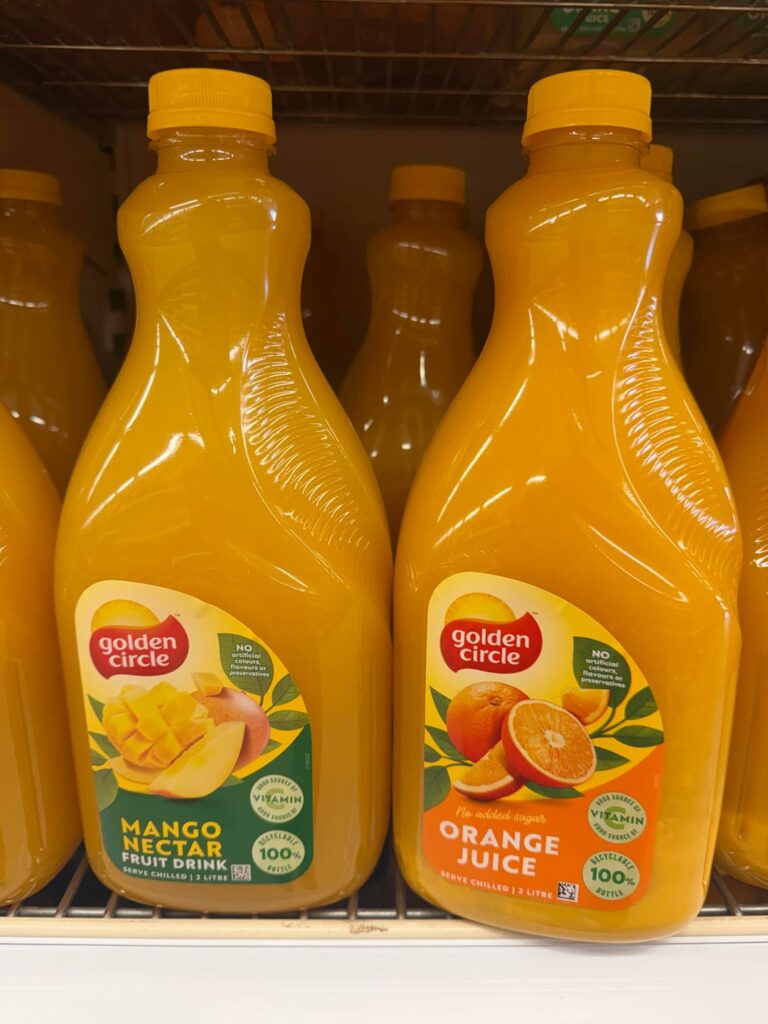
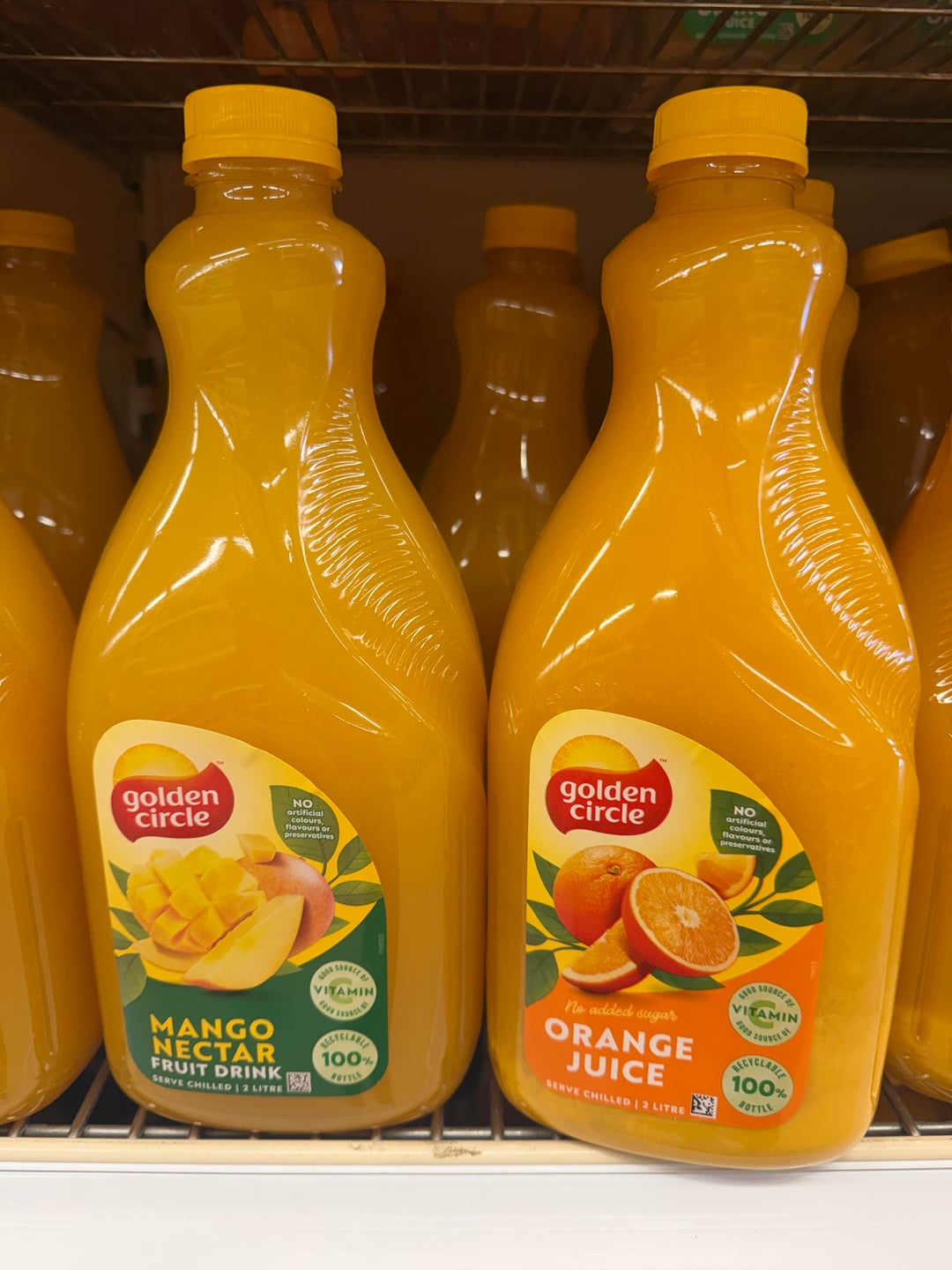
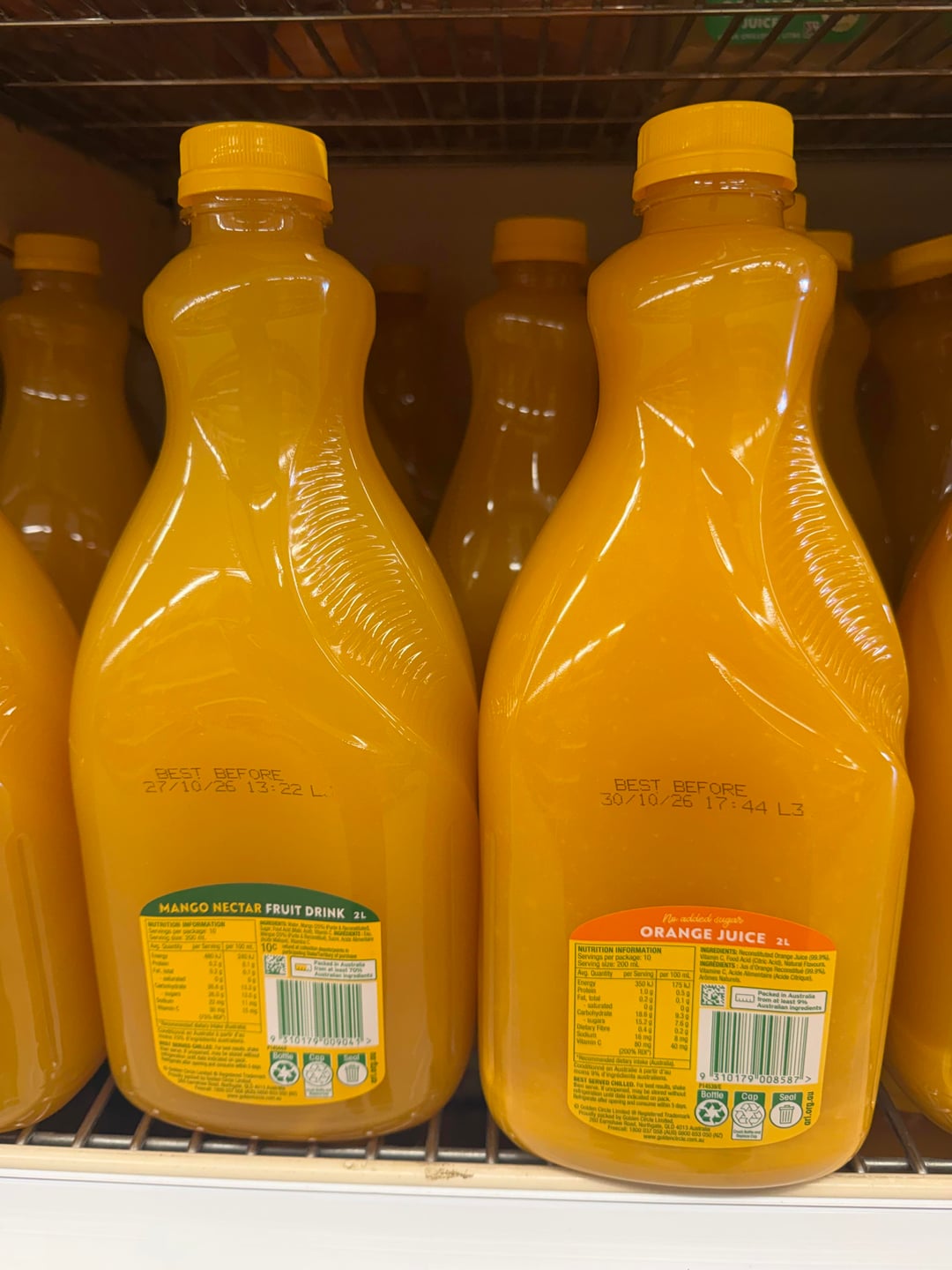
Anyone understand this whole container deposit scheme and what’s eligible .. looking at the 2 items on the picture.. How come mango nectar fruit drinks gets 10c back but orange juice does not ? Seems random on all the Golden Circle items
Posted by whoistheg
21 Comments
The determinant is juice content. Over 90% pure juice is ineligible in NSW, I imagine similar criteria in VIC.
Edit: I mixed up eligible/ineligible
The “juices” are not part of the scheme, because the governments didn’t want to reduce consumption of “healthy” options. The “fruit drinks” are part of the scheme because they are considered “unhealthy” options.
The smaller juice bottles (e.g. smaller than 1L) have the deposit on them because they are more likely to end up discarded in public spaces and not in the major recycling schemes.
Juice containers must be between 150mL and 1L for companies to be compelled to enrol items for the CDS and be eligible for the scheme.
On the other hand, non-carbonated water and soft drinks are compelled to enrol if they are between 150mL and 3L.
As the mango nectar is a “fruit drink”, it falls into the latter category.
Orange JUCE is a singular natural “health” food like milk, providing vitamins etc. Like with GST it’s exempt.
The mango fruit drink is a manufactured highly processed product, like soft drink it isn’t exempt.
10 cents extra is charged for the one with a 10 cent refund, so if you want to save yourself some trouble buy the one without the 10c refund
I work in the beverage industry and love the beauty of which plastic/glass/paper/aluminium package your beverage is stored in, determines the recycling ability of that container.
It’s a refund scheme, so the price of the container it’s sold in increases by 20c when initially sold.
They don’t want juice to be more costly for consumers.
That’s the real scam of the entire thing. For anyone not participating, you just pay an extra 10c for every can or bottle you buy that’s eligible for this refund.
Edit: I stand corrected on the refund amount.
On the plus side you can easily time these into a nearly 20% alcohol once the end times come.
The real reason is lobbying. The container deposit scheme was brought in to destroy craft alcohol producers in Victoria during a very challenging time post Covid. So many producers went bust during rising production costs, which the major producers ( Asahi and CUB ) could absorb and later increase prices.
The big question is why arent milk cartons recycled in this scheme? Why aren’t juice like in this post recycled, why arent wine bottles recycled? Because 10 cents on a wine bottle won’t put a small producer out of business, and milk is basically a duopoly, so who cares, right?
We currently pay through this scheme 18 cents a can, even though you (the consumer) only get 10 cents. Straight to the government coffers. Even if it’s not recycled through the scheme, we still have to pay the 18 cents. Source, I run a small Cider business.
Just drive by my wheelie bin every fortnight, I got ya fam
It’s a tax on soft drinks and beer
What I don’t get is that little kiddie milk drink cartons are part of the scheme but the larger vitasoy type aren’t.
Aliens
Another grift from the Victorian government. My local council has 5 metropolitan train stations and still not one deposit machine. Most of the otc have given up because its such a shit show
Brooo tell me about it. I work at a C4C and I can’t explain to people why some things are taken and others aren’t it so infuriating. It’s all the same material
I worked in a Cash for Containers facility around 18/19 months ago. If we had questions regarding a bottle, and it wasn’t imprinted on it, we had an app that could tell us. But if, say a fruit drink bottle came through saying yes 10c, that OJ bottle would have been allowed through as well.
The CDS refund is actually being paid for by the drink companies (as in, they’re paying the 10c for each container). This means that eligibility is decided by which of the major drink companies / bottlers are participating in the scheme.
Hence, if you’ve got an imported aluminium can of root beer, for example, it’s not eligible even though it’s identical in material to your regular can of coke.
This is also why wine bottles aren’t eligible despite the main focus of material collection being glass (since it’s almost infinitely recyclable onshore by the major packaging companies like Visy, unlike plastic and aluminium). Wine makers lobbied to not be included in the CDS because they said they couldn’t / wouldn’t / shouldn’t foot the bill for refunds.
Source: worked on the CDS marcomms.
fruit discrimination. justice for orange juice, its worth 10c too
The deposit needs to be 20c.
Man, that mango nectar goes so hard in the slushie machines.
I think its the type of plastic they use
“I shed shum pulp”