
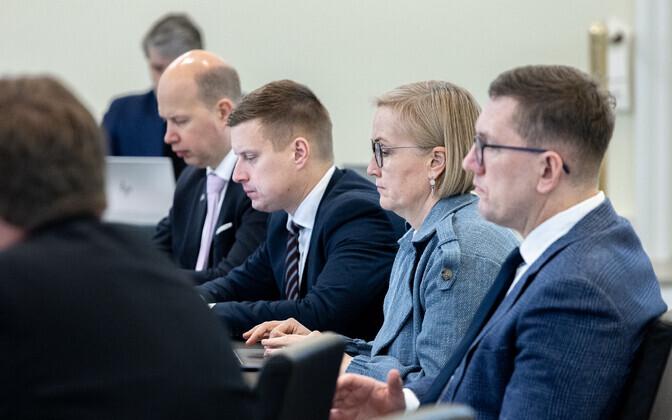
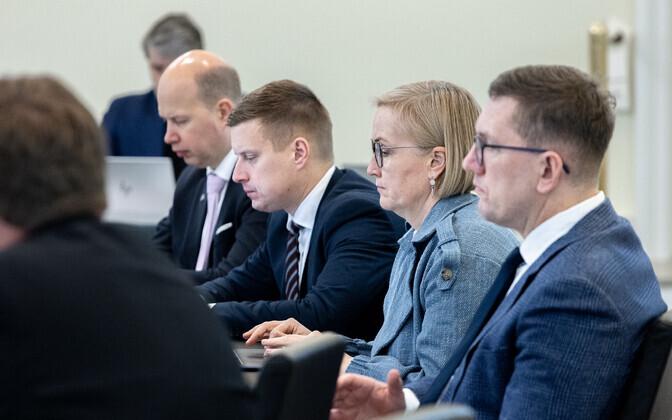
I made an overview of what the wage directive means for the employee and the employer and who is against it.
Who is against that
Erkki Keldo – Minister of Economy and Industry (Reform Party)
Erkki Keldo explained the government’s position with the need to protect the competitiveness of Estonian companies. "For us, the fundamental problem is how the directive stipulates salary transparency – it unfortunately increases the administrative burden on entrepreneurs," Keldo explained.
Margus Tsahkna – Minister of Foreign Affairs (Estonia 200)
"This is really one of the very specific places where we have to say that what is coming from Brussels is not for us. It is still a very clearly ideological and over-regulatory do-no-do directive, which I’m sure will absolutely not lead to the outcome being talked about, but may instead kill off entrepreneurship," said Tsahkna.
Ain Käpp – Council member of the Central Union of Employers, CEO – Radisson Collection Hotel
“Estonian employers have recommended that the wage transparency directive be adopted minimally and without additional bureaucracy, and therefore we support taking time out of it,” says Ain Käpp, council member of the Central Union of Estonian Employers and head of the labor market working group.
“Although employers have supported the payment of equal pay for equal work, according to members of BusinessEurope, the directive is called “unworkable administrative complexity”, i.e. the requirements of the directive are not used in a real business environment. For example, the methodology for evaluating ‘equivalent work’ is so complex that companies cannot fulfill it without huge additional costs and specialists.”
EU Pay Transparency Directive 2023/970 – summary
| Theme | What does that mean |
|---|---|
| To whom it applies | All private and public sector employers in the EU; reporting obligation from 100 employees |
| When recruiting | Employer must provide salary level or range already in the job advertisement or before the interview |
| Previous salary | Employer must not ask salary information of the candidate’s current or previous employment |
| The employee’s right to information | The employee has the right to ask in writing about his wage level and the average wage level by gender in the same or equivalent position; the employer must respond within 2 months |
| Annual notification | Every year, the employer must remind all employees that they have the right to ask for information about their salary level and the average salary of colleagues working in the same or equivalent position by gender. The employer must also explain how to use this right (e.g. to whom to write, in what form) |
| Wage confidentiality clauses | Forbidden – the employee must not be prevented from publishing his salary |
| Criteria | Remuneration must be based on objective, gender-neutral criteria, without direct or indirect discrimination |
| Reporting to 250+ employees | Annually, first report by 7 June 2027 |
| Reporting 150-249 employees | Every 3 years, first report by 7 June 2027 |
| Reporting to 100-149 employees | Every 3 years, first report by 7 June 2031 |
| <100 employees | Reporting is optional; a member state may oblige domestically |
| The 5% pay gap rule | If the report reveals a ≥5% gender wage gap in a certain category of employees, which cannot be objectively justified or corrected within 6 months → mandatory joint salary evaluation together with employee representatives |
| In the burden of proof | In case of dispute, it must to be verified by the employerthat there was no discrimination |
| Punishments | Member States shall establish "effective, proportionate and dissuasive" penalties; the employee has the right to full compensation, including lost wages and damages |
Estimated fines for Estonia in case of non-transposition of the directive
Basis of calculation: Decision C-154/23 (European Commission v. Estonia, 6 March 2025)
| Duration of the delay | One-time fine (estimate) | Daily fine | Total for one year |
|---|---|---|---|
| 6 months | ~€150 000 | €1,500/day | ~€273,000 + fine |
| 1 year | ~€250 000 | €1,500/day | ~€547,500 + fine |
| 2 years | ~€400 000 | €1,500/day | ~€1,095,000/year + fine |
| 3 years | ~€500 000 | €1,500/day | ~€1,500,000/year + fine |
| 5 years | ~€800 000 | €1,500-2,000/day | ~€2,700,000+/year + fine |
Estonia’s gender wage gap (Eurostat)
| A year | Estonia | EU average | The difference |
|---|---|---|---|
| 2015 | 26,7% | 15,5% | +11,2 |
| 2016 | 24,8% | 15,1% | +9,7 |
| 2017 | 24,9% | 14,6% | +10,3 |
| 2018 | 21,8% | 14,4% | +7,4 |
| 2019 | 21,6% | 13,7% | +7,9 |
| 2020 | 21,0% | 12,7% | +8,3 |
| 2021 | 20,3% | 12,3% | +8,0 |
| 2022 | 21,1% | 12,2% | +8,9 |
| 2023 | 19,6% | 11,7% | +7,9 |
| 2024 | 18,8% | 11,1% | +7,7 |
Estonian MEPs vote on Directive 2023/970 (EP, 30.03.2023)
Aggregate result: 6 for, 0 against, 1 abstention
| Euro ambassador | Political party | Group (EP) | Voice |
|---|---|---|---|
| Andrus Ansip | Reform Party | Renew Europe | by |
| Urmas Paet | Reform Party | Renew Europe | by |
| Jana Toom | Center party | Renew Europe | by |
| Marina Kaljurand | SDE | S&D | by |
| Sven Mikser | SDE | S&D | by |
| Riho Terraces | Fatherland | EPP (PPE) | by |
| Jack Madison | SCREEN | ID | unbiased |
Sources:
- Directive (EU) 2023/970 full text (EUR-Lex)
- ERR – Estonia says no to the equal pay directive
- ERR – About Tsahkna’s salary directive: it is an ideological directive of commands and prohibitions
- ERR – Minister Keldo: we would rather pay fines than increase the administrative burden
- Delfi – Ärileht: Employers support putting the wage directive on hold
- ERR – Kallas: the wage transparency directive contains measures that must be adopted
- Eurostat
Ülevaade: Mis on palgadirektiiv ja kes sellele vastu on
byu/MoonOperator inEesti
Posted by MoonOperator
8 Comments
Ehk siis me maksame EL-ile raha, selleks et eestlastel oleks just keerulisem leida endaline sobiv töökoht, kus palk pole naljaväärne? Kõlab nagu Eesti küll.
Palun ütle millist AI-d sa kasutasid, et sellist teksti kokku panna.
Küll aga tasub kõigil ise seda direktiivi sirvida, sest on aru saada, et vastuseis pole mitte palga avalikustamisele (nagu üritatakse hetkel narratiivi luua) vaid sellele tohutule ja ebavajalikule aruandlusele mida antud direktiiv ettevõtetelt nõuab. Sh aastaringselt nõuab.
[https://eur-lex.europa.eu/legal-content/ET/TXT/HTML/?uri=CELEX:32023L0970](https://eur-lex.europa.eu/legal-content/ET/TXT/HTML/?uri=CELEX:32023L0970)
Vaadake artikkel 7, 8, 9, 10 ja 11.
Kui olete läbi lugenud siis mõelge, kas see tegevus on vajalik? Kui palju läheb selle tegevusele aega kaduma. Kas see tegevus ja see aruandlus on üldse Eesti kultuuriruumi osa.
Eraldi teema:
>Kui aruandest ilmneb mingis töötajate kategoorias ≥5% sooline palgalõhe, mida ei saa objektiivselt põhjendada ega 6 kuuga parandada → **kohustuslik ühine palgahindamine** koos töötajate esindajatega
Mõelge, et olete ettevõttes keskastme juht kes vastutab oma tiimi eest. Kuidas sa nüüd ütled ühele tiimi liikmele, Kristole, et “Kati saab rohkem palka sest tema töö on väärtuslikum ja täpsem ja parem kui sinu töö. Seetõttu saab Kati sinust 1000€ rohkem palka”
Mida sa teed nüüd selle totaalselt demotiveeritud Kristoga?
Direktiivi järgi tõstad tema palka. Või siis hakkad Katile välja mõtlema mingeid pseudotiitleid, et ta oleks justkui Kristost erineva ametipositsiooniga. Aga who needs this shit?
Väga tervitatav. Ettevõte mu poolest nutku, kui ei kannata, kao Eestist
Kui kuradi palju olen aega raisanud vaid et teada saada et akadeemilist kraadi nõudev töö algab miinimumist. Naeruväärne. Töötutoetus on ka etem kui rügada 10h päevas iga päev et kuus paar sotti juurde saada. Klouniriik.
Kes seda palga avalikustamist ja palgavõrdust niiväga taga nõuavad võivad ju enda ettevõtted püsti panna ja maksta niipalju palka töötajatele kui tahavad ja teha seda nii võrdustatult kui võimalik.
[https://www.postimees.ee/8453842/palgalohe-akkpidur-aastaid-teada-direktiivile-voib-eestile-maksta-sadu-tuhandeid-eurosid](https://www.postimees.ee/8453842/palgalohe-akkpidur-aastaid-teada-direktiivile-voib-eestile-maksta-sadu-tuhandeid-eurosid)
Pigem maksame trahvi kui tagame õiglust!
Reformi värdjad suudavad iseennastki ületada.
Ükski neist teemaalgatuse punktidest pole sisuliselt ebamõistlik, aga täitsa kindel jah, et ametnikud suudavad selle keerata täiesti ebanoormaalselt idiootseks protsessiks.
Palga ette avalikustamine on niikuinii praegu juba a la palgavahemik 1000-10000 eurot. Mida kõrgem alumine äär, seda enam tuleb IT sektori kontoritöö konkursile autoremonilukkseppasid jms, kellele siis peab äraütlemiskirju kirjutama, sest muidu nad ju pahased, et detailset personaalset tagasisidet ei tile jne.
Sealjuures kogu värbamine on väiksemas ettevõttes tegevjuhi töö, kes sellise sarnase jampsi ja tulevase paberimajanduse asemel võiks ettevõtet juhtida paremate finantstulemusteni, mis võimaldab töötajate palka tõsta ja uue kuulutuse kõrgema alumise äärega avalikustada, mille peale peab järgmisele 50le logistikafirma laotöötajale personaalset tagasisidet andma…