
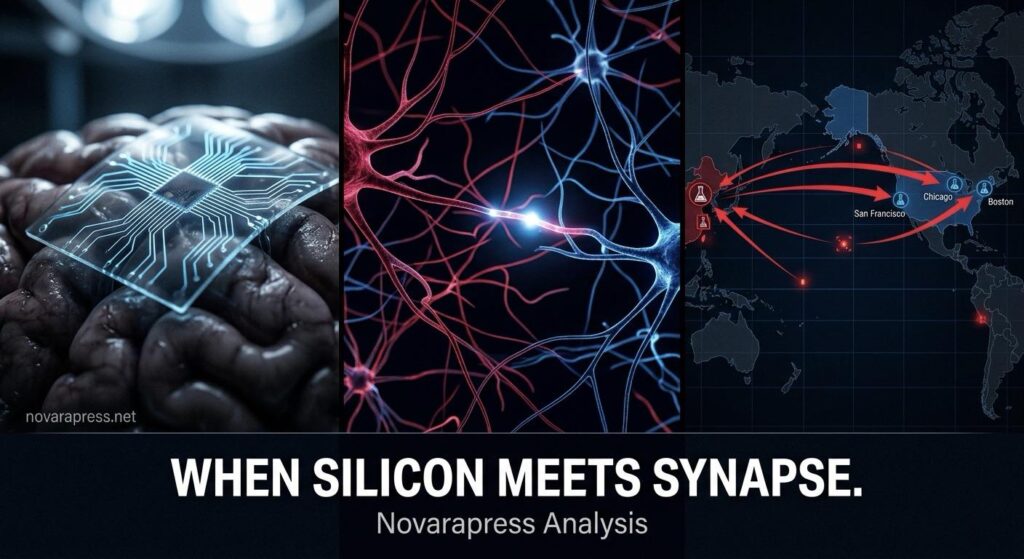
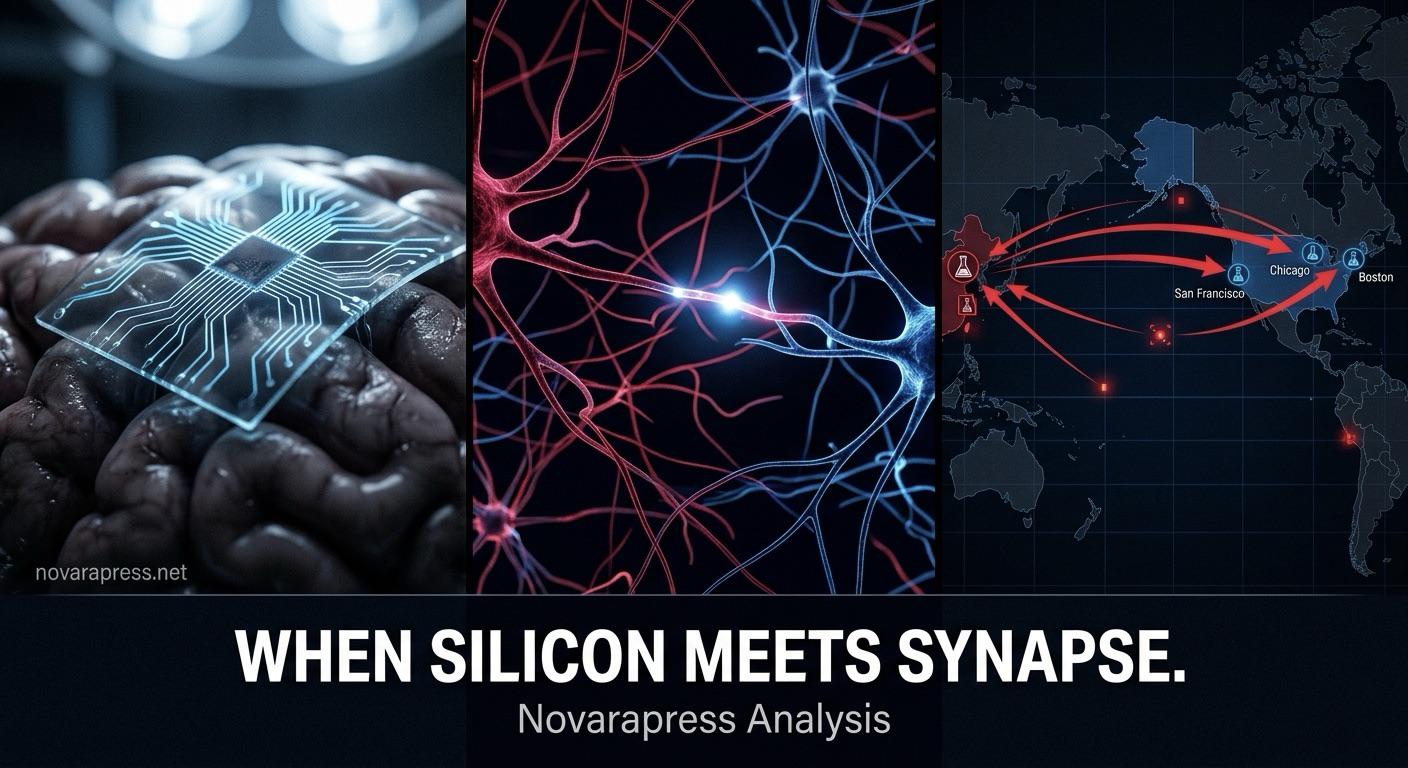
Northwestern engineers printed artificial neurons that successfully activated living brain cells. The implications for AI computing and brain-machine interfaces go far beyond the lab.
THE BRAIN ANSWERED: HOW A PRINTED CHIP JUST REWROTE THE RULES OF AI AND WAR
2 Comments
Northwestern researchers just published this in Nature Nanotechnology last week. The device uses MoS2 and graphene ink printed onto flexible polymer. Not rigid silicon. When they fired signals into slices of mouse brain the living neurons actually responded. Correct timing, correct spike shape.
The reason this matters beyond the medical side is the energy math. Current AI infrastructure is heading toward gigawatt data centers running on dedicated nuclear plants. The human brain runs the same complexity on 20 watts. Thats a 5 orders of magnitude gap. This is the first artificial neuron that gets close enough to biological signal fidelity to actually bridge that gap in hardware.
Military applications are obvious but nobody is talking about governance. There is no legal framework anywhere for neural data ownership. That part moves slower than the tech always does.
The longer term question is governance. No international treaty covers neural interfaces. No legal framework defines who owns neural data. The CRISPR parallel is worth watching. He Jiankui edited human babies in 2018, only 6 years after the science published, before any rules existed. Brain-computer interfaces are on the same trajectory. Either this reshapes AI hardware architecture within a decade or it becomes the most dangerous unregulated dual-use technology since CRISPR. Probably both.
what will happen first, biological immortality or replacing your brain neuron by neuron? coming to you in the 2100s