
Translation via Deepl:
In Pakistan, too, the first anniversary of the victory of “Marka-e-Haq”—the Urdu name for Operation Sindoor, which is viewed in India as a triumph—was celebrated. Long-range missiles, cyber drones, AI… current and future wars will be multi-domain, warned the head of the Pakistani armed forces, Asim Munir, during the ceremony commemorating the conflict between the two nuclear powers, threatening the “enemy” with extremely “dangerous” consequences.
French defense contractors could not have found a better “sales pitch” for New Delhi than the one from Islamabad. Since MBDA missiles and Dassault Rafale jets supported India’s counteroffensive against Pakistan, doors have opened even wider at the world’s second-largest arms importer (behind Ukraine), which is preparing to sign a record order for the French fighter jet. India has become by far the leading recipient of French arms technology license transfers.
Drop in Russian Imports
A market historically dominated by Russia, which was New Delhi’s leading supplier between 2021 and 2025, according to SIPRI. With 40% of imports, Moscow remains far ahead of Paris (29%). But in India, the unreliability of Indo-Russian cooperation—despite the very attractive terms offered—is a source of frustration. In 2018, the country withdrew from the joint fifth-generation fighter jet program aimed at co-developing a variant of the Russian Su-57 fighter.
“Over the past decade, India has shifted its defense procurement relationships, moving away from Russia toward Western suppliers, notably France, Israel, and the United States,” notes SIPRI. Russia’s share of Indian arms imports fell from 70% between 2011 and 2015 to 51% between 2016 and 2020, eventually losing its dominant position.
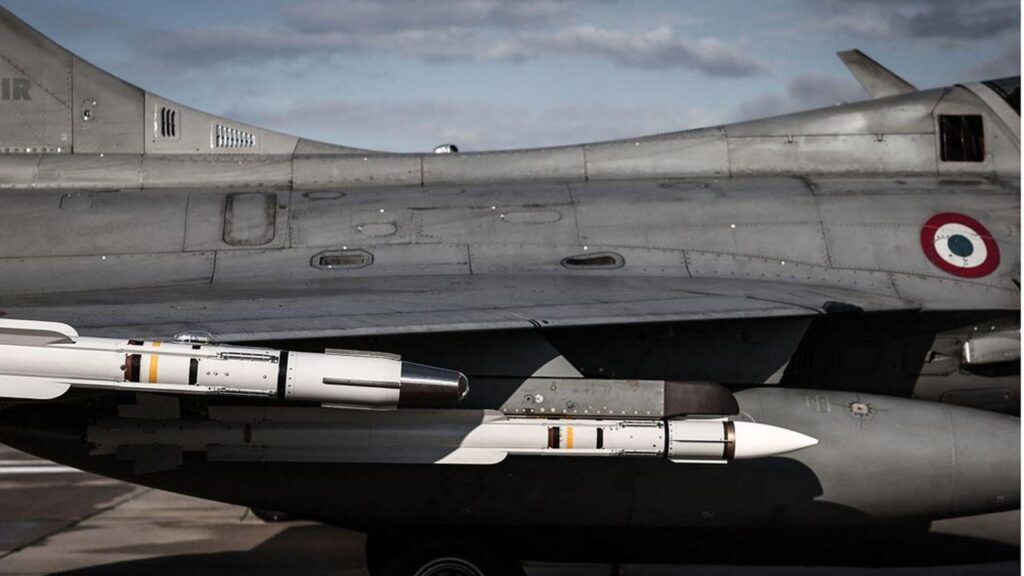
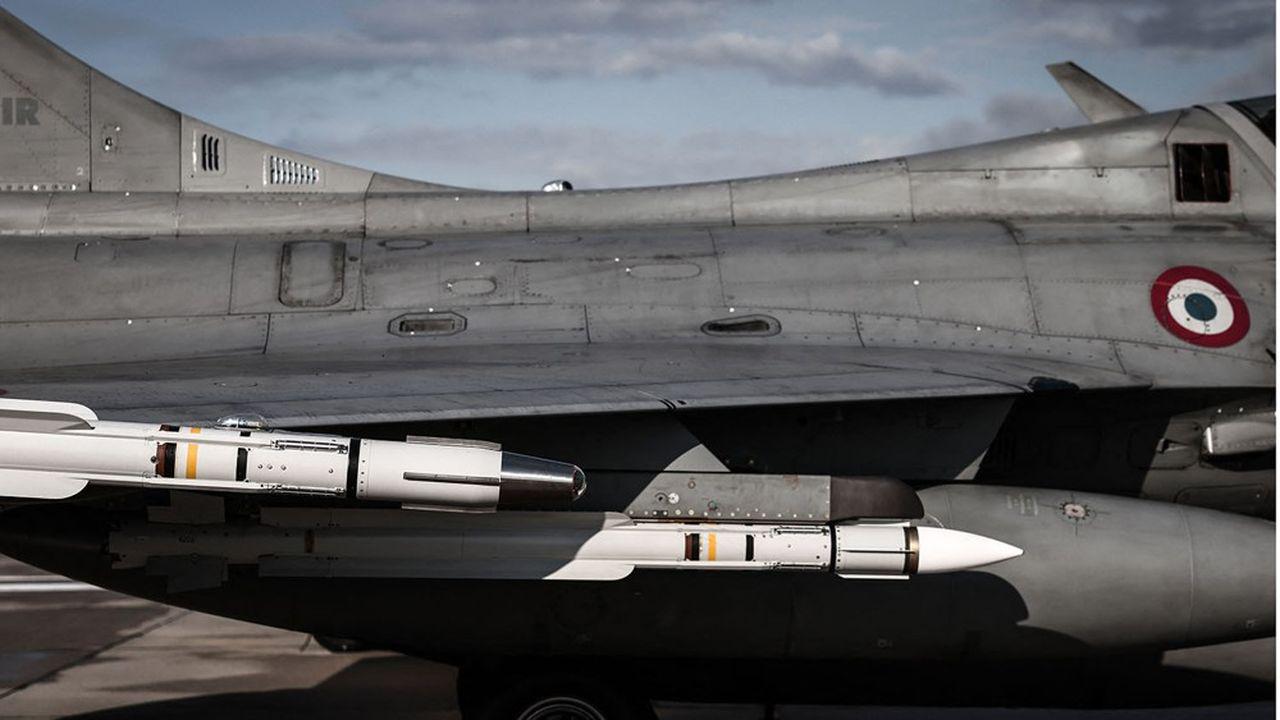
A partner of the Indian Armed Forces for over fifty years, MBDA has just announced a new agreement with the Indian Air Force aimed at developing local maintenance and mid-life overhaul capabilities for Mica air-to-air missiles. This initiative responds to New Delhi’s “Atmanirbhar Bharat” self-reliance plan to strengthen operational capabilities for one of the primary weapons carried by the Mirage 2000 and Rafale.
The missile manufacturer, which has had its largest office outside Europe in India since 2006 and operates there through a joint venture with the Indian conglomerate Larsen & Toubro, will provide industrial equipment, tools, data, training, and technical support. From Meteor and SCALP on the Rafale, Asraam on Jaguar aircraft, Mistral Atam on LCH helicopters, and Exocet SM39 on Scorpène submarines… MBDA has become a key partner for New Delhi.
In ten years, the share of French exports to India has risen from 1.5% to 29%, moving into second place behind Russia, which has seen a sharp decline.
Several years ago, MBDA signed an agreement with Bharat Dynamics for the assembly, integration, and final testing of Mistral and Asraam missiles in India. And this fall, the Indian Air Force confirmed that the Asraam will be integrated into the Tejas Mk-1A light fighter and will eventually replace the Russian R-73 missile across the entire fleet.
A First Outside France for Dassault
For Dassault, India—the first country to operate all three Rafale variants (B, C, and M) and one of the few to have ruled out the American F-35—is, in effect, a strategic partner. A year ago, New Delhi signed a contract for the Indian Navy to acquire 26 Rafale jets, and since then, exclusive negotiations have been confirmed for 114 fighters intended for the Indian Air Force.
The group led by Eric Trappier is ramping up its operations there. Dassault has taken a majority stake in its joint venture, Dassault Reliance Aerospace, to strengthen the development of its production activities and its industrial footprint in India. Signed in 2025, its partnership with Tata marks the start of construction on a factory to manufacture Rafale fuselage sections in Hyderabad. An agreement was also reached with Hical for the supply of precision parts for the Falcon and Rafale flight control systems.
According to Eric Trappier, Dassault is “naturally” bringing together its “major partners”—Thales and Safran—around its fighter jet, in addition to the entire supply chain, which includes some 30 partners providing local support. A future final assembly line is being considered. “We know how to achieve 50% local content,” the executive asserts.
Thales has opened an avionics maintenance center in Gurugram and, in November, signed an alliance with the Indian industrial group SFO to produce complex radar cable assemblies for the 26 Rafale jets destined for the Indian Navy.
Safran's Board in New Delhi
Safran, which has also launched an M88 Rafale engine maintenance center in Hyderabad, has equally ambitious goals. The group, led by Olivier Andriès, aims to triple its revenue there to exceed 3 billion by 2030—with half of that generated locally—and to increase its local procurement fivefold.
In late 2025, it signed an agreement to establish a joint venture in India with Bharat Electronics to produce the AASM Hammer guided bomb. This air-to-ground weapon can be adapted for both the Rafale and the Tejas aircraft from the HAL group. And if India’s major additional order is confirmed, Safran will establish an assembly line for the Rafale’s M88 engine in India. Should this be seen as a sign of things to come? For a week in November, the entire Safran board of directors was invited on a trip to New Delhi, Hyderabad, and Bangalore to meet with key figures, including Prime Minister Modi, at his office on Lok Kalyan Marg.
https://www.lesechos.fr/industrie-services/air-defense/ils-delaissent-la-russie-en-inde-les-industriels-francais-de-larmement-en-pleine-percee-un-an-apres-loperation-sindoor-2231615
1 Comment
SS: The proportion of arms imported to India from France have climbed from 1.5 % to 29% whereas the equivalent figures from Russia have seen a decline from 70% to 51%. This shift mirrors not only Russia’s declinign worldwide influence but also india’s decision to withdraw from the Su-57 Fighter programme and conversely partner more closely with French firms like Safran and Dassault who are more willing to establish more equal work share programmes as India increasingly seeks to build more indigenous arms systems.