
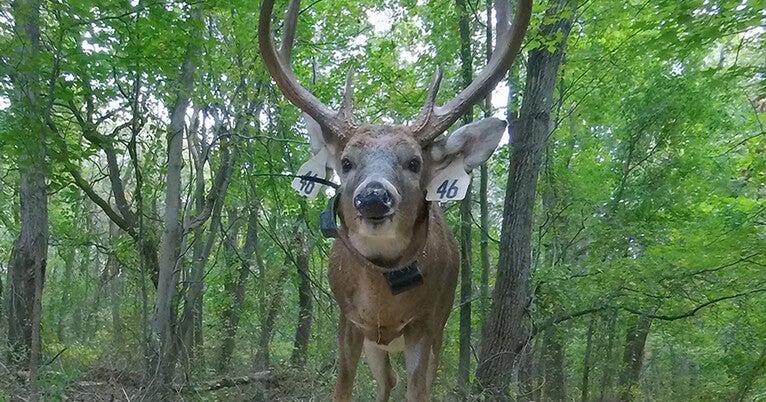
Wildlife is watching us, too — and changing their behavior in response: « How the mere presence of people, not just landscape change, can reshape how species use space and environment, with implications for conservation efforts. »
https://news.yale.edu/2026/05/21/wildlife-watching-us-too-and-changing-their-behavior-response
5 Comments
I guess it’s just proof of how generally arrogant we are as a species that this may come as a shock for some people, but yeah, this 1000% makes sense to me.
Why WOULDN’T they be changing their behavior in response to us? Do people really believe we’re the ONLY species who can adapt to changes in our environment?
Granted, we’re a hell of a change to the environment so far, but I don’t feel like you need to be able to invent things or write self-help books to be able to modify your behavior if it means getting wiped out otherwise.
I mean, look at raccoons. They are now basically subsisting primarily on human-generated trash and tossed food. They’re virtually subsistence scavengers now, except the definition of the “carcass” they’re picking clean has changed.
We abandoned pigeons and squirrels en masse after we got sick of having them as pets and invented telegraphs and telephones. But look how well they’ve gotten along despite being cast off by humans; it honestly makes me sad how these creatures we used to love and keep as pets are now treated as vermin to be poisoned and driven away.
Cougars and coyotes are quite the success story too: we’ve taken away their habitats and hunting grounds on a grand scale to build ever-increasing tracts of homes barely anyone can afford to buy and live in, but they’ve learned that cats and designer dogs are VERY tasty – and they’re getting bolder about hunting them by the day.
I could go on and on about how we’re discovering crows, octopi, and many other species are “intelligent,” but I suspect we’re going to continue to have to re-define what we think of as intelligence as we grow to understand that many animals we wrote off as “dumb” are in fact just as capable of thinking and feeling emotions as we humans are.
And when that day comes, I think we’re going to have a lot to mourn about how we’ve treated these creatures for so long. If I’m right about all this – and that’s a big IF, I’ll concede – I think we’re also going to have a lot to make up for.
This is not really “news.” Wildlife has been doing this for a long time. Most of it, that is. Because there are some stubborn species (I’m looking at you alligators and moose) who continue to inhabit and “invade” human habitats.
This is something I think every hunter has known for a very long time.
The entire forest behaves differently once your presence is known by those that live there.
This is especially noticeable on multi-day trips if you’re camping out there.
Well I know for sure that corvids do that. Squirrels too.
It’s obvious in retrospect but good to have data backing it up. Animals have been watching and adapting to us for centuries. The real challenge is how conservation accounts for this behavioral shift. Static protected areas may not be enough if species are already avoiding humans at a distance. We need to think about landscapes differently.