
May 23, 1958: EOKA murders the leftists Savvas Menikou in Lefkoniko and Georgios Giasoumis Matsoukos in Gypsou
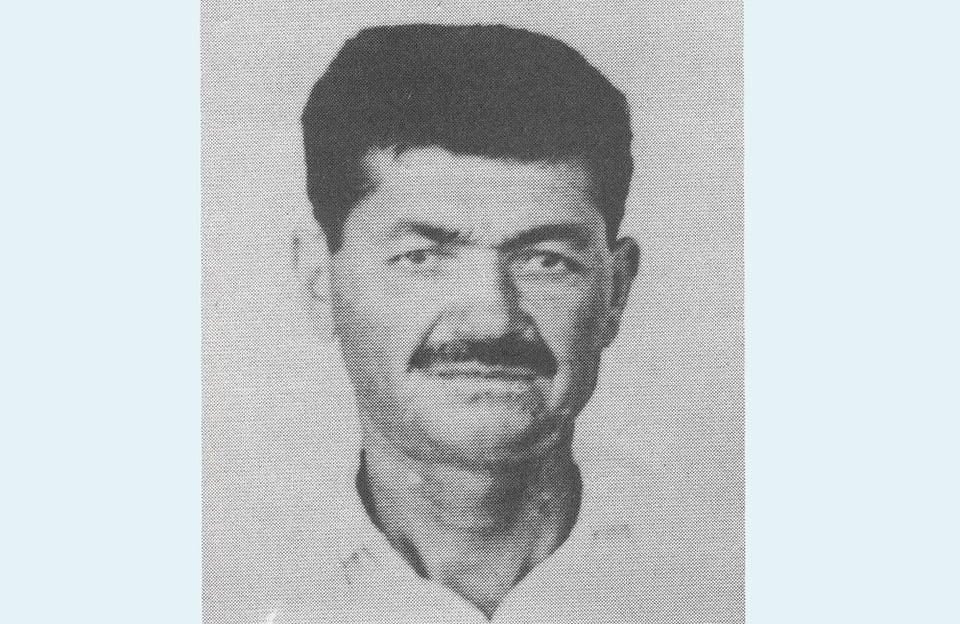
Savvas Menikou:
A member of the Left who opposed the armed struggle of EOKA. He was executed by EOKA on May 23, 1958, on charges of treason in the village of Lefkoniko.
Savvas Menoikos, a father of six children, was an active left-wing trade unionist and spoke out publicly against EOKA and its tactics.
In May 1958, on the orders of the local EOKA sector commander Fotis Papafotis, he was arrested in Lefkoniko while returning from work on his way to the village of Goufes (which was located near Lefkoniko). He was put into a car and driven to the square in Lefkoniko. There, in front of a crowd, he was accused of being a marked traitor. The crowd was ordered to spit on him and call him a “traitor.” Then, they tied him to a tree in the courtyard of his church and according to some accounts stoned him.
It seems that after they had beaten him, they took him to the village, bound hand and foot and gagged. They tied him to the eucalyptus tree two meters from the church courtyard and began ringing the bells, while on the other side of the village, some people were shouting through a megaphone and calling on the crowd to come and witness the punishment of a “traitor.”
There they began to abuse him again. They kicked him, beat him, and spat on him. The victim was still alive. He was gagged with a large cloth. He could not cry out to protest the injustice being done to him. He was breathing deeply, his entire chest rising and falling. He was thrashing about like a fish, seeking to free himself from the torment.
When Savvas was nearly dead, they struck him with a large rock.
According to the account of journalist Christakis Katsambas, a member of AKEL, they tied him to a tree in the churchyard and stoned him to death. While they were stoning him, they stuffed filth into his mouth, spat on him, and cursed him. “As he lay dying, they untied him, threw him to the ground, kicked him, and urinated on his face. And the worst part was that Menikos’s executioners were mainly elementary school children whom the executioners had rounded up with megaphones, while the village priest also took part in the crime.”
In a statement, Sector Chief Papafotis claimed that Menikou died of a heart attack. “I ordered the organization to arrest Menikou, to detain him in a square in Lefkoniko, to call on the people to gather in the square, and after denouncing his anti-national behavior, to release him so he could return to his village. My order was carried out by the fighters exactly as given. Unfortunately, Savvas Menikou could not withstand the people’s boos and died of a heart attack.”
According to Fotis Papafotis, sector commander of EOKA and later of EOKA B΄, in his book Karpasia in the EOKA Strugglehe states that “S. Menikou was burdened with the following:
- When the Greeks of the mixed-ethnicity village Goufes hoisted the greek flag on their houses on Sundays and holidays, he would threaten them, saying, “There they go again, hanging up their old rags. I’m going to the police to have you rounded up.”
- On March 3, 1958, on the anniversary of the death of Gregoris Afxentiou, student events were held in his honor. Menikos beat several students and tore up the Greek flag in front of them.
- "On April 29, 1958, he beat up a young student and then an older student from the Lefkoniko high school, threatening to turn them in to the police." Papafotis was the sector commander responsible for the village of Savvas Menikou.
Savvas Menikou had been working in Dekelia for three years as a laborer in the quarries. Before that, he had been a laborer at the health center in Lefkoniko.
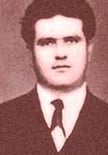
Dimitris Matsoukos:
Dimitris Matsoukos, from Gypsou, Famagusta, was murdered on May 23, 1958.
The murder of Dimitris Matsoukos took place on the same day as that of Menikou, when masked men entered the Gypsou’s kafenion armed; as soon as Dimitris realized what was happening, he fled, and one of the hooded men managed to shoot him in the head.
May 23, 1970 "Holy Battalion" (Jeros Lohos) of the National Front (Ethnikon Metopon) seizes the Limassol police station
The "Holy Battalion" branch of the illegal organization "National Front" carried out its most spectacular operation in Limassol on May 23, 1970: It attacks the city’s central police station, which it seizes.
A secret, illegal, and criminal organization of Greek Cypriots. It was founded by a group whose stated goal was to promote the struggle for the union (ένωσις) of Cyprus with Greece. The founding of the “Front” is dated to late 1968but it first appeared in early 1969 with an assassination attempt on the then-Chief of Police Charalambos Chasapi and through leaflets it distributed.
The “National Front” was a right-wing organization, though its objectives were marked by considerable confusion. It initially emerged as an organization supporting President Makarios, although it acted vigorously and fiercely against Makarios’s close associates and members of the government, against whom it also carried out assassination attempts. At the same time, the “Front” also turned against the Cypriot Left and the AKEL. Documents from this organization stated that the “National Front” was attempting, through forceful means, to compel President Makarios to pursue a policy of immediate union (ένωσις) between Cyprus and Greece, and to this end believed it necessary to strike at Makarios’s close associates. He was also interested in “reforming” the state apparatus.
On August 28, 1969, President Makarios declared the “National Front” an illegal organization.
The “National Front” established contact with and received support from the Greek junta. Its activities, particularly intense in the city and region of Limassol, included bombings, explosions, assaults on civilians, and murders. An offshoot of the “National Front” was the so-called “Holy Battalion” which carried out in Limassol, in May 1970, the organization’s most spectacular operation: the attack on the city’s central police station, which it seized. Specifically, with the slogan “I want the wine” and the reply “Come and get it,” it took place in the early hours of Saturday, May 23, 1970, a spectacular operation by dozens of armed men took place, during which the central police station in Limassol was seized, and weapons and many police cars were stolen. The armed men belonged to the “Holy Company,” a branch of the illegal organization “National Front.”
Following the major operation in Limassol, the Cypriot government launched a counterattack and dealt crushing blows to the “Front,” most of whose leaders were arrested. Moreover, the “Front” itself, composed of disparate elements and characterized by confusion regarding its goals, orientations, means, and tactics, had been fractured since the end of 1969. Following the assassination attempt on President Makarios’s life in Nicosia on March 8, 1970 carried out by a group led by Cyprus’s former Minister of the Interior, Polykarpos Georgatzis, and with which the “National Front” had no connection many members of the “Front” resigned, sending collective and signed confessions to President Makarios, from whom they sought “forgiveness” because they “had been led astray.” However, the members of the “Front” who carried out the attack in Limassol were tried and convicted.
On June 22, 1970, the National Front was dissolved, and on June 24, the Paphos National Front announced in a letter to Archbishop Makarios the immediate dissolution of all its groups in the Paphos district. Other district organizations followed this example, simultaneously surrendering their weapons.
https://www.reddit.com/gallery/1tlbcjz
Posted by Deep-Ad4183
5 Comments
❌ Armed struggle } ⭕ terrorist organisation
[removed]
Why is it called “armed struggle”?
What would EOKA do the Turkish Cypriots? Push them into enclaves?
Papafotis was extremist even by EOKA standards, he disagreed with pretty much everybody else shortly after independence in 1960 and politically isolated himself.
He was working as a religious education teacher in secondary schools into the 80s/90s where he was infamous for doing pro-Junta, counter-Polytechneio propaganda every 17th of November, telling the students that nobody was killed during the suppression of the 1973 uprising in Greece.