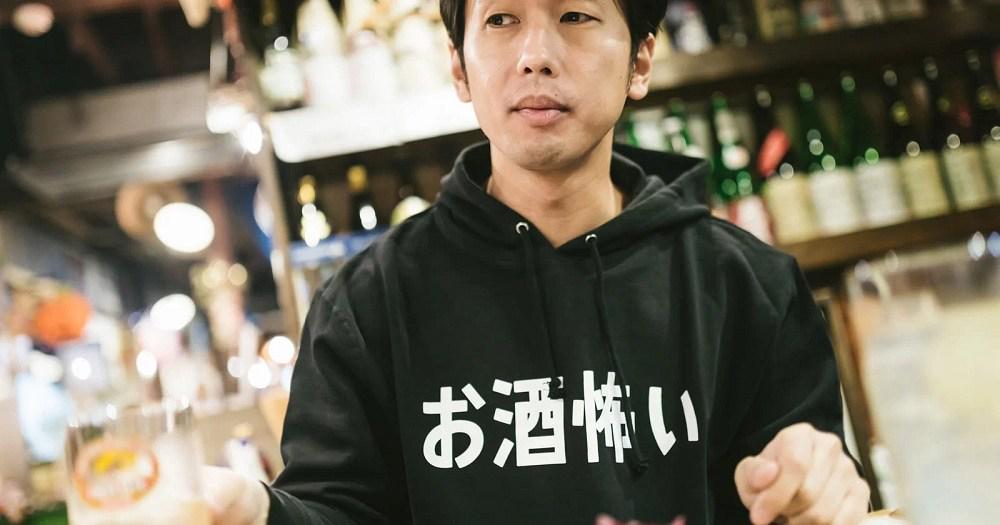
Japan’s izakaya pubs closing at record pace, failing to attract foreign tourists
Japan’s izakaya pubs closing at record pace, failing to attract foreign tourists

Japan’s izakaya pubs closing at record pace, failing to attract foreign tourists
Japan’s izakaya pubs closing at record pace, failing to attract foreign tourists
19 Comments
Hmm I wonder why
Last time I was in Asakusa, most of the izakaya didn’t want gaijin. So many places that were empty to the untrained eye and yet apparently too packed or fully reserved to accommodate. Now it’s a gaijin problem. Got it.
If you want others people’s money, at the very least be nice and hospitable. It’s not that hard.
You mean having a giant sign outside that says “JAPANESE ONLY” isn’t helping business??
I like izakaya for sure, but they’re rarely a place I’d call tourist friendly, let alone foreigner friendly. Many izakaya use hand written menus and traditional prices which are tough to figure out if you don’t read well.
It’s funny because I think they’d be primed to do well with a bit more thought. A lot of tourists travel in groups and izakaya are one of the few places that can accommodate large groups easily.
My first time in an Izakaya in Kyoto as soon as I entered the store the Taisho immediately said “Japanese won’t be an issue will it?” And I’m just like even if I wasn’t able to get by, is it really not worth your money to pop up a translation app for 5 seconds?
“Failing to attract foreign tourists” implies they’re trying at all. The only English words I tend to see in izakaya are on the beer/highball ad posters they get sent by suppliers. Menus are handwritten or stylised print (primarily in kanji) and they don’t write prices in Arabic numerals, so foreign visitors have a tough time figuring out what they’re ordering and how much anything costs.
It’s because none of us living here can afford to go anymore 🫠
Good. Let them all rot.
The original article barely mentions tourism. I think it is extremely unrealistic for the vast majority of izakaya restaurants to attract tourists in the first place, unless they are located in popular tourist areas like Kyoto or central Tokyo. Very few tourists will visit in izakaya in the business districts or residential areas of pretty much any prefecture besides maybe Kyoto, and a relatively limited area of Tokyo.
>Izakaya Bankruptcies Hit Record High: Driven by Soaring Costs and the “5,000 Yen Boundary”
>There is no end in sight to the rising costs of ingredients and utilities. As pressure on consumer wallets intensifies, Japanese pubs (izakayas) are being forced to raise prices on their dishes, change ingredients, or reduce portion sizes. Consumers, plagued by “price-hike fatigue,” find themselves hesitating to stop by for a casual drink, even when they want to.
>Between January and April 2026, bankruptcies among izakayas surged to 88 cases, a 54.3% increase compared to the same period last year. This significantly surpasses the 59 cases recorded in 2024, marking the highest number of bankruptcies for this timeframe since data tracking began in 1989.
>This data was compiled and analyzed by extracting bankruptcies of izakayas (with liabilities of 10 million yen or more) from Tokyo Shoko Research’s corporate database for the January–April period.
>A Mirror of the Economy
>Izakayas have traditionally accommodated a wide range of customers—from corporate employees and students to families—with large major chains and local neighborhood joints coexisting. Because of this broad customer base, the economic health of the izakaya industry has always served as a mirror reflecting societal trends.
>2003 (Dot-com Bubble Burst): Bankruptcies hit the 20-case mark for the first time.
>2007 (Just before Road Traffic Act revisions): Cases rose to 39.
>2012 (Post-Great East Japan Earthquake): Widespread self-restraint in dining out pushed bankruptcies up sharply to 50 cases.
>During the COVID-19 pandemic, however, bankruptcies were temporarily suppressed due to the widespread distribution of business suspension subsidies and various financial support measures.
>Yet, the moment the pandemic settled down, the industry was hit by a wave of rising costs for ingredients, utilities, and labor. Combined with intense competition from specialized eateries (such as yakiniku BBQ restaurants) and the rise of food delivery services, izakaya bankruptcies shifted into an upward surge.
>Breaking Through the “5,000 Yen All-You-Can-Drink” Wall
>As successive price hikes reduced the availability of sub-5,000 yen “all-you-can-drink” (nomihodai) courses—historically the main selling point and charm of izakayas—consumers abruptly tightened their purse strings.
>Furthermore, the pandemic triggered a permanent decline in traditional corporate gatherings like year-end (bonenkai), New Year (shinnenkai), and welcome/farewell parties, as well as business entertainment. For many, an invitation from a boss, senior colleague, or coworker to “go out for a drink” now feels like a psychological burden. Workplace reforms, remote work, and reduced overtime hours may also be playing a role.
>On top of this, consumer behavior is shifting; instead of visiting standard izakayas, more people are choosing to cut back on alcohol consumption overall and spend their money at yakiniku or Italian restaurants instead.
>Above all, consumers are adopting defensive lifestyle measures to resist inflation—such as drinking at home to stay within budget. This modest resistance is further accelerating the hardships faced by the izakaya sector.
>Outlook
>The harsh environment is set to continue for izakayas that fail to capture the booming inbound tourist demand, leaving them reliant solely on domestic corporate workers. Caught in a price war driven by inflation and suffering from declining foot traffic, many establishments are trapped in a downward spiral. The shakeout of the izakaya industry is likely to continue for some time.
Aren’t these places routinely refusing to serve foreigners? Seems like an unforced error.
Torikizoku ftw!!!!
“failing to attract foreign tourists”
Then don’t put Japanese only on the goddamn front door?…..
I’ve never been a huge fan of the izakaya. Yeah the food is fine, but I don’t like the constant shouting whenever people come and go, the smoke, the cramped nature of the establishments, and with separated seating almost zero chance of meeting anyone new that isn’t sitting next to you.
Perhaps that’s the reason tachinomi seems to be catching on (here in Kyushu at least) and well, with Japans population deficit becoming an emergency, introducing more places where people can actually mingle better might be a wise move forward!
At least have english menu. Just make simple google translate version. It is easy and tourists do not mind. We respect Japanese.
I tried to go in one and got turned away before I’d even got up the steps.
You do realize the World Cup is around the corner right?
I am happy with Torikizoku anyway
How do you plan on attracting foreign tourists when you put a BIG sign on your door that says “NO FOREIGNERS!”?
Make it makes sense…
but did they open at a record pace? just wondering.
yeah…at least here in states….gen z and alpha don’t drink.