In South Asia it is also called Bakrid or Bakra Eid (Goat Eid)
kamikazekaktus on
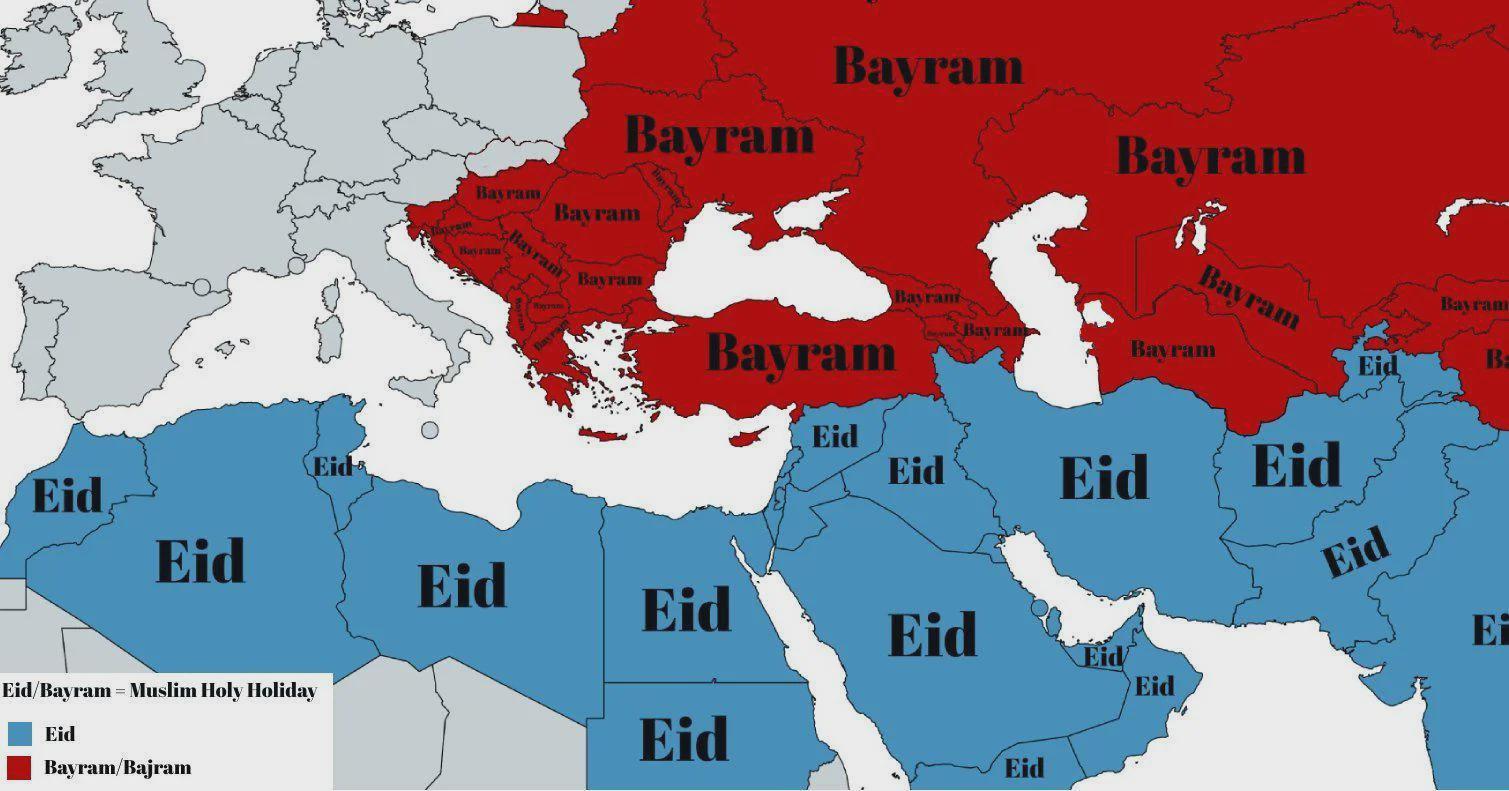
Is there any explanation for the split? Like language families for example?
Less-Most-2861 on
Good map, but in Turkish, “Bayram” refers to any fixed celebration/festivity(not just religious or islamic, but also secular celebrations)
For example, the Turkish expression for Easter is “Paskalya Bayrami” or The Republican Day or 1923 is known as “Cumhuriyet Bayrami”
Neo_luigi on
What is bayram if anyone can explain
NotBradPitt9 on
Merry Christmas guys!!
Gold_Knight_13 on
I wonder how different this map would be if most languages in these areas were considered.
Like how Eid is “axtár” (اختر) in Pashto (in both Afghanistan and Pakistan), or a celebration in general in some contexts.
I’ve heard Kurdish has a different word too, not sure.
tcsreject on
What do they call in England ??
Wandering-Paradox on
Bit oversimplified, some minorities in these countries use a completely different name
Sakeetkat on
As an Uyghur Turk, both exist in Uyghur but the most dominantly used one is Eid (or, as we pronounce it, Id/Yit)
Emergency_Skill419 on
Bayram originates from the Persian word Bahram (The deity Mars)
FengYiLin on
Interesting exception where Persian sides with Arabic instead of Turkish
prplt on
surprised that Tajikistan is blue rather than red
Hot-Job-6281 on
Missing the largest Muslim countries in the world. Absolutely not r/MapPorn level.
jalanajak on
“Корбан ГАЕТЕ” is also in use in Tatar, but in a more religious context.
Also in several other Turkics, including Ottoman Turkish (“İyd”)
ulpnn on
Turk is more good
cyanopsittaspixiiiii on
Ottomans used Eid, the people did use Bayram but it only replaced Eid in formal language in 1921, during the purification of language period.
Old Turkic: [Kaşgarî, Divan-i Lugati’t-Türk, 1073]
bayrām: yawma’l-ˁīd [Eid al-Adha] [[Oghuz. I think it is derived from the word baḏram (joy, entertainment) in the vernacular, because the day of Eid is also a day of joy and happiness. (…) The word bayram is used in this sense only by those who make ḏ into y in their own dialects (Oghuz and Kipchaks).]]

20 Comments
Why east europe
*Cejn* in Kurdistan.
In South Asia it is also called Bakrid or Bakra Eid (Goat Eid)
Is there any explanation for the split? Like language families for example?
Good map, but in Turkish, “Bayram” refers to any fixed celebration/festivity(not just religious or islamic, but also secular celebrations)
For example, the Turkish expression for Easter is “Paskalya Bayrami” or The Republican Day or 1923 is known as “Cumhuriyet Bayrami”
What is bayram if anyone can explain
Merry Christmas guys!!
I wonder how different this map would be if most languages in these areas were considered.
Like how Eid is “axtár” (اختر) in Pashto (in both Afghanistan and Pakistan), or a celebration in general in some contexts.
I’ve heard Kurdish has a different word too, not sure.
What do they call in England ??
Bit oversimplified, some minorities in these countries use a completely different name
As an Uyghur Turk, both exist in Uyghur but the most dominantly used one is Eid (or, as we pronounce it, Id/Yit)
Bayram originates from the Persian word Bahram (The deity Mars)
Interesting exception where Persian sides with Arabic instead of Turkish
surprised that Tajikistan is blue rather than red
Missing the largest Muslim countries in the world. Absolutely not r/MapPorn level.
“Корбан ГАЕТЕ” is also in use in Tatar, but in a more religious context.
Also in several other Turkics, including Ottoman Turkish (“İyd”)
Turk is more good
Ottomans used Eid, the people did use Bayram but it only replaced Eid in formal language in 1921, during the purification of language period.
https://tr.wikipedia.org/wiki/%C4%B0yd_M%C3%BCbarek
Wtf it’s Eid.
Old Turkic: [Kaşgarî, Divan-i Lugati’t-Türk, 1073]
bayrām: yawma’l-ˁīd [Eid al-Adha] [[Oghuz. I think it is derived from the word baḏram (joy, entertainment) in the vernacular, because the day of Eid is also a day of joy and happiness. (…) The word bayram is used in this sense only by those who make ḏ into y in their own dialects (Oghuz and Kipchaks).]]