
![[OC] Average Housing prices, monthly rents and utility benchmarks across EU capitals](https://www.byteseu.com/wp-content/uploads/2026/06/0671600o6w4h1-1024x578.jpg "[OC] Average Housing prices, monthly rents and utility benchmarks across EU capitals")
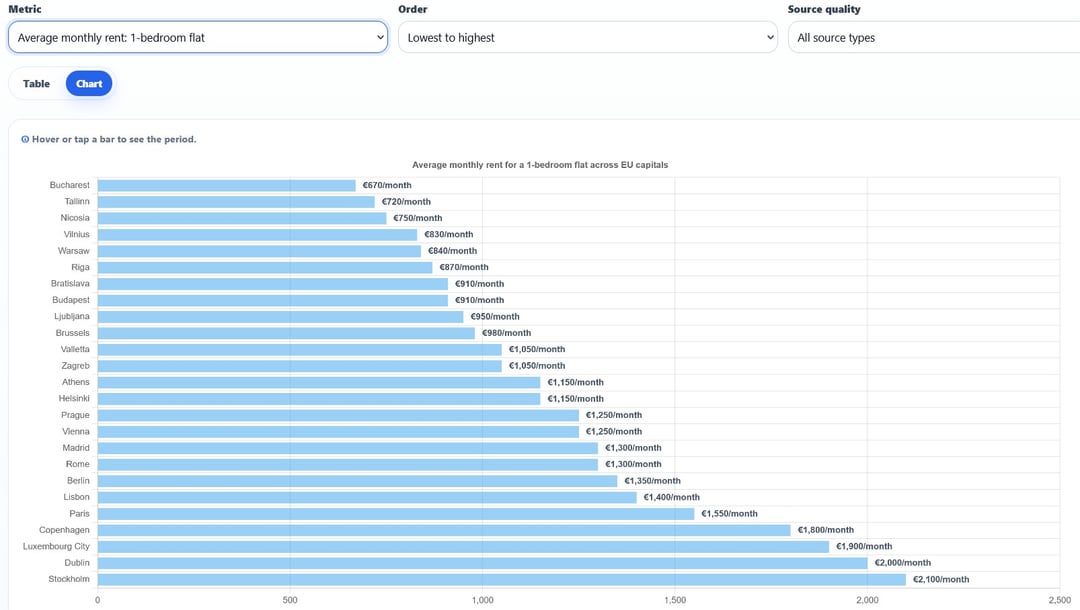
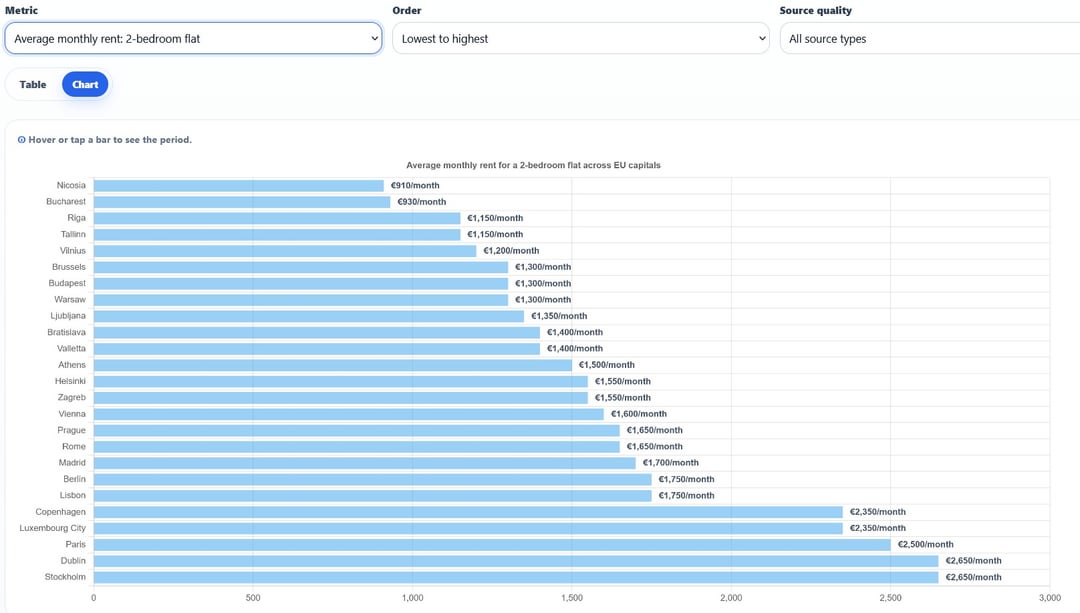
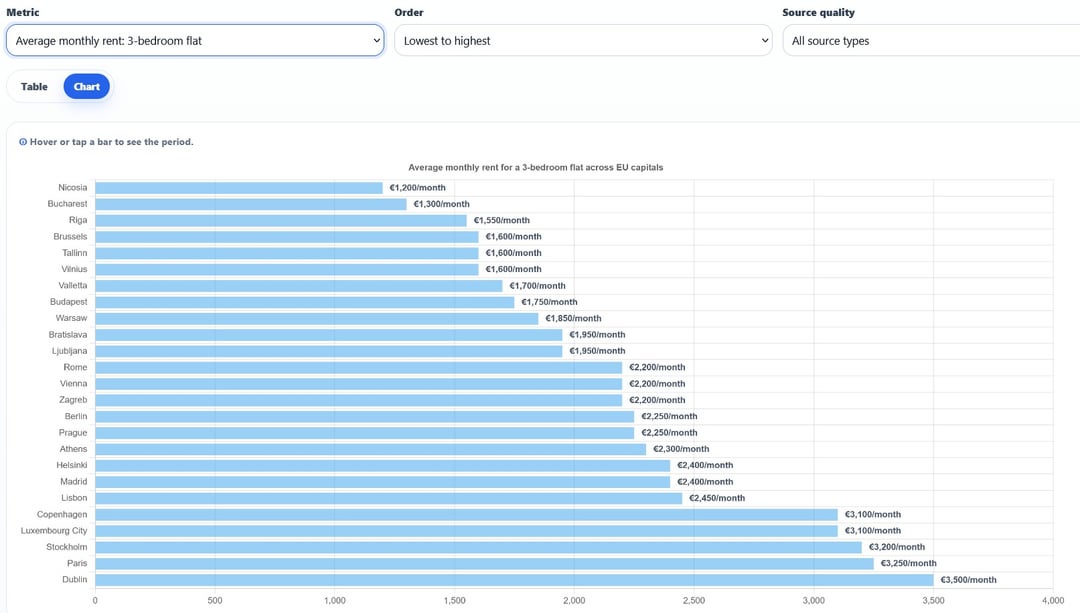
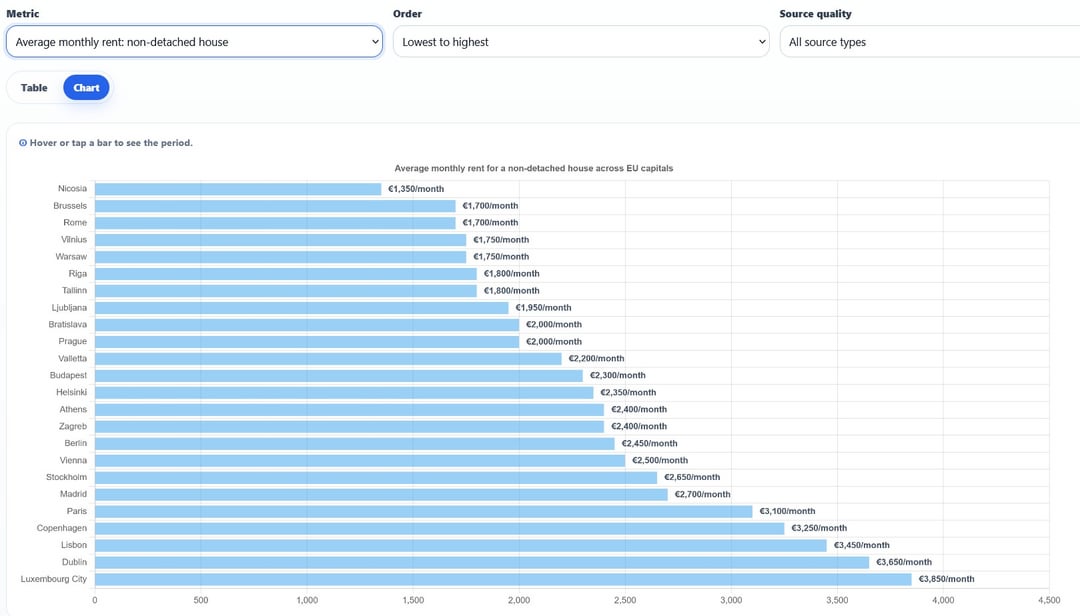
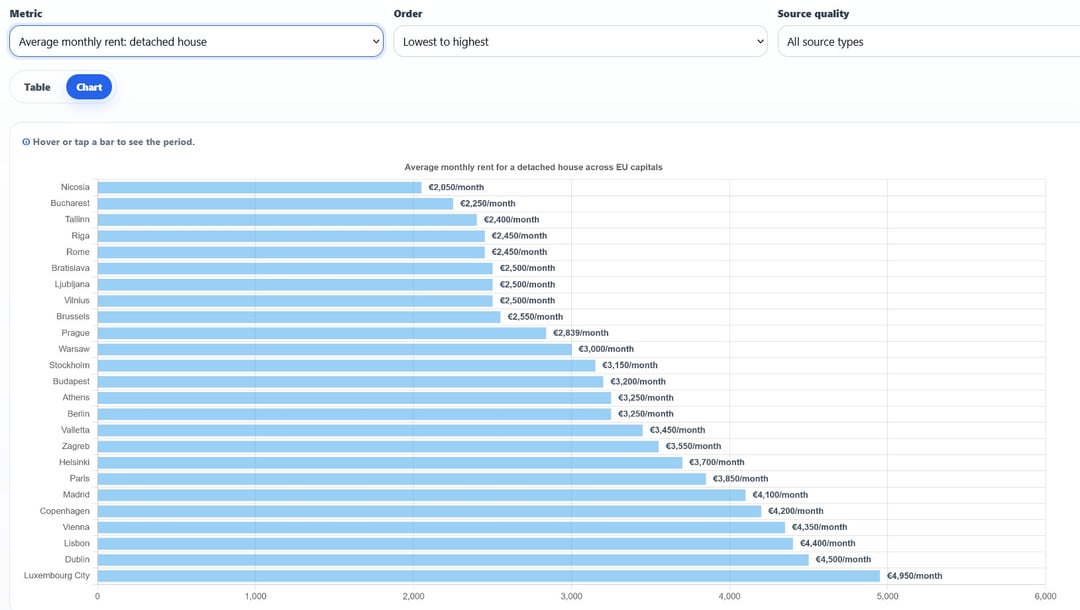
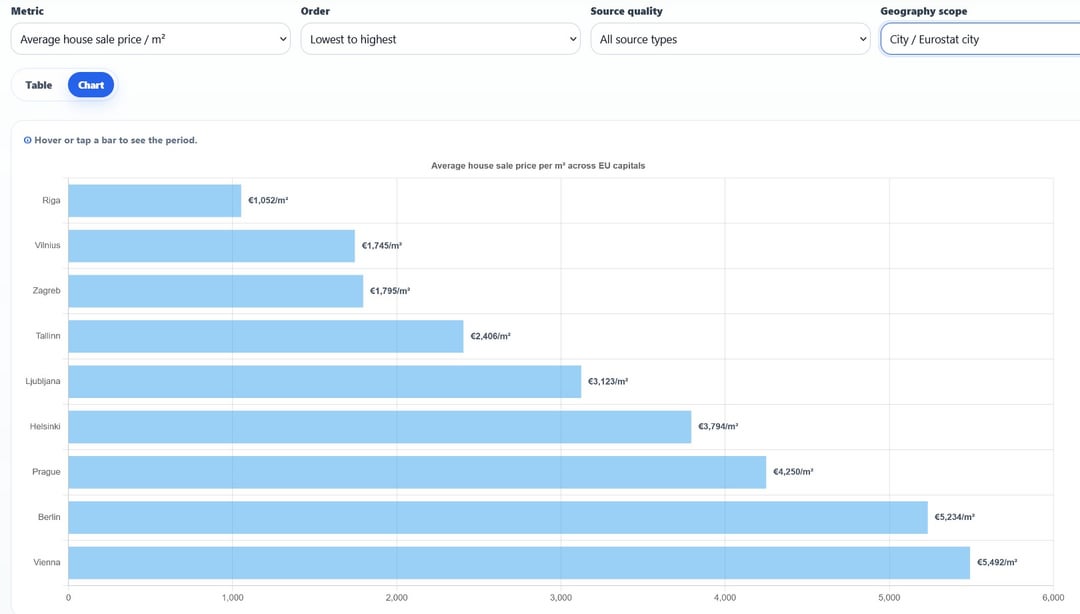
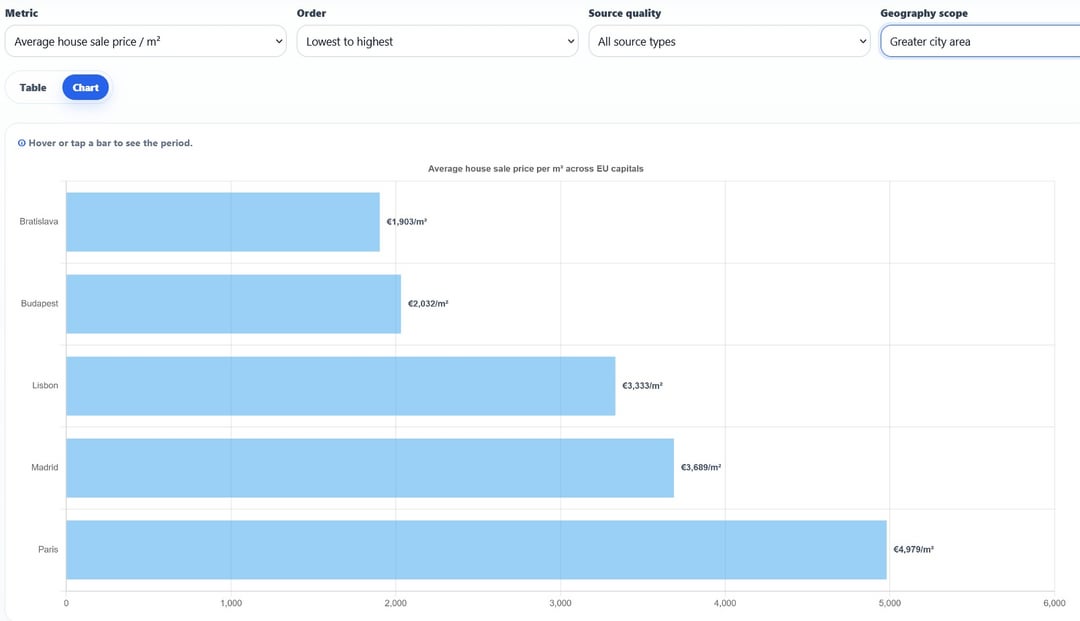
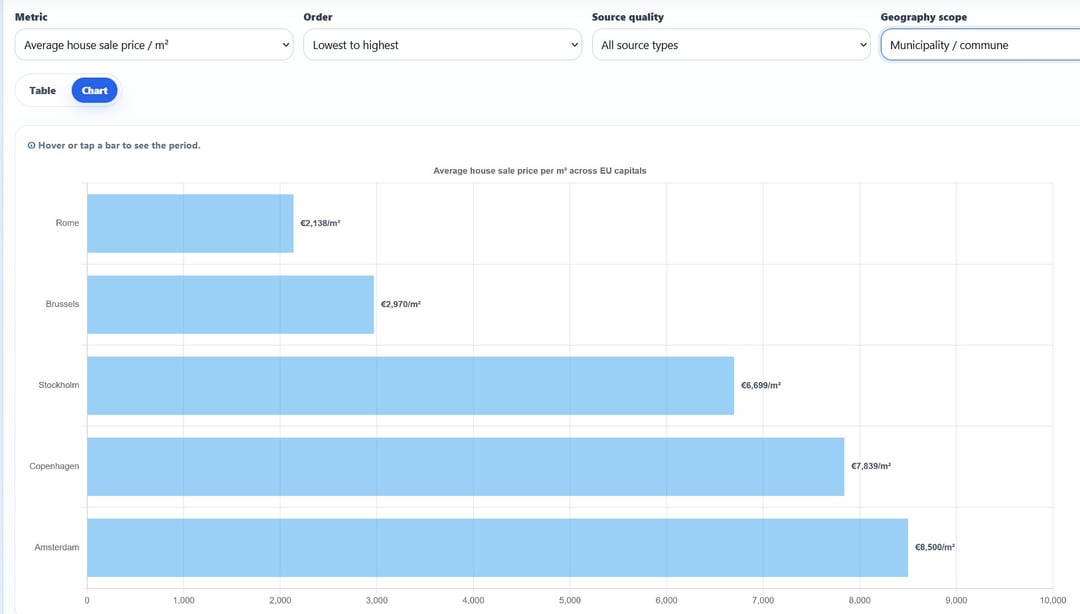
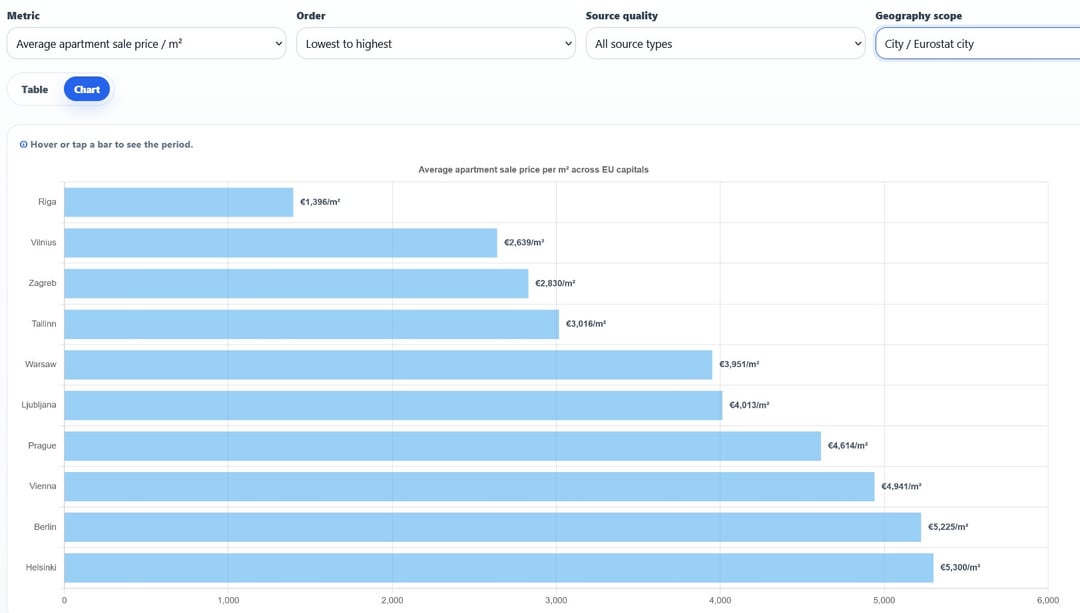
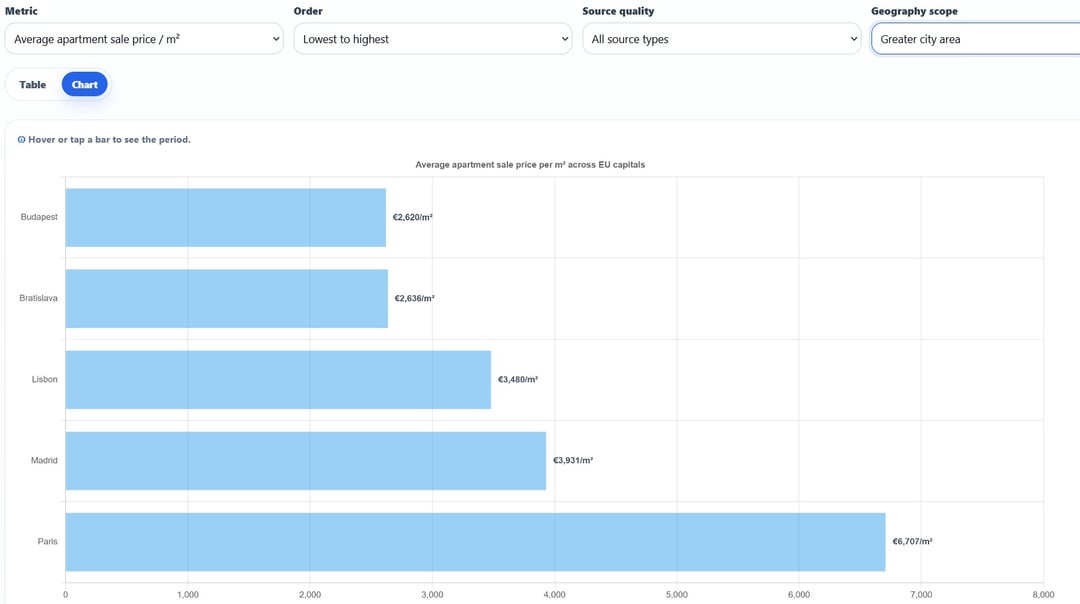
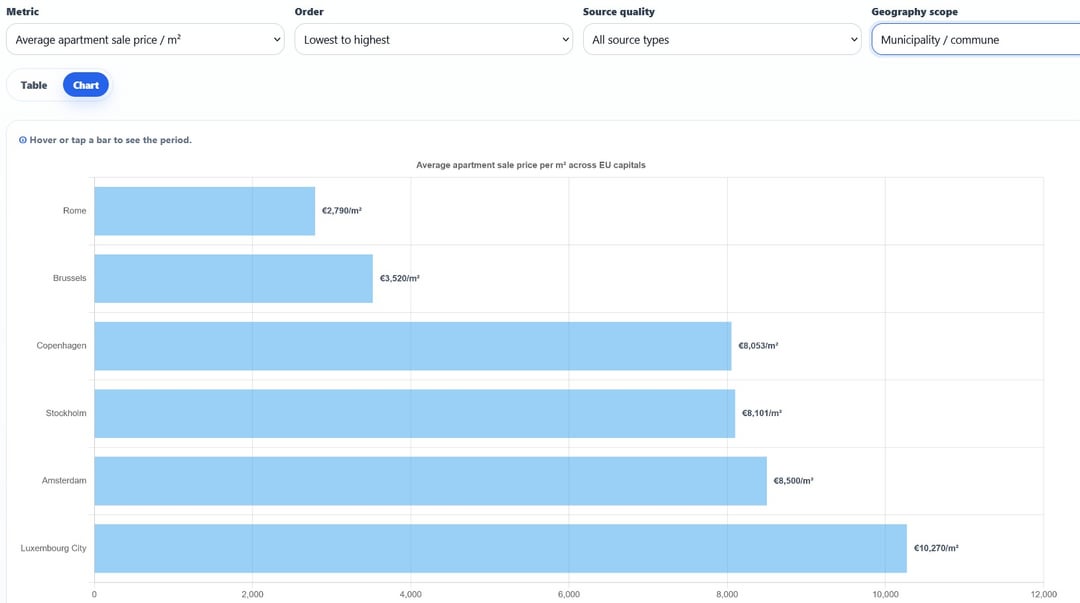
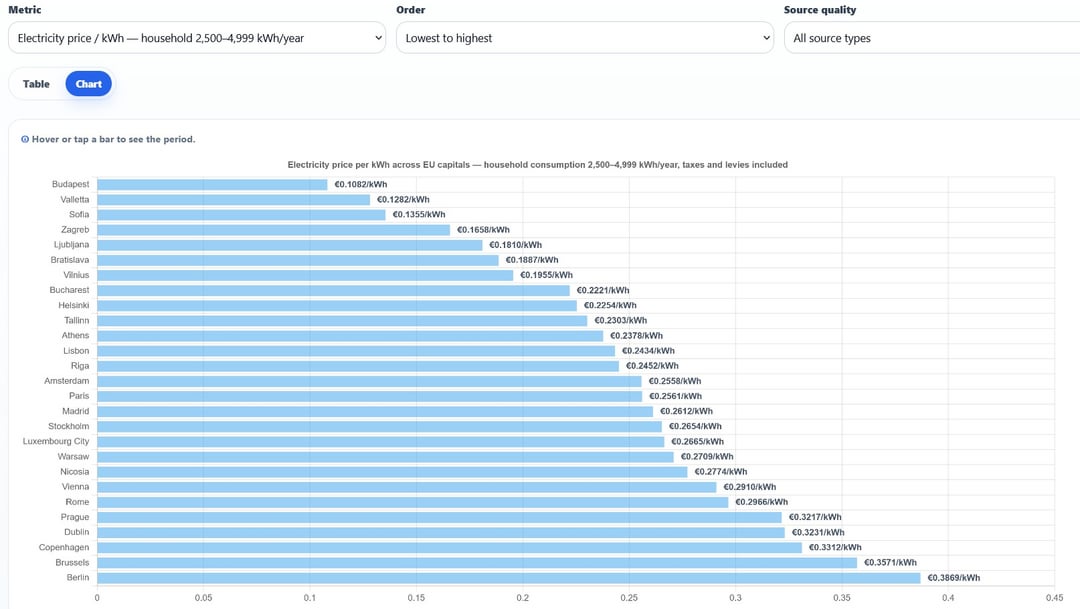
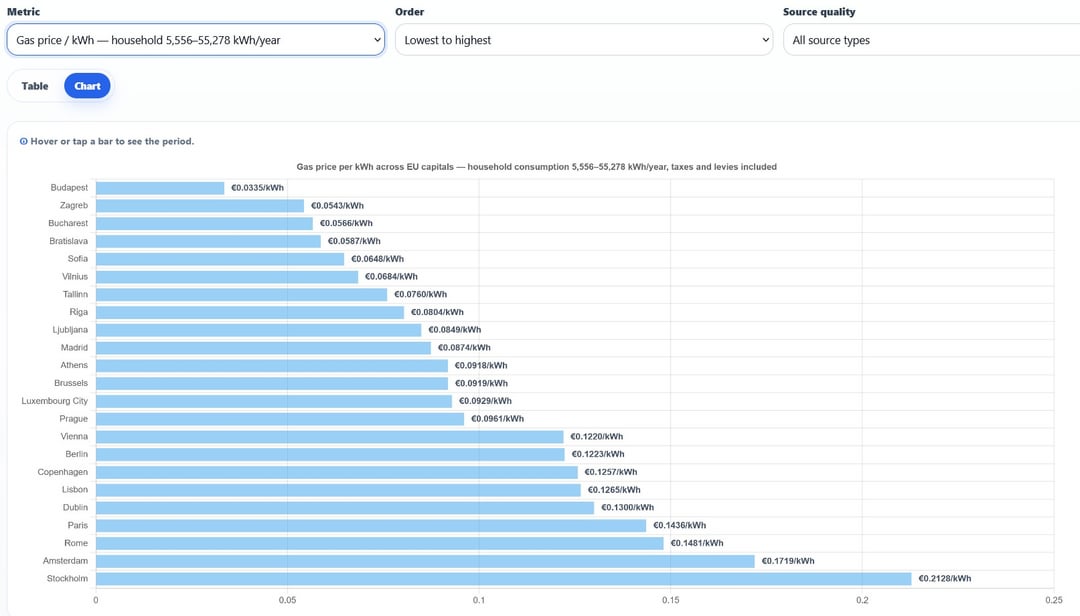
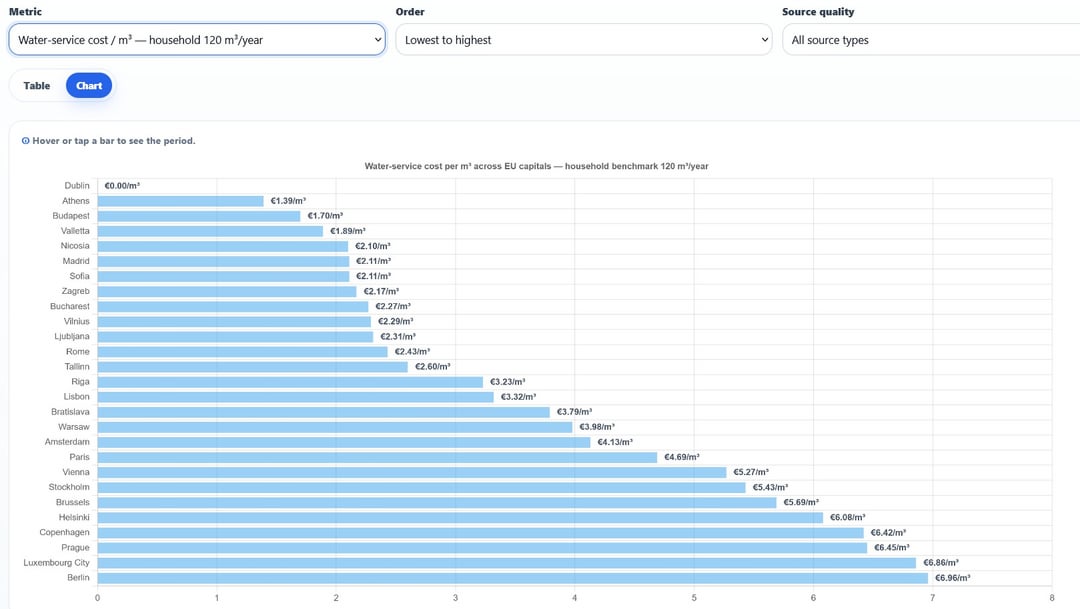
All data is source-linked, with the methodology, reference period and geographic scope of each value clearly shown.
The metrics in the charts are: average sale price per m² for apartments and houses, average monthly rents by dwelling type, household gas prices per kWh for annual consumption between 5,556 and 55,278 kWh, household electricity prices per kWh for annual consumption between 2,500 and 4,999 kWh, and water prices per m³ based on annual consumption of 120 m³.
For monthly rents by dwelling type, I used Eurostat / ISRP market-rent benchmarks. These are survey-based values collected from estate agencies for selected neighbourhoods in each city covered by the survey, excluding utilities and other running costs. They should be read as comparable rent benchmarks, not as official city-wide average rents.
For sale prices per m², different geographic scopes are used depending on the source, such as city, greater city area, municipality or commune. In the website users can filter the rankings by geography type, for example city vs city, greater city area vs greater city area, municipality/commune vs municipality/commune, or view all available data together for general comparison.
For electricity and gas, I used Eurostat national household price benchmarks, so these are country-level values rather than city-specific tariffs. For water, the source varies by city: where available, I used local, municipal or utility tariffs; otherwise, I used the best available national benchmark or public-data-based proxy.
Sources:
- Housing sale prices per m² are mainly based on Eurostat data where available. When Eurostat did not provide suitable data, national government sources, municipal sources, or reliable real-estate market/media sources were used.
- Monthly rents by dwelling type, electricity prices and gas prices are based on Eurostat data. Water prices are based on the best available local or national public source for each city. In some cases, the value is an official tariff or benchmark; in others, it is a public-data-based proxy normalised to typical household consumption.
Disclaimer: I built the website.
The website also includes an interactive map where users can search for a city and instantly see all available data, together with the source, methodology and geographic scope. There is also a ranking section that allows users to view the data either as a table or as a chart, as well as a city-vs-city comparison tool. For this initial version, I decided to focus only on European Union capitals, with the goal of expanding to more cities worldwide in the future if possible.
I posted this a few hours ago, but deleted it because some of the images contained errors.
Sources and methodology: citycostatlas.com
Posted by miguelsims12
10 Comments
the graphs provide 0 useful data without a comparison with minimal/median wage in those countries. + its clear that it was vibecoded. ugly data
You should at least list all EU capitals.
[removed]
Prague – Western prices for Eastern wages. In more ways than just housing.
Even numbeo data is more accurate than this
No one except for tech expats (fuck them, leave our city) would pay 1350€ for a one bedroom apartment in berlin
We are getting ripped off in the US.
That seems lower than i would expect. I’ve seen single rooms in Dublin for rent for 1,000 Euros.
What are the boundaries being used? Is it the metropolitan areas, or the traditional city limits?
“I built the website.”
No, you did not. It’s clearly vibecoded. Personally, I have zero problems with vibecoding, just don’t claim this is your code.
Amsterdam is missing in the graph. A 40m2 studio goes for €1400 a month, a 50m2 1 bedroom sells for €450k.