
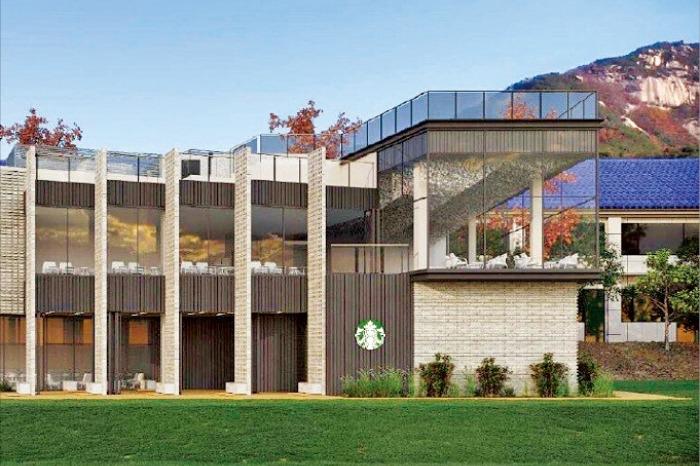
Starbucks Korea backlash spills into South Korea's real estate market
More landlords are seeking exits as the nationwide boycott pressures store sales, rental income and building values
By Yeon-Su Woo / Published June 2, 2026 at 9:16 PM(KST)
—-
For years, landing a Starbucks tenant was one of the surest ways for Korean landlords to boost a building's value. The coffee chain paid reliable rent, drew steady foot traffic and gave otherwise ordinary retail properties the cachet of a marquee asset.
That equation is rapidly changing.
A boycott sparked by Starbucks Korea's "Tank Day" marketing controversy is rippling through South Korea's commercial property market, prompting some landlords to put Starbucks-leased buildings up for sale or switch tenants as weakening store sales threaten rental income.
As of June 2, 32 Starbucks-occupied buildings were listed for sale by a major commercial property brokerage, according to industry officials. That is up about 60% from roughly 20 listings in mid-April.
The properties include several well-known locations among locals, including stores near Bukhansan and in Seoul's Hannam-dong and Samcheong-dong neighborhoods.
The shift marks a reversal for a brand long viewed as a so-called super tenant among Korean property owners.
A Starbucks lease was once seen as a guarantee of stable income and stronger valuations.
Now, the boycott and broader frustrations with the company's sales strategy are prompting some landlords to rethink that assumption.
WEAKER SALES, SOFTER VALUES
Some Starbucks-occupied properties have already been sold at a discount.
Starbucks' The Yangpyeong Drive-Thru store, a popular location overlooking the Namhan River in Gyeonggi Province, sold for 13.4 billion won ($9 million) last October, 4.8 billion won below its appraised value.
A building leased to Starbucks near Konkuk University in eastern Seoul changed hands this year for 24.5 billion won, down 4.3% from its 2021 sale price.
In central Seoul's Cheongjin-dong, the asking price at a public auction for a three-story Starbucks building fell to 7.4 billion won from 10.4 billion won over two months, yet still failed to attract a buyer.
Industry officials said another 15 Starbucks landlords recently approached the same brokerage about potential sales.
Part of the concern stems from how Starbucks structures its leases in Korea.
The company operates all of its stores through leases rather than owning the underlying properties. Most landlords receive rent tied to store revenue, typically 12% to 15% of sales.
The arrangement can be lucrative when business is strong. When sales weaken, rental income and property values can come under pressure simultaneously.
Average monthly rent per Starbucks store has already fallen from 16.55 million won in 2023 to 15.68 million won this year.
The decline appears to have accelerated since the controversy surrounding the company's "Tank Day" campaign, which started on May 18.
According to Hankyung Aicel data, estimated credit card spending at Starbucks Korea totaled 21.2 billion won during the week of May 24-30, marking a second consecutive weekly decline.
The figure was down 33.5% from 31.9 billion won in the second week of May, before the controversy erupted.
"I check on the store almost every day because I'm worried about how sales are trending," said a landlord who owns a Starbucks drive-through property in Gyeonggi Province.
A local real estate broker who runs his own agency said more owners are considering an exit.
"There are plenty of landlords who would sell if they could get the right price," he said.
THE BOYCOTT EFFECT
The property market jitters follow a public backlash over Starbucks Korea's "Tank Day" tumbler promotion, which launched on May 18, the anniversary of the 1980 Gwangju Democratic Uprising.
Critics said the campaign invoked memories of the brutal military crackdown on pro-democracy protesters in Gwangju, where troops were deployed with armored vehicles, guns and bayonets, as well as other painful chapters of South Korea's authoritarian era.
Starbucks Korea withdrew the promotion, apologized and sacked its chief executive, but the boycott has continued to weigh on the brand.
For landlords, the issue is less about reputational damage than economics.
A prolonged decline in store sales would translate directly into lower rent for landlords with revenue-linked leases.
For owners who paid premium prices for Starbucks-anchored properties, weaker sales could also make those assets harder to sell.
The controversy has also intensified existing tensions between Starbucks Korea and some landlords over the company's subscription-based promotions.
FRICTION OVER DISCOUNTS
A paid membership program known as the Buddy Pass has become another flashpoint.
Introduced in October 2024, the service allows customers who pay 7,900 won a month to receive a 30% discount on custom-made beverages after 2 p.m.
Some landlords argue that the program erodes store revenue, the basis for calculating rent, while subscription fees flow to Starbucks.
Starbucks has countered that the Buddy Pass draws more customers and encourages additional purchases, ultimately supporting sales.
The dispute has already prompted some landlords to file a class-action lawsuit.
According to court filings by Starbucks, discounts accounted for 10.9% of sales at 26 stores between January and April last year, up 1.4 percentage points from a year earlier. Landlords argue that as discounts rise, the sales used to calculate rent inevitably fall.
One landlord who owns a Starbucks drive-through property in Busan said, however, that many owners remain hesitant to challenge the company publicly.
"Sales have dropped sharply since the controversy, but landlords worry that pushing back could jeopardize their lease agreements," the landlord said.
"Most are unhappy, even if they don't say so publicly."
https://www.kedglobal.com/business-politics/newsView/ked202606020008
Posted by Ok-Huckleberry5836
2 Comments
Seems bizarre that most leasing arrangements are related to sales. I would have assumed places just paid a fixed rent. Is this normal commercially world wide? Unique to Korea? Unique to Starbucks? Does the landlord get to see their books and audit their sales – how do you know whether you’re getting the right amount?
I couldn’t get a seat in one on election day last week.