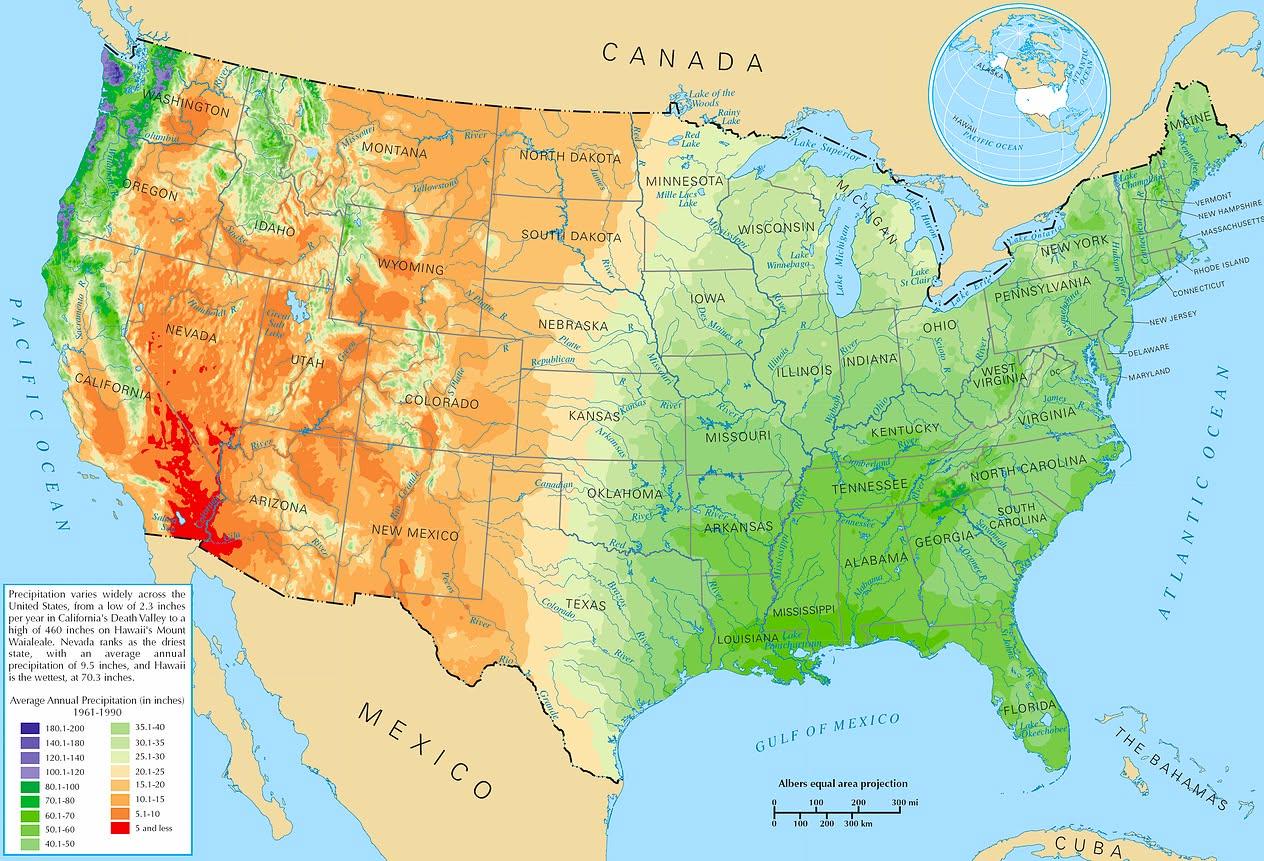
One of the most noticeable patterns on this map is the contrast between the wetter eastern United States and the much drier interior West.
A major reason is the Rocky Mountains. As moist air from the Pacific is forced upward over the mountains, much of its moisture falls as rain or snow. By the time that air descends on the eastern side, it is considerably drier, helping to create the semi-arid and arid landscapes that characterize much of the American West.
Fred42096 on
I’ve always been curious about MN’s precipitation. I don’t really think of it as a “dry” place, yet it shares rainfall levels with places like the Texas interior
reptilianwerewolf on
The spot in western North Carolina that gets 100 inches of rain is interesting. Highest average precipitation in the eastern US.
davidw on
The rainshadow effect from the Cascades is pretty amazing. I rode my bike over McKenzie Pass a few weeks ago and you go from sagebrush and pine trees in Sisters to very lush, wet, green forests on the west side in just 40 miles.
SquashDue502 on
Proud of my home state for that blob of temperate rainforest in western NC lol
rayrayww3 on
As someone that has lived in the Washington Cascade range, seems accurate.

6 Comments
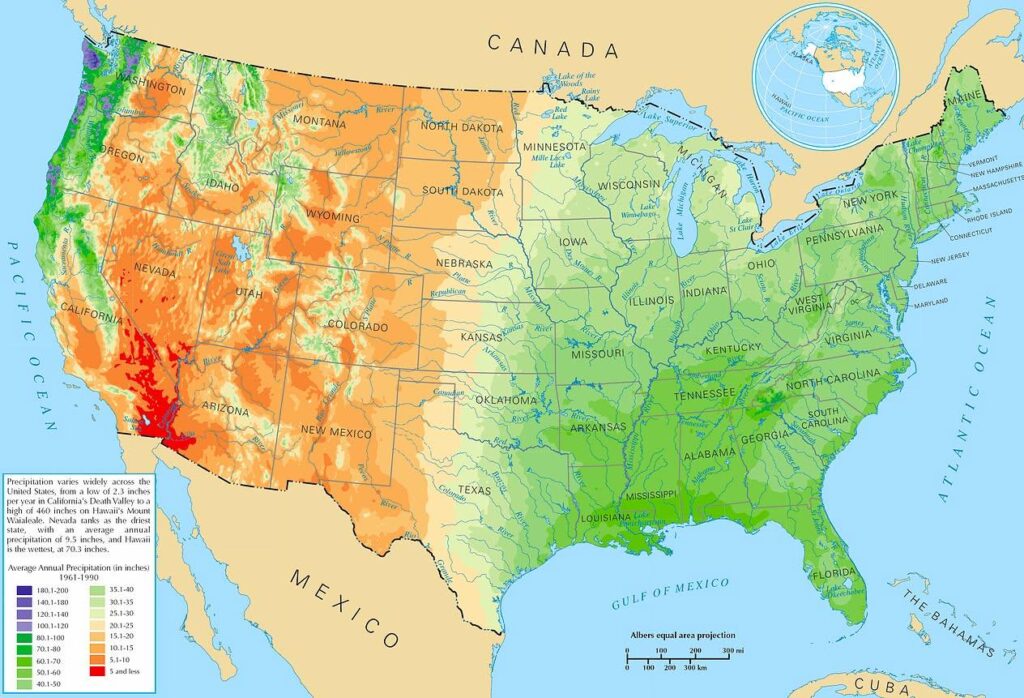
One of the most noticeable patterns on this map is the contrast between the wetter eastern United States and the much drier interior West.
A major reason is the Rocky Mountains. As moist air from the Pacific is forced upward over the mountains, much of its moisture falls as rain or snow. By the time that air descends on the eastern side, it is considerably drier, helping to create the semi-arid and arid landscapes that characterize much of the American West.
I’ve always been curious about MN’s precipitation. I don’t really think of it as a “dry” place, yet it shares rainfall levels with places like the Texas interior
The spot in western North Carolina that gets 100 inches of rain is interesting. Highest average precipitation in the eastern US.
The rainshadow effect from the Cascades is pretty amazing. I rode my bike over McKenzie Pass a few weeks ago and you go from sagebrush and pine trees in Sisters to very lush, wet, green forests on the west side in just 40 miles.
Proud of my home state for that blob of temperate rainforest in western NC lol
As someone that has lived in the Washington Cascade range, seems accurate.