
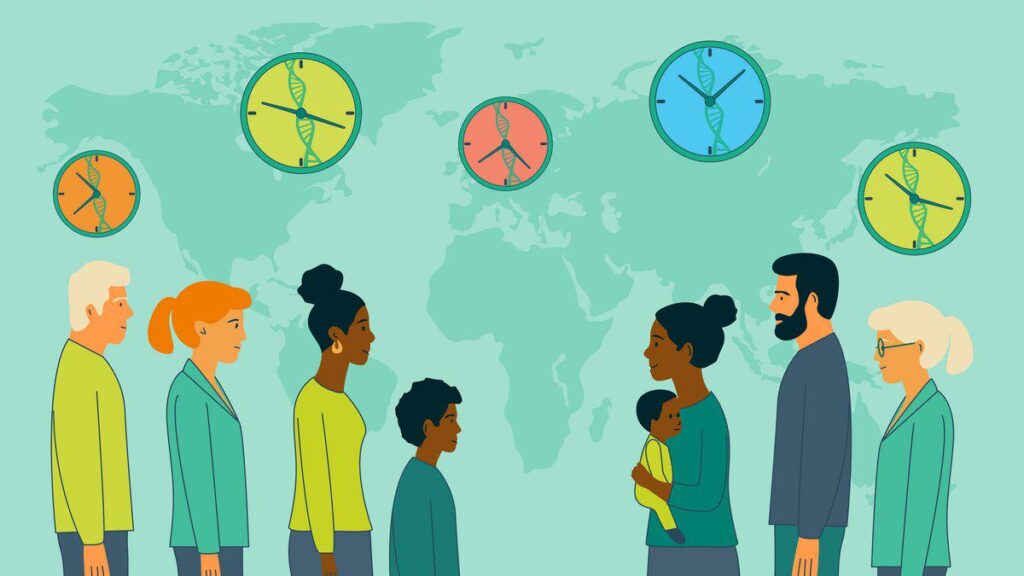
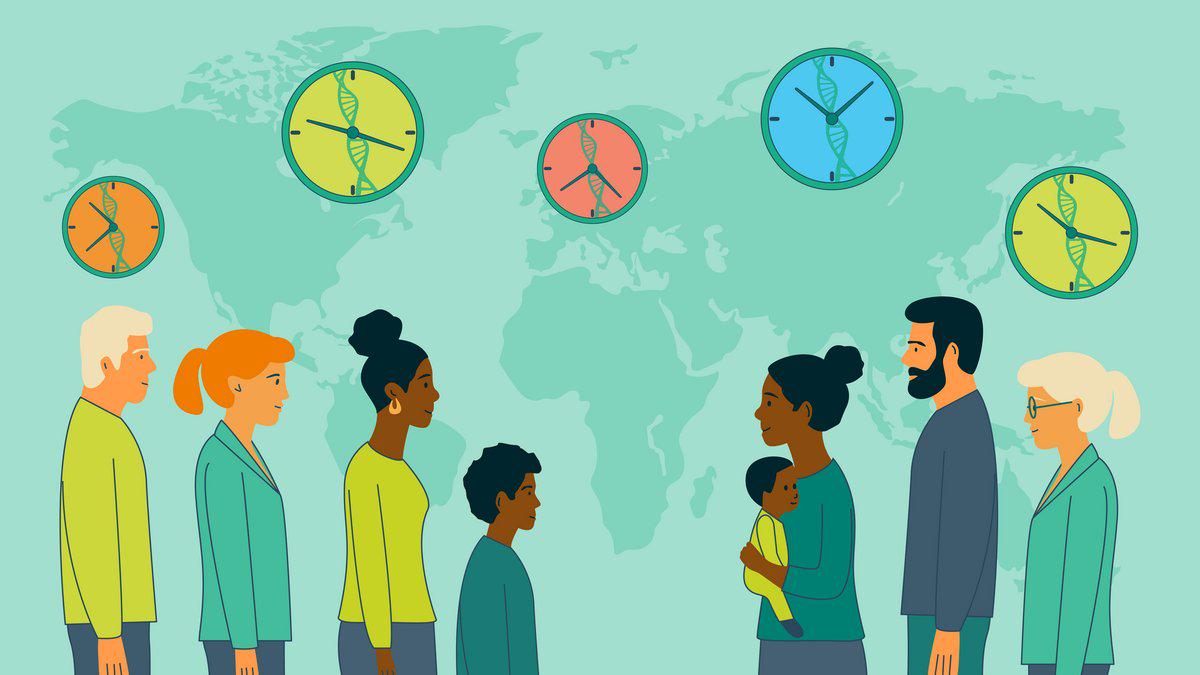
Research has found social inequality is linked to faster biological aging. Evidence of accelerated biological aging associated with social disadvantage is already visible in children, indicating that social inequality can shape biology from a young age.
https://www.mpib-berlin.mpg.de/2370223/pm-2026-june-biosocial-1
5 Comments
The study, conducted by the Biosocial team at Max Planck Institute for Human Development in collaboration with Columbia University in New York, demonstrates that social inequality, such as poverty and racism, are related to biological aging measured in the epigenome, also known as “epigenetic clocks”. Epigenetic clocks analyze patterns of chemical marks on DNA to estimate a person’s biological age or the rate at which their body is aging. These tools are increasingly used by scientists to study how environmental exposures, lifestyle, and social conditions affect health across the life course.
Previous individual studies have shown that epigenetic clocks are sensitive to socioeconomic and racial or ethnic disparities. However, because multiple types of epigenetic clocks exist, it has remained unclear which measures best capture the effects of social determinants of health, at which stages of life socioeconomic exposures most affect epigenetic aging, and whether associations differ by sex or by technical factors such as the tissue in which epigenetic data are collected. This study integrates findings across many independent studies offering a comprehensive test of whether these associations are consistent and robust.
Newer biological aging measures are most sensitive to social conditions
The study reveals a robust pattern: people experiencing social disadvantage tend to show faster biological aging, and this association was strongest when using the newest generation of epigenetic clocks. First-generation clocks—designed primarily to estimate chronological age—are weakly associated with socioeconomic conditions. In contrast, second-generation clocks, which reflect health and mortality risk, and third-generation clocks, which measure the pace of aging, show substantially stronger associations with socioeconomic conditions.
Evidence across the lifespan
The study also indicates that social inequality influences biological aging from early in life: children growing up in lower socioeconomic circumstances already show signs of faster biological aging when measured using newer epigenetic clocks. The study further finds that adults who grew up in disadvantaged families tend to age faster biologically later in life, even decades after childhood exposures.
Social disparities reflected in biological aging
The researchers also examined racial and ethnic disparities in biological aging. In U.S.-based studies included in the analysis, Black participants show faster biological aging than white participants when measured with second- and third-generation clocks. Differences between Latinx and white participants are also observed, though somewhat smaller.
https://www.nature.com/articles/s41562-026-02477-6
I don’t get this is news.
Of course would social disadvantage of yours parents be largely inherited.
Of course would it manifest in consumer behavior and thus health.
It’s not really a question if it’s present but it’s a huge question what we can and should do about it.
A question that can not only be based on statistics but is largely social and also philosophical.
Which? Inequality or poverty? America has high inequality and low poverty. Cuba has high poverty and low inequality.
Doesn’t make sense to me that this would be the result of inequality. Poverty, yes, but inequality, no.
[deleted]