
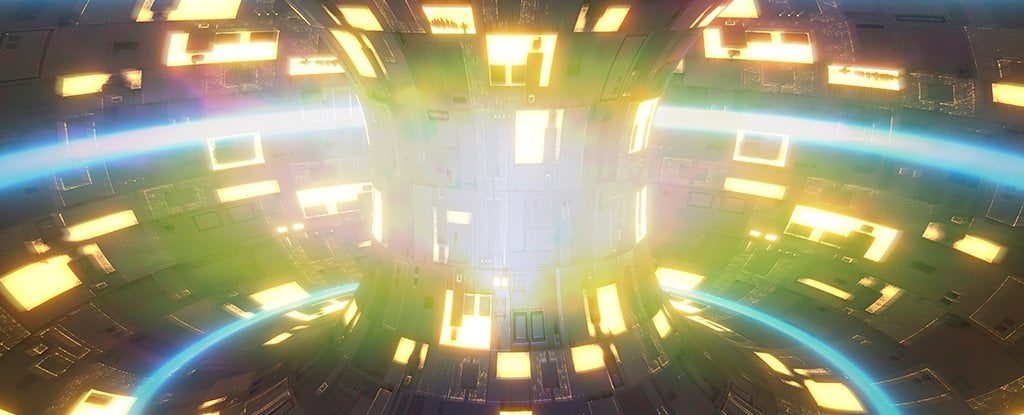
Fusion Is Coming, But Are We Ready For The Problems It Could Cause? – Squaring greenhouse gas emissions with energy demand also raises questions of justice and equity.
https://www.sciencealert.com/fusion-is-coming-but-are-we-ready-for-the-problems-it-could-cause
4 Comments
From the article
>Fusion energy may also placate energy security concerns because some of its key resources are abundant. For example, the deuterium fuel used in some fusion processes can be [readily derived from seawater](https://www.iaea.org/newscenter/news/what-is-deuterium). This would reduce reliance on imports and insulate nations against global market shocks.
>But these benefits may mask deeper ethical questions around the development of the technology and some potentially detrimental impacts. Perhaps one of the clearest instances of such a tension arises over environmental sustainability. This applies particularly to the association with climate change mitigation and the reduction of greenhouse gas emissions.
>Climate change is an issue that lends itself to the “techno-fix” approach – in other words, it can be tempting to avoid making important changes to our behaviour because we think we can depend on [technology to fix everything](https://journals.sagepub.com/doi/abs/10.1177/0002764201000903). This is known as [the “mitigation obstruction” argument](https://royalsocietypublishing.org/doi/10.1098/rsta.2014.0062).
>Squaring greenhouse gas emissions with energy demand also raises questions of justice and equity. Energy demand is growing in certain regions, primarily the global south, that have [contributed the least](https://www.sciencedirect.com/science/article/pii/S097308261930777X) to the current climate crisis. Yet fusion programmes are overwhelmingly based [in the global north](https://www.ipp.mpg.de/1740642/weltweit). So if fusion proves viable, those with access to such a transformative technology are not necessarily those who will need it most
Fusion probably isn’t going to get cheaper than solar and batteries, so why are we even talking about it like it’s any serious solution to Climate Change? It’s decades away and showing no sign it will be cheap enough to compete to the ever falling prices of solar and batteries. AND on top of that batteries have many times more uses than fusion because we’re not putting fusion in cars, ships and robots like batteries can.
You also can’t really export to fusion to all the nations that need it, so it’s not a great climate change solution. Like African and South American nation and most developing nations in Asia are not going to be able to handle super complex fusion plants and most of the emission growth is in the developing world where solar and batteries makes a ton more sense logistically and economically, but also because they are real products and not just vaporware.
Don’t worry, fusion’s not coming. It’s just that the crypto bros who fled that ponzi scheme went to AI then when they found out that AI is low yield and full of people who are smarter than you they have moved on to fusion startups because crypto and ai need energy and fusion is energy.
There is no risk of a fusion breakthrough in the next couple of decades because all the fusion startups will end up draining talent from the legitimate fusion science world. I wouldn’t be surprised if the fusion startups end up burning out some good talent and setting the world back a few decades.
I look at fusion as just another technology in the history of humanity that is meant to fix a problem we created but inevitably will just delay, hasten or have no timely impact on our eventual demise as a dominant species on earth. Does that mean we shouldn’t pursue it? No. It’s clear our current energy needs/?wants? have created escalating environmental and socioeconomic problems around the globe. Fusion would likely mitigate many of the environmental issues. Will it be used primarily by wealthy countries over those lacking in resources? Absolutely, as does most technology at first. Eventually this technology will become cheaper to produce/share but until then resource limited countries will absolutely use fossil fuels in increasing amounts especially since they’ll be cheaper as fusion is adopted more broadly. At some point, fusion and electric infrastructure will be cheap enough to be adopted globally. Will all this likely cause unexpected or unintended consequences that humanity believes they can fix with newer technology? Of course. That’s the fatal flaw of our species.