
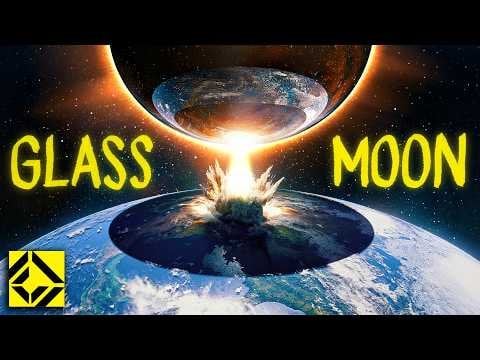
I got this idea from this video https://www.youtube.com/watch?v=xBQ59s90TsA where they imagine a magnifying glass the size of the moon, and then the moon as glass.
But what if we had smaller, satellite size magnifying glasses that are locked in geostationary orbit and are pointed to a specific spot on earth to
-Super charge a solar panel array
-Heat up molten salt
-Used for de-desalination plants to turn water into steam with just the sun
I'm really not an expert on this, so just wanna know ya'lls thoughts
By not really an expert on this, I mean I have absolutely no clue 😂
Geostationary Magnifying glass satellites for super solar power?
byu/GoldenTV3 inFuturology
2 Comments
Without taking the engineering issues into account, assuming you are refracting light that was not already going to hit earth, a ton of that energy is going to be absorbed by the atmosphere before it gets to the ground. More energy = more heat, faster climate change, worse weather events, etc.
The other thing, at the point sunlight hits the earth, it provides about 1300 watts per square meter across all wavelengths. But about half the energy won’t pass through or won’t be affected by a magnifying glass. That means you are working with around 650 watts per square meter, with (and I’m pulling a number out of my ass here), 30% energy loss from that as it passes through the atmosphere. So you are getting about 450 watts on the ground from every square meter of magnifying glass.
So let’s say you toss up a 10 meter (33ft) diameter lens. Which would be hugely expensive to launch into space. That gives you 314 square meters, or about 141 kilowatts. The best solar panels are only about 22% efficient, so you would only be able to convert 31 kilowatts.
Congratulations. Your 150 million dollar space magnifying glass can charge a single Tesla in 2 hours.
I played sim city 2000, too. Those satellite microwave plants were pretty cool.