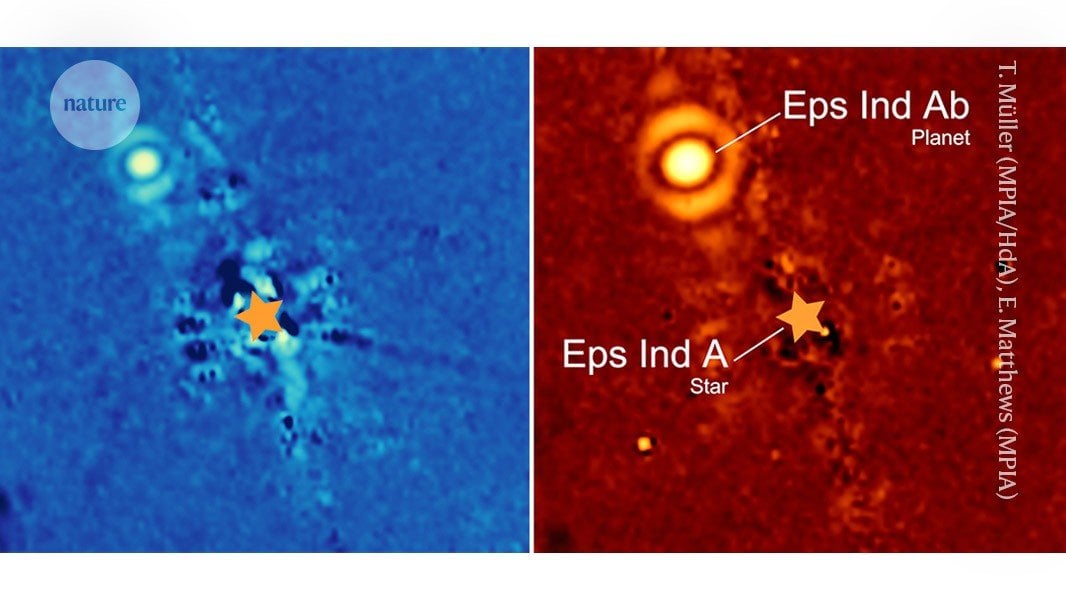
The James Webb Space Telescope has produced the first direct image of another solar system, recording a gas giant orbiting the star Epsilon Indi-A, 12 light years away.
https://www.nature.com/articles/d41586-024-02440-3?

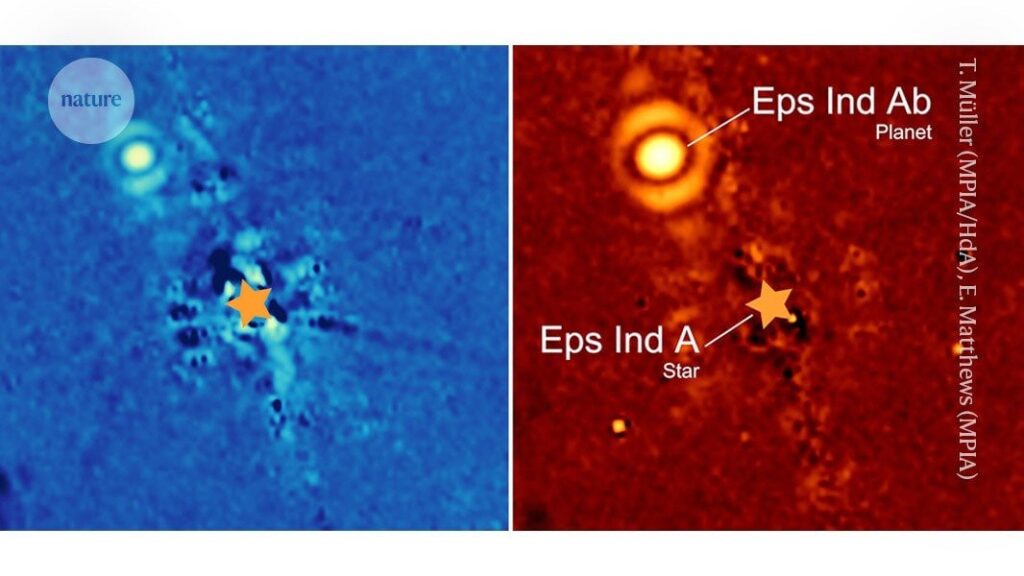
The James Webb Space Telescope has produced the first direct image of another solar system, recording a gas giant orbiting the star Epsilon Indi-A, 12 light years away.
https://www.nature.com/articles/d41586-024-02440-3?
3 Comments
Submission Statement
They are pretty grainy images, but it’s amazing to think we are able to look at another solar system 12 light-years away.
It’s worth noting that space agencies around the world are ramping up efforts to get more detailed data about solar systems and their exoplanets within 100 light-years of Earth. Estimates vary, but that is thought to include 12,000 – 15,000 solar systems. Presumably, the exoplanet tally will be 100,000. If microbial life is widespread in the Universe, it seems a near-certainty it will have to be in some of these.
Amazing. Thgere is a caveat though:
>Janson cautions that “the silver bullet for proving that the source is definitely a planet” — a later image that shows that the speck of light has moved — does not exist yet. But, he adds, “the study is of great, great importance, since it marks a step toward the ability to image planets in mature systems”. Previous direct-imaging efforts have been limited to observing young star systems, he says, whereas ε Indi A is nearly as old as the Sun.”
That said, this is probably the best picture so far of an exoplanet. Another triumph for the James Webb Telescope.
So…..what’s the best method of getting there?