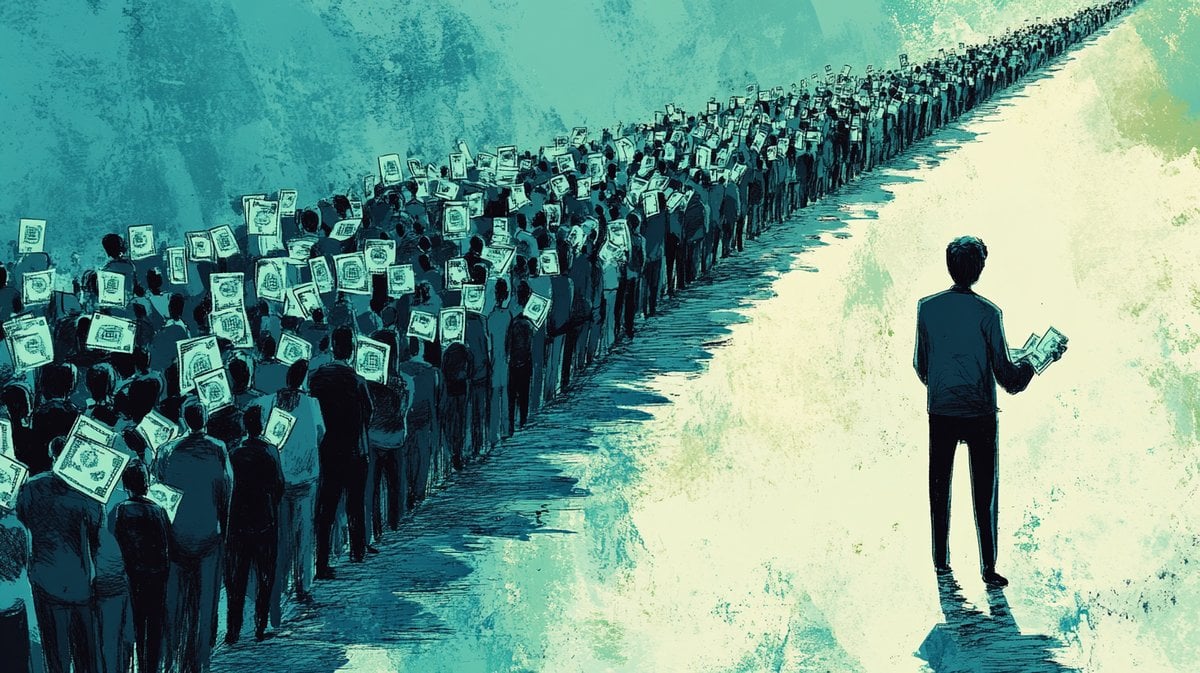
Did Sam Altman’s Basic Income Experiment Succeed or Fail?
https://www.scottsantens.com/did-sam-altman-basic-income-experiment-succeed-or-fail-ubi/


Did Sam Altman’s Basic Income Experiment Succeed or Fail?
https://www.scottsantens.com/did-sam-altman-basic-income-experiment-succeed-or-fail-ubi/
7 Comments
What a shock! When people have their basic needs met, they actually become better citizens? Who’d a thunk it?
### Submission comment
Sam Altman’s big 3-year $1,000 per month for 1,000 people pilot released the initial results about two weeks ago and lots of people immediately claimed it a failure due to the average increase in unemployment and reduction in work hours it found, but I didn’t see any article that looked beneath the averages and just what those findings say about the potential for UBI.
This article looks at those nuances, compares those nuances to the findings from other basic income pilots, and puts them into context.
One key nuance is how employment didn’t decrease for childless adults and those over age 30, but only decreased for single parents and young adults in their 20s. And that reflects an increase in unpaid care work and an increase in more education and skills attainment.
Additional findings of interest were the increases in entrepreneurship for Black participants and women, and just how many women shared stories of escaping abusive situations.
Based on the data, it sounds like a resounding success for humans. Not corpos though, seems like it’s causing them some suffering by not being able to inflict as much suffering on the humans.
We have a lot of problems in the world. Resources is actually not one of them if we accept that the ultra-materialistic lifestyle promoted by current corporate marketing.
Less marketing, more taxes, more people having time to do the wonderful things we know people can do.
Well there are two sides. The sociological side and the economical side.
Sociological it’s positive for the people but in the long run it must destroy the economy. We already see that with minimum wages.
The problem is that if the economy is broken, also the people will get unhappy so it will influence sociological aspects negatively. In the end there will be no source for the basic income and this will be the end of the basic income
Remember: it’s easier for our “betters” to craft a bootstrap narrative than actually pushing legislation that will help us. There’s no reason for them to dismantle the system that benefits them. There is no problem if you just ignore it.
Here’s the rub. If you are already favoring basic universal income and you get to be part of a test where you are getting some you are obviously going to know that giving positive survey results to the test can possibly result in getting continued basic income. Who doesn’t want $1,000 a month of free money? So these tests are really kind of flawed. In fact, any test based on survey data is flawed