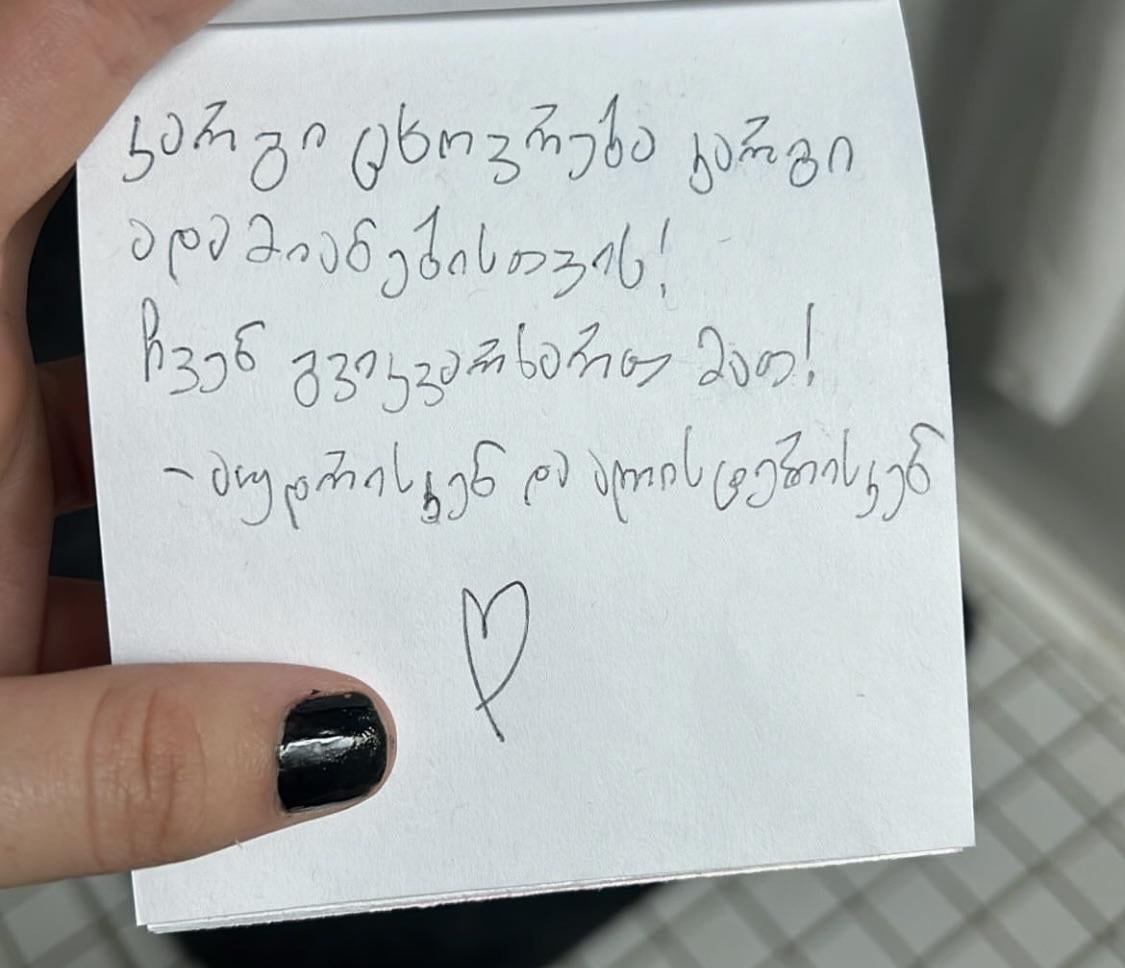
This note was left after a party. I think this is Georgian but I am not 100% sure, can anyone read this?
https://i.redd.it/chgq9ybd2lgd1.jpeg
Posted by kingpinorpauper

This note was left after a party. I think this is Georgian but I am not 100% sure, can anyone read this?
https://i.redd.it/chgq9ybd2lgd1.jpeg
Posted by kingpinorpauper
6 Comments
[deleted]
Good life for good people and then I couldn’t read it
Looks like a note written by non-native. Here is the translation (I stayed true to grammar errors):
“Good life for good people!
We love they!
– Towards Audrey and Alister”
Good life for good people. We lobe you they. Towards Audrey and Alistair.
Definitely not written by a native, because the grammar is wrong and because სიყვარული love is spelled with a instead of ყ. That’s why I translated it as lobe.
კარგი ცხოვრება კარგი ადამიანებისთვის. ჩვენ გვიკვარხართ მათ.
– აუდრისკენ და ალისტერისკენ.
Kargi cxovreba kargi adamianebiatvis. Chven gviyvarxart mat – audrisken da alisterisken.
Good life to good people. We love you (them) – to Audrey and Alister
The “mat” is misplaced, it means (to) them/they, but it isn’t necessary to that sentence. We love you is “ჩვემ გვიყვარხართ” without anything else required. Otherwise the sentences are comprehensive even with some grammatical errors.
It could also mean that the note is from Audrey and Alister which would be Audrey’s-gan instead of Audrey’s-ken (from Audrey vs to Audrey). So maybe a translation error if this went though google translate or something.
I’ll add my two cents about it being written by a non-native, but who knows how to read and write Georgian.
“Good life for good people! We love you! – to Audrey and Alister.” I presume that’s how the writer intended it to be written.
The second line is written incorrectly, it says გვი***კ***ვარხართ instead of გვი***ყ***ვარხართ (the ყ sound does not exist in many languages and many people unfamiliar with that sound use კ (k) instead of it), which means “we love you”, but the მათ (mat) word is third person plural pronoun “them”.
So it has first person plural pronoun (ჩვენ, we), the verb “we love you”, but ends in მათ (them) instead of თქვენ (tkven, plural “you”).
In the end it literally says “towards Audrey and Alister”, with the -ისკენ (-isken, “towards”) suffixes instead of -ის (“-is”, to) attached to the names. It also says “Audrey” transliterated (აუდრი instead of ოდრი, as we usually translate that name).
Regarding the second name, we can’t make distinctions between Alister/Allister/Alistair/Aleister names due to similar pronunciation and write them as ალისტერ, unless there are examples with different enough pronunciations to express different sounds.