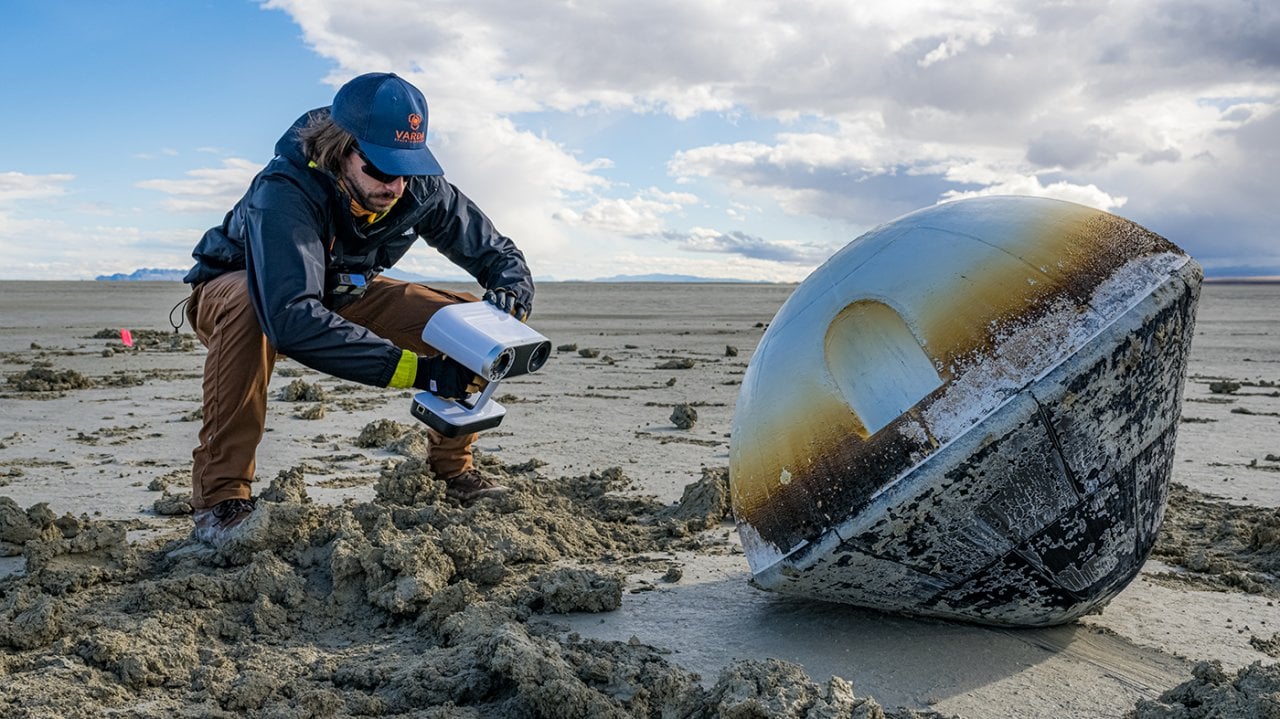
US space industry struggles with ‘constitutional crisis’ in quest to bring shipments back to Earth
https://thehill.com/policy/energy-environment/4828100-commercial-space-industry-regulation-reform/

US space industry struggles with ‘constitutional crisis’ in quest to bring shipments back to Earth
https://thehill.com/policy/energy-environment/4828100-commercial-space-industry-regulation-reform/
3 Comments
From the article
>As first entrants into orbital manufacturing, Varda is at the forefront of a rapidly evolving and still-confusing dispute within the U.S. government over how to govern America’s nascent commercial space industry — and who should do it.
>Space manufacturing is roughly where the Internet was in the 1980s, said Ajay Malshe, a professor of mechanical engineering at Purdue University: struggling to emerge from its Cold War legacy of control by the military and academia, and to build the infrastructure — including regulation — that will make future technology possible.
>While much of the space economy — from orbital manufacturing to asteroid mining — currently seems outlandish, Malshe said, the operative word is “currently.” Imagine, he said, how hard it would be to project the Internet’s trajectory toward the iPhone and the cloud economy from its first stirrings.
>The still open-ended nature of space manufacturing’s development is why the House, Senate and White House are in a historic fight over who should control the passage to orbit — and who takes responsibility if a launch or reentry ultimately ends in disaster.
There is no asteroid mining or any use for such a thing. Asteroids are hundreds of thousands of miles apart, there is no asteroid field like on the movies, nor is there the slightest use even if they were closer together.
There is also no space manufacturing happening at all. These are both total science fiction dreams with no purpose. Humans cannot live in low gravity and rotational space habitats are probably never practical. There is no big space economy forming for humans to expand in space, all that’s happening is satellites are getting cheaper to launch.
Humans cannot possibly expand on the moons .1 gravity and not have that be a total dead-end and Mars .37g is also almost certainly not good enough.
I love space tech, but mass lying to people about space mining and space economies and expanding humans off Earth is wrong even if you really wish it could happen because the facts are pretty clear. Humans are only going to hold human health to an ever increasing standard, you can’t live in .1 or .37g long enough to have a space economy that makes any sense.
Even a Mars or Moon base is going to get replaced with robots because nobody in the right mind is paying to cycle humans on and off the moon more than a few times and the only reason to be there is do space geology and perhaps yet more zero gravity experiments which could have been done on the ISS for years.
I’m sorry, it just doesn’t make the slightest bit of sense. Humans can only live in Earth like conditions long term and these Moon base or Mars base ideas are not humans expanding permanent settlements into space. They’re just short term research stations that do their research and close down.
The only chance you have of long term settlement is using Venus .9g gravity, but beside that Venus sucks because you can’t land on the surface and it’s not a well preserved sample with minimal erosion like Mars, so studying the rocks sucks on Venus compared to Mars and that’s the main value in going to Mars, not human expansion or a space economy.
Is this a potential problem? Could be.
Is this a “constitutional crisis”? No.