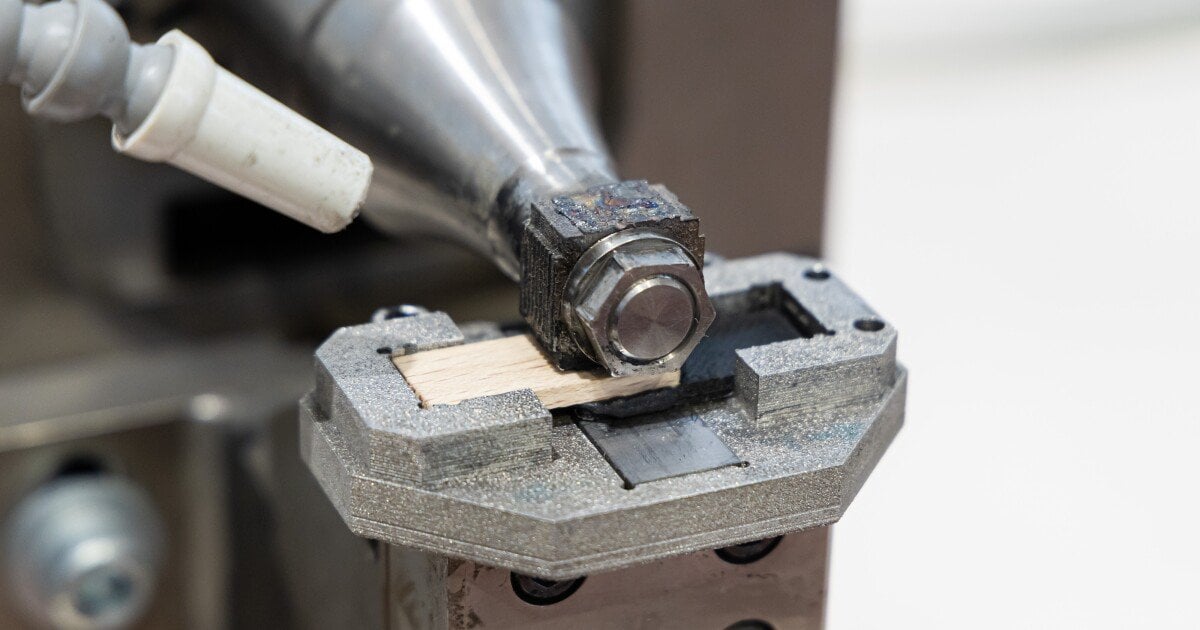
No glue required: Wood and metal bonded with sound and 3D printing
https://newatlas.com/materials/adhesive-free-bonding-wood-metal/

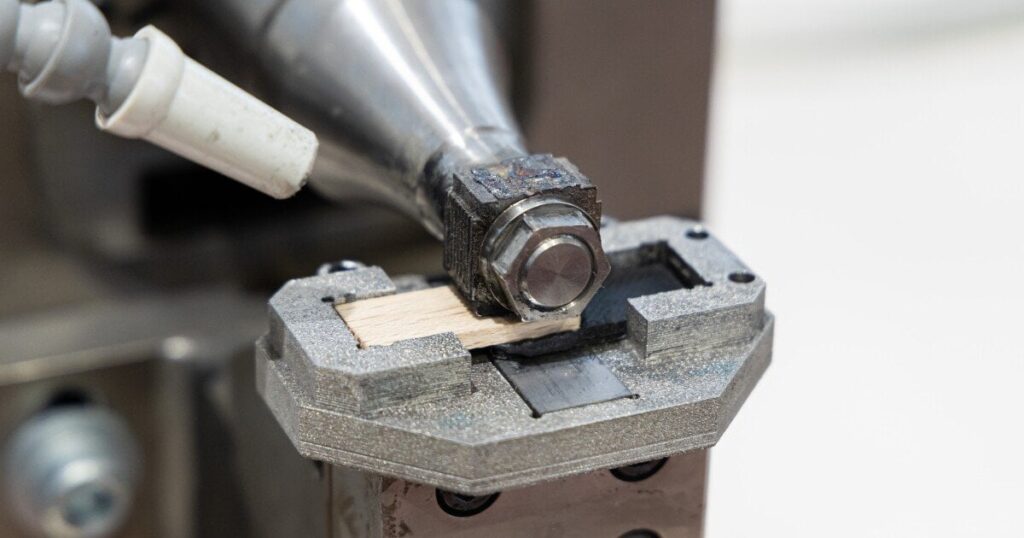
No glue required: Wood and metal bonded with sound and 3D printing
https://newatlas.com/materials/adhesive-free-bonding-wood-metal/
3 Comments
From the article
>Manufacturing could be dramatically changed thanks to two new techniques for joining materials created by scientists in Austria. The two methods create super strong bonds at the pore level, eliminating the need for caustic adhesives.
Also from the article
>In the first, the researchers used a 3D-printing process they termed “Addjoining.” They were able to 3D print the various materials directly onto a piece of untreated wood in such a way that they penetrated the pores in the wood, forming a bond in much the same way an adhesive would. The team then snapped the bond apart.
>“After the (bond) fractured, we were able to find polymer in the wood pores and broken wood fibers in the polymer, which suggests that the fracture occurred in the wood and polymer, but not at the joint,” explains Gean Marcatto, who worked on this process as a postdoc at TU Graz’s Institute of Materials Sciences, Joining and Forming.
>The team believes that the 3D-printed bonds could be made even stronger if the wood was etched using lasers to create more complex structures or larger pores for the other material to bond with.
>“But we wanted to work with as few steps as possible and, above all, without chemicals,” says Sergio Amancio, who led the research. “We can use this technology particularly well with complicated 3D geometries because the components are printed directly onto the surface – in whatever geometry is required.”
I’m trying to think of the applications of this and the only thing I’ve come up with is fretboards and Morgans.
Except that the plastic part is effectively *all* hotglue, having started in a liquid state.