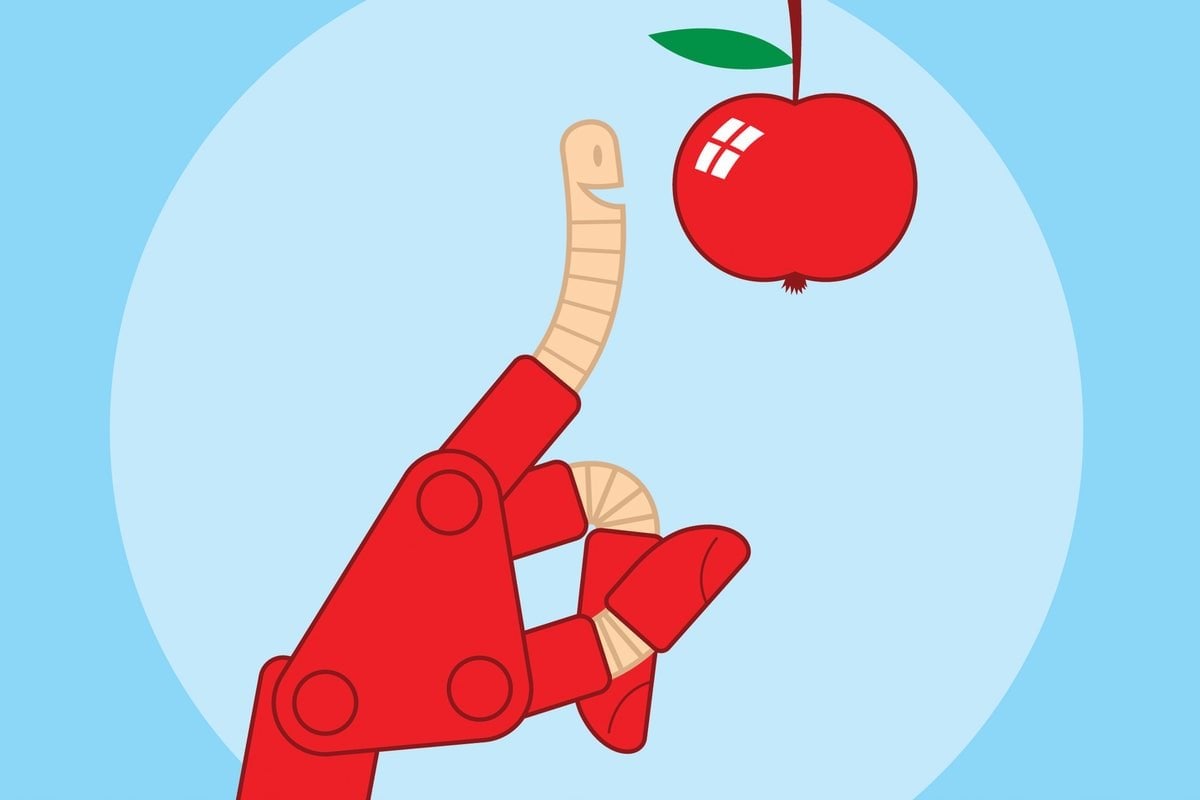
Scientists Make ‘Cyborg Worms’ with a Brain Guided by AI
https://www.scientificamerican.com/article/scientists-make-cyborg-worms-with-a-brain-guided-by-ai/

Scientists Make ‘Cyborg Worms’ with a Brain Guided by AI
https://www.scientificamerican.com/article/scientists-make-cyborg-worms-with-a-brain-guided-by-ai/
1 Comment
Scientists have given artificial intelligence a direct line into the nervous systems of millimeter-long worms, letting it guide the creatures to a tasty target—and demonstrating intriguing brain-AI collaboration. They trained the AI with a methodology called deep-reinforcement learning; the same is used to help AI master games such as Go.
According to Harvard University biophysicist Chenguang Li, the paper’s lead author, “one can easily see how it might be extended to harder problems.” Her team is exploring whether their method can improve electrical deep-brain stimulation to treat Parkinson’s disease in humans by adjusting the voltage used and its timing. One day reinforcement learning plus implants might even give us new skills, Li says—artificial and real neural nets united.