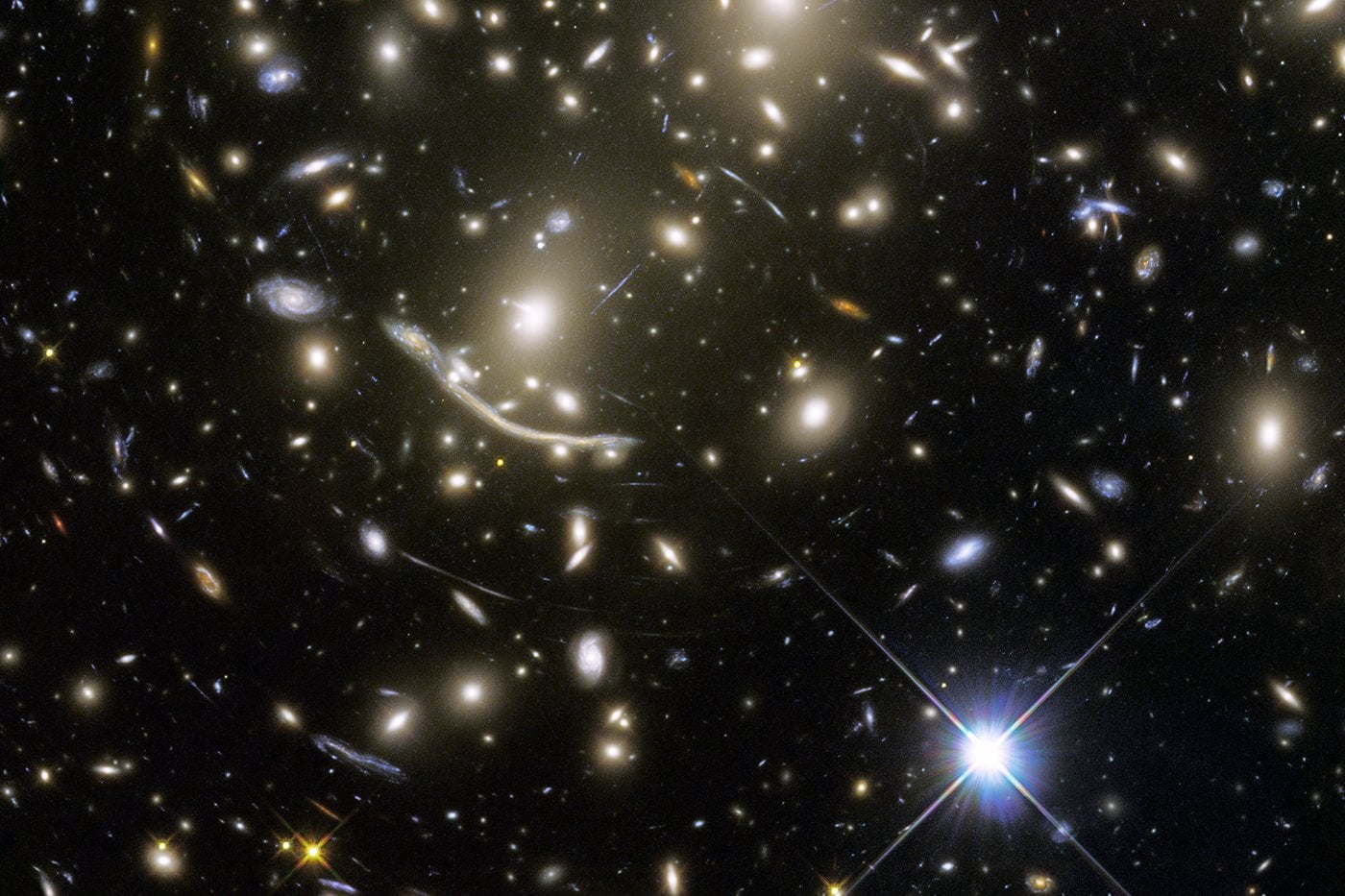
Astronomers discovered 44 ancient stars using gravitational lensing. An astrophysicist explains how they did it
https://news.northeastern.edu/2025/01/08/gravitational-lensing-ancient-stars/

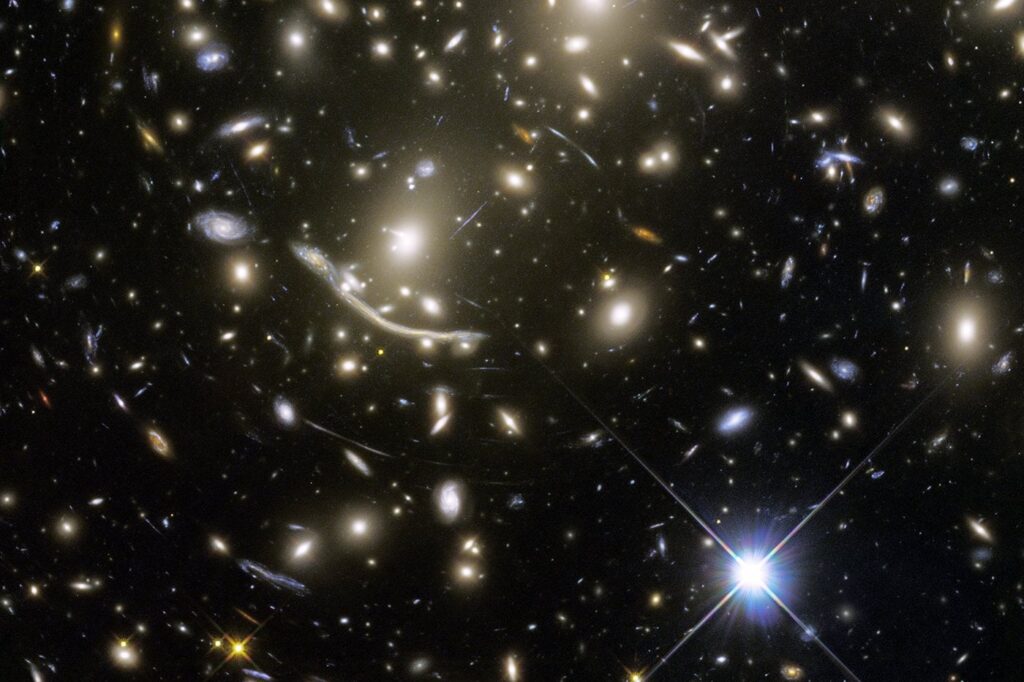
Astronomers discovered 44 ancient stars using gravitational lensing. An astrophysicist explains how they did it
https://news.northeastern.edu/2025/01/08/gravitational-lensing-ancient-stars/
1 Comment
Astronomer here! Lucky find for sure!
This article focuses on 40 stars that are *individually* detected by JWST, 5 billion light years away. This isn’t a record breaking distance for JWST to see galaxies- most of those articles focus on galaxies over twice this far- and we can see individual very bright supernovae and the like at this distance. However, a big galaxy or explosion is much more luminous than a relatively normal star (these appear to be red supergiants at the end of life stage), so yeah, pretty unusual.
What this team did was a thing called [gravitational microlensing](https://en.wikipedia.org/wiki/Gravitational_microlensing), which is studying the tiny amounts light is bent when it goes close to a larger object and interacts with its gravity. (Many [famous examples](https://en.wikipedia.org/wiki/Abell_2218) of galaxies with lensing are due to “strong lensing” and are much larger objects.) In the JWST image, things in this region of space were aligned *just right* for these stars to be detected, and the photometric data indicates that’s what they are. Cool!
Final wild thing, one thing about living in a universe that’s always moving is microlensing a specific object at these distances means you see them once, but will never see them again- it’s a transient signal. So basically enjoy this discovery- no one will ever see these particular stars ever again. I always thought that was wild in itself.