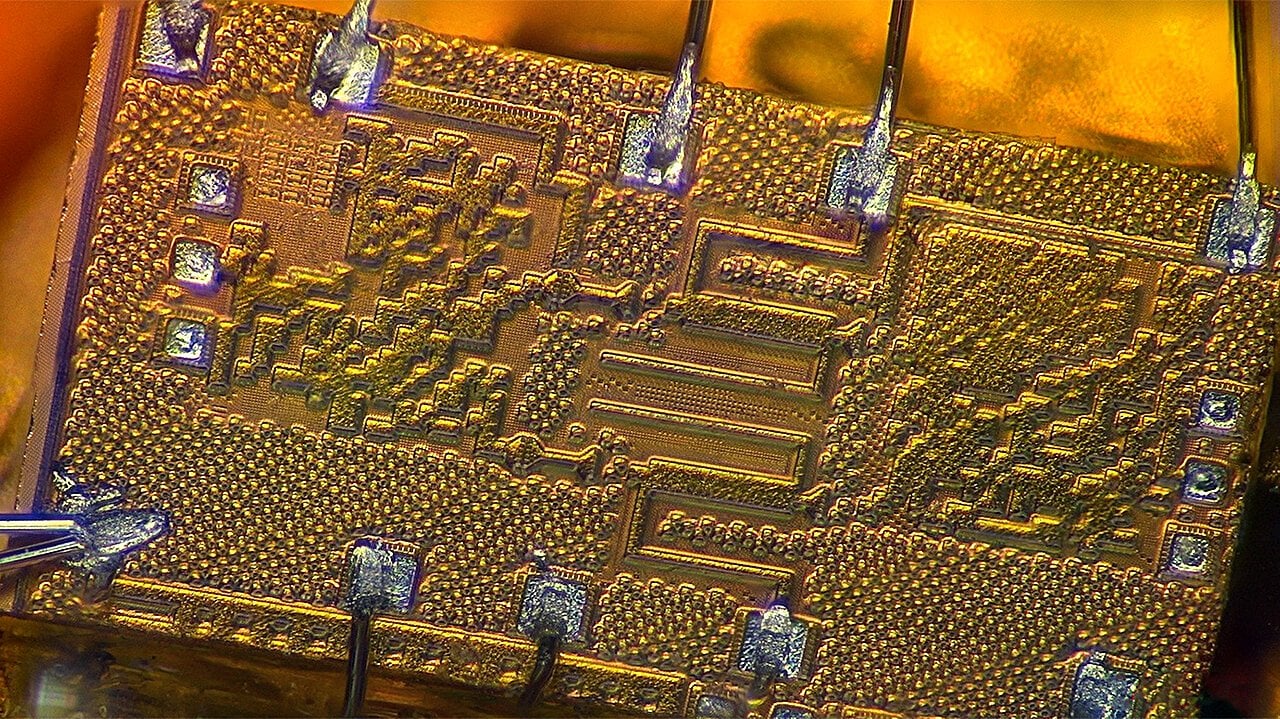
AI unveils strange chip designs, while discovering new functionalities
https://techxplore.com/news/2025-01-ai-unveils-strange-chip-functionalities.html

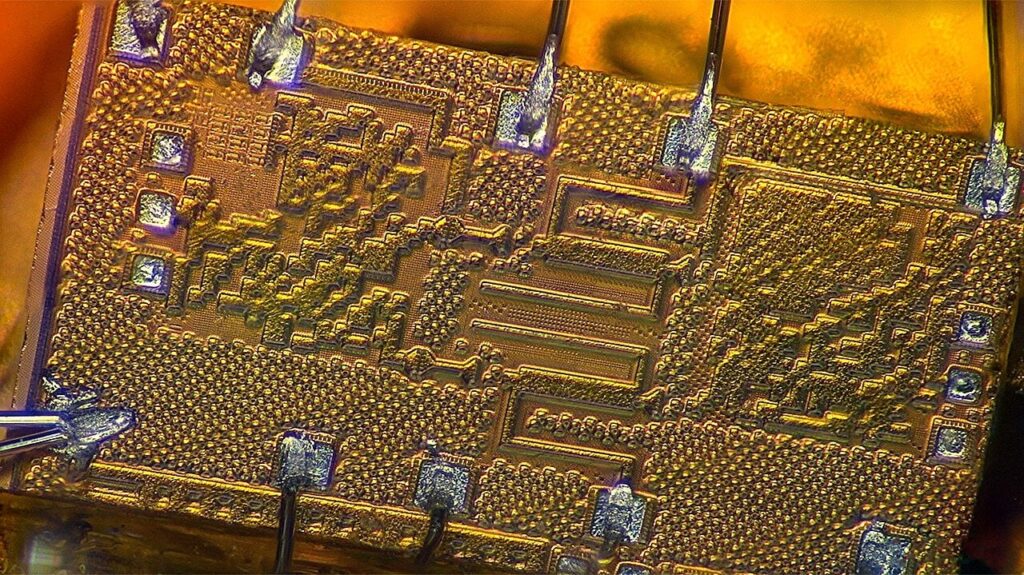
AI unveils strange chip designs, while discovering new functionalities
https://techxplore.com/news/2025-01-ai-unveils-strange-chip-functionalities.html
17 Comments
“In a [study](https://www.nature.com/articles/s41467-024-54178-1) published in *Nature Communications,* the researchers describe their methodology, in which an AI creates complicated electromagnetic structures and associated circuits in microchips based on the design parameters. What used to take weeks of highly skilled work can now be accomplished in hours.
Moreover, the AI behind the new system has produced strange new designs featuring unusual patterns of circuitry. Kaushik Sengupta, the lead researcher, said the designs were unintuitive and unlikely to be developed by a human mind. But they frequently offer marked improvements over even the best standard chips.
“We are coming up with structures that are complex and look randomly shaped, and when connected with circuits, they create previously unachievable performance. Humans cannot really understand them, but they can work better.”
Dang. I wish I understood what they’re talking about! Thx for the interesting share!
i remember like 20 years ago i red about similarly designed chips by ai or what was regarded as such back then which also came up with some strange design features like design elements completely isolated from the main circuit of the chip, ie not connected and hence seemingly power- and useless, yet when they were removed from the design the chip ceased working. so somehow by some seemingly interference this was crucial for the working of the chip. im really looking forward to strange yet highly functional design patterns ai will come upt humans never thought of.
edit: yall praise u/cmndr_keen who brought up the website where i finally found it again!
[https://www.damninteresting.com/on-the-origin-of-circuits/](https://www.damninteresting.com/on-the-origin-of-circuits/)
(…)
Dr. Thompson peered inside his perfect offspring to gain insight into its methods, but what he found inside was baffling. The plucky chip was utilizing only thirty-seven of its one hundred logic gates, and most of them were arranged in a curious collection of feedback loops. Five individual logic cells were functionally disconnected from the rest— with no pathways that would allow them to influence the output— yet when the researcher disabled any one of them the chip lost its ability to discriminate the tones. Furthermore, the final program did not work reliably when it was loaded onto other FPGAs of the same type.
It seems that evolution had not merely selected the best code for the task, it had also advocated those programs which took advantage of the electromagnetic quirks of that specific microchip environment. The five separate logic cells were clearly crucial to the chip’s operation, but they were interacting with the main circuitry through some unorthodox method— most likely via the subtle magnetic fields that are created when electrons flow through circuitry, an effect known as *magnetic flux*. There was also evidence that the circuit was not relying solely on the transistors’ absolute ON and OFF positions like a typical chip; it was capitalizing upon analogue shades of gray along with the digital black and white.
(…)
So it’s begun. We’ll use AI to supplement and improve our own intelligence, evolving ourselves into supreme immortal beings.
Or at least the rich will lol
A company saying that their research is amazing and that they are going to bring the future today? No way! I have never heard that before. And without proof! Amazing
Got a feeling of deja vu. I remember an article from 20 years ago where they used some form of AI to generate circuits and were surprised at getting more efficient designs that people had trouble comprehending. That wasn’t wireless specific though.
So AI and climate change are competing to see who can finish off civilization first?
This should be expected from an evolved process.
We don’t fully understand how bacteria work, but it doesn’t stop us from making yogurt.
A couple of decades ago, people were using artificial evolution to design circuits that did things no human designer would consider.
You should see the AI design for the rocket engine that was 3D printed. I don’t know the progress of finding out the reason behind each details but at the time, everybody was clueless and yet in awe.
This reminds of, like, a demon self-assembling itself in a pool of blood, slowing rising up out of the crimson liquid before ruling as the new god.
can not understand the design ? so just ask the AI to explain you like a student.
I for one am extremely excited Scott our new ai overlords. They just need to work on an ai that can gain and maintain control of other ais then we are in for a treat.
I design and fabricate electronic devices at the cutting edge level.
We don’t even have accurate simulation programs for existing well tested devices because it’s quantum physics and the actual limits of physics in a tangible environment we are talking about. The experimental models haven’t been derived from real physical measurements broadly or finely enough to declare models for all cases and materials. The way electronic designs are actually tested and evaluated is by prototyping several iterations and fabricating specific characterization test structures. The idea of an “AI” being able to circumvent that right now is actual fanfiction.
This is 100% bullshit and a great example of why anyone working in Computer *Science* or Software “Engineering” (and based on the actual study, Computer Engineering lol) is not who will ever be consulted when it comes to designing or creating actual hardware and fabricated circuits.
Not being able to intuitively understand the result is the case with a lot of optimisation tools, this isn’t really new or specific to tool using AI in the optimisation regime.
Humans cannot understand them but they work better than what a human would or could have designed is a little bit unnerving, more so if humans can’t understand how the improvement is made but recognise the improvement. It’s awesome but at the same time humbling.
So we’re at a frontier now at low-level microcircuitry that we’re unable to understand (and outside modern means of production) that deal with communications.
Someone will build something they don’t fully understand much in the same way traditional IT jobs are being transformed, for example coding.
This is exciting, but already out of control.