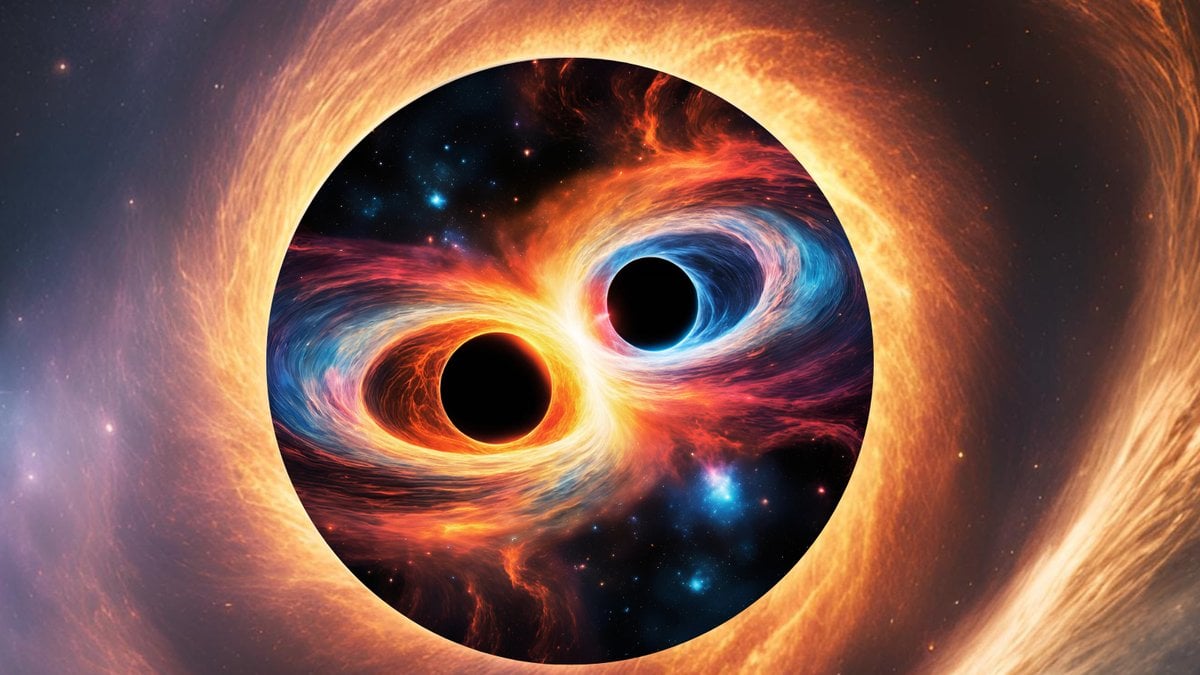
Gravitational waves offer a ‘cosmic DNA test’ for black holes
https://www.space.com/black-hole-size-spin-ancestors

Gravitational waves offer a ‘cosmic DNA test’ for black holes
https://www.space.com/black-hole-size-spin-ancestors
1 Comment
“Our study gives us a powerful, data-driven way to identify the origins of a black hole’s formation history, showing that the way it spins is a strong indicator of it belonging to a group of high-mass black holes, which form in densely populated star clusters where small black holes repeatedly collide and merge with one another,” team member and University of Cambridge researcher Isobel Romero-Shaw said in a statement.