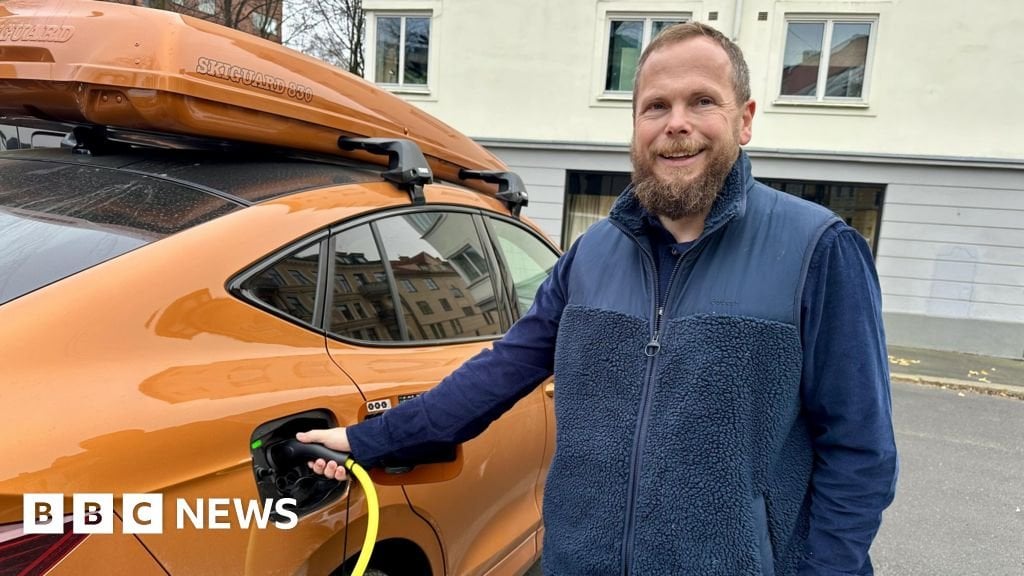
Despite being the world’s 8th biggest crude oil exporter, Norway is banning the sale of new gasoline cars in 2025.
https://www.bbc.com/news/articles/cg52543v6rmo

Despite being the world’s 8th biggest crude oil exporter, Norway is banning the sale of new gasoline cars in 2025.
https://www.bbc.com/news/articles/cg52543v6rmo
10 Comments
Submission Statement
Banning gasoline cars isn’t that radical a step for Norway – 90% of new cars sold there are already EVs. This also doesn’t mean the disappearance of ICE cars from Norwegian roads, the old stock will have to gradually disappear as it ages out.
The EU (which Norway isn’t in) has set 2035 as the date for banning the sale of new gasoline cars there. However, [many think most car makers will have stopped selling them in Europe before that date.](https://www.rte.ie/brainstorm/2024/1215/1380408-eu-ban-petrol-diesel-cars-2035-emissions-standards-euro-7/#:~:text=Ultimately%2C%20the%20ban%20in%202035,and%20fleet%20average%20efficiency%20requirements.) As their market share shrinks, it will become unprofitable to make them anymore.
Rule number one for being a drug dealer: Never do your own drugs.
Please don’t think Norway is doing this for the planet.they are doing it as they have enough hydro power that they are close to exploring it. They are one of the biggest oil and gas produces in the world. The money they make goes into the stock market. They control 1.2% of the market. All oil money.
They are going electric because it is better for their wealth growth. Nothing more.
Drug dealer move. Don’t get high on your own supply.
What about enthusiast cars? Surely a few exceptions should stay.
Title is incorrect.
As per the actual article, we havent banned sales of ICE vehicles here in Norway. There was a debate in parliament discussing it but that didnt amount to much. There’s been a long standing ambition to phase ICE vehicles out, and we’ve definitely come a long way, but not entirely there.
Also, while we do produce a fair amount of both Oil & Gas, we do not consume either. The crude is sold raw, then refined somewhere else, before we import petrol/diesel back. Apparently this is cheaper than doing it ourselves. Gas is refined here but exported to UK/Continent via pipelines.
98% or so of electric power production in Norway is from Hydropower which is extremely cheap to produce per kwh. However, we export more and more power and electricity prices are so high here as a result, that the government had to step in and subsidies costs a few years back. As mentioned we dont use gas, so our electricity consumption is generally high. Cost of living in Norway is generally very high. A half-liter of beer in your local bar will set you back something dumb like USD $10-15
The headline has been editorialised and is wrong. Norway is not banning ICE cars in 2025. There is a non binding target of having entirely electric cars by 2025, which has mostly been achieved.
This is because ICE cars are highly taxed, and electric cars are not. Combined with street charging installed all over cities, free tolls and ferry crosses and they were even allowed in bus lanes until they became too popular.
You’d have to be pretty mad or have very very specific needs to buy a new ICE car in Norway today. The electric transition has finished. EVs have really improved in terms of range, cost and quality in the last 5 years and I see it as inevitable that they will beat ICE cars globally within 10 years. There will be no need for bans, but at least it’s a kick up the arse for car manufacturers.
That’s a country with population of a big city or a city with metro area. Well good for them, but we should strive to reduce coal and gas burning. The amount of electricity that industry is eating in Europe is crazy and it’s still mostly fueled by coal. Last time I checked whole Norway had similar number of cars registered as Warsaw and its metro area alone.
Sorry but electric leaves quite possibly a larger carbon footprint than just using gasoline. Not to mention what do we do with all these toxic batteries at the end of their life. Not saying electric isn’t a bad idea but we are a ways away from it being viable. Personally I think hybrid is the way to go.
I’ve always been fascinated by the Norwegian sovereign wealth fund’s decisions and philosophy (it was previously headed by a philosopher, by the way). They’ve had the position for quite some time now that the (that *their*) environment is very important and that pollution should be curtailed – therefore they are cutting back/cutting off petroleum burning engines. Fine- that’s an admirable position.
At the same time, however, they have no problem profiting from the sale of the very material that causes all the environmental damage as long as it is sold to outsiders. I don’t see how anybody can reconcile the morality of this position. At least other oil producers openly hold the position that oil isn’t bad (whether or not they actually believe that is a different question- but at least their posturing is consistent).
I’ve always thought of it as eerily similar to the old 60s and 70s mafia position of “you can sell drugs but never in our neighbourhood” (only to the “outside groups”- which were usually poor non-white neighbourhoods) and you yourself should never use them.