Controlling plasma heat in a fusion energy power plant: ‘Louvers’ on fusion device should exhaust gases as hot as a star
https://phys.org/news/2025-01-plasma-fusion-energy-power-louvers.html

Controlling plasma heat in a fusion energy power plant: ‘Louvers’ on fusion device should exhaust gases as hot as a star
https://phys.org/news/2025-01-plasma-fusion-energy-power-louvers.html
1 Comment
From the article
>The study, [appearing](https://iopscience.iop.org/article/10.1088/1741-4326/ad85f3) in *Nuclear Fusion*, evaluated actuator configurations, in particular those used to control neutral gas flowing in and out of the tokamak.
>A power-producing fusion [plasma](https://phys.org/tags/plasma/) must reach a temperature at its center hotter than the core of the sun. At the same time, it must maintain a temperature at the plasma edge that is cool enough to avoid vaporizing the fusion device.
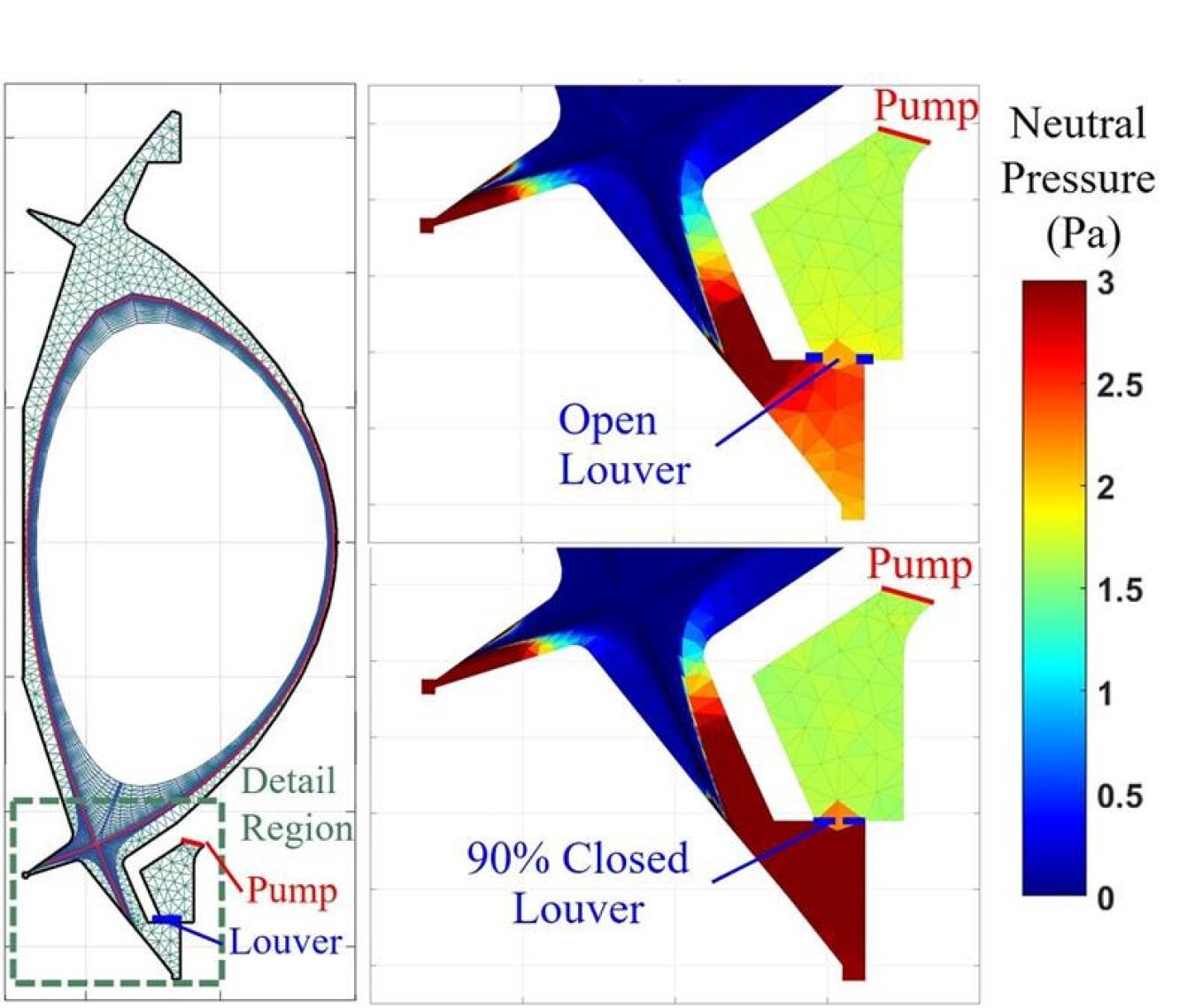
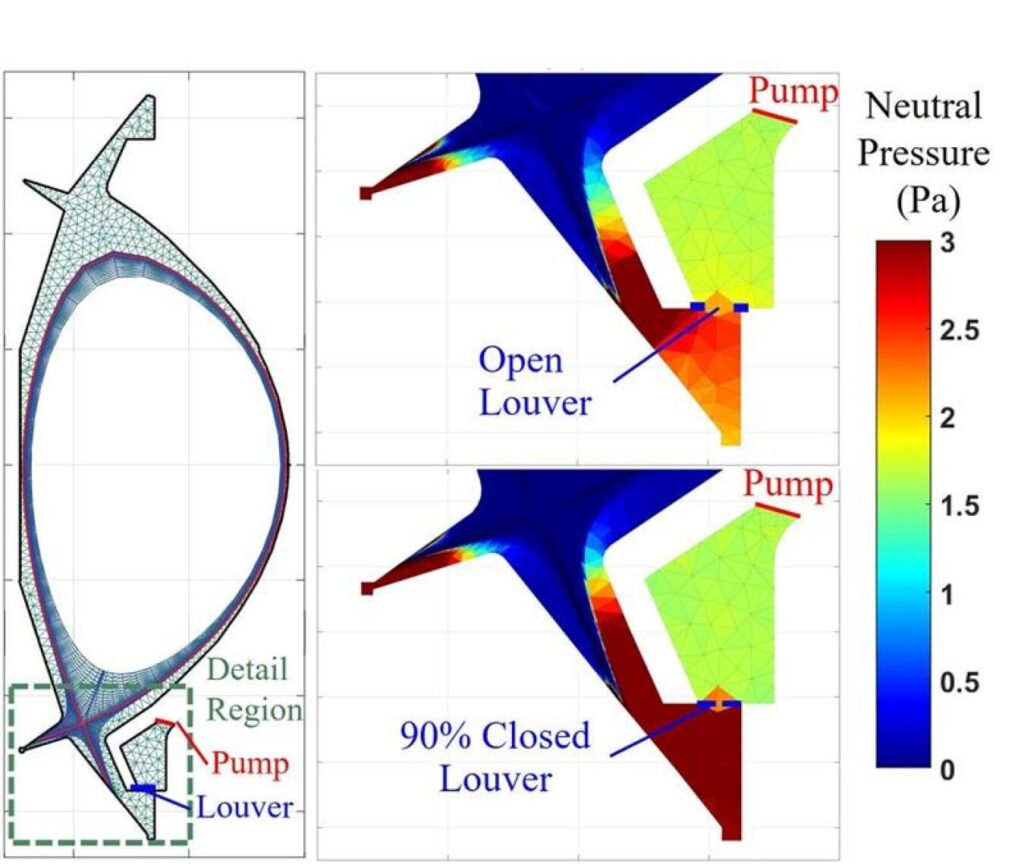
>New studies have found that using louvers at the bottom of the fusion device, like those found on the air ducts of a home, create local conditions that can reduce the temperature of the edge plasma. Specifically, the louvers allow the hot plasma to “detach” from the walls of the device, spreading out the heat.
>To predict the actuators’ ability to control the plasma, ORNL developed new methods to run a major simulation code, SOLPS-ITER, in a dynamic, time-dependent manner, focused on the actuator design.