Astronauts’ eyes weaken during long space missions, raising concerns for Mars travel
https://phys.org/news/2025-01-astronauts-eyes-weaken-space-missions.html

Astronauts’ eyes weaken during long space missions, raising concerns for Mars travel
https://phys.org/news/2025-01-astronauts-eyes-weaken-space-missions.html
19 Comments
Tbf we don’t really need our organic eyes, we’re pretty close to just being able to make cameras we can shove in your eye sockets lol
The people willing to go to Mars literally don’t care. There could be a 75% chance of death and you would still get a ton of extremely talented people willing to go, especially to be among the first. They don’t care about radiation, long term health problems etc.
500 years ago going to the new world was considered suicide and had an extremely high chance of death (usually painful) and people still sent it while having entire families at home.
Before that, Polynesian sailors, Viking sailors, and many other civilizations. Men going out on big ships with minimal/zero intention to make it back home has been a thing since forever.
You can never take the inner urge of exploration out of a Man.
Reading some of the comments. The lack of connection with reality of some Mars Colonization Fans is fascinating.
Radiation? Put water supply around living quarter to double as shielding.
Microgravity? Use spin gravity. If we cannot make individual ship of large enough size, then use Aldrin cycler.
Simple as. Just mail the Nobel prize straight to my house, thank you.
Okay but astronauts can still see when they come back to Earth. If it took this long to discover, then the issue is probably not that big. There’s even been a cosmonaut that’s spent 2.5 times longer in space than people would on a Mars mission and he’s fine.
>According to the researchers, these ocular changes **are generally not cause for concern** when the space mission lasts six to 12 months. Although 80% of the astronauts they studied developed at least one symptom, their eyes returned to normal once back on Earth.
“Raising concerns,” come on…
There are many studies that show the many ways in which the human body will break down in space travel.
Personally, I think the race to Mars is just on it’s face stupid, and amounts to nothing more than a egotistical fascination with planting a flag on some place first.
We need to be sending more probes into deep space, we need to be focused on discovering the physics of the world. If we find ways to become space travellers, it won’t be from aiming for Mars, it will from foundational scientific discovery that bends our understanding of space time, energy, matter, gravity (etc.).
Unfortunately, Trump seems to really really hate scientists and thus far has issued a lot of executive orders to halt basic science funding.
Bruh if I get on a spaceship to go to Mars, I’m fully accepting I might be the first of what would ultimately not even be considered human down the line after we’ve been on Mars for a while.
This is like the least of the concerns when talking about travel to Mars. Imo, it’s incredibly unlikely we will be doing this trip in our lifetimes, and that’s entirely because of biology.
The human body can’t handle Mar’s low gravity either.
Mars is not going to happen for decades if ever. Chemical rockets are simply too slow. Heck, we can’t even do a sample return.
What if we just take their eyes out and give them bionic eyes 🤖 👀
Any age of exploration demands blood sacrifice.
Develop ESP, shed the Earther weakness of outside-in senses. NEWTYPES SHALL RISE!
Magneto style helmets for everyone. Capes are optional.
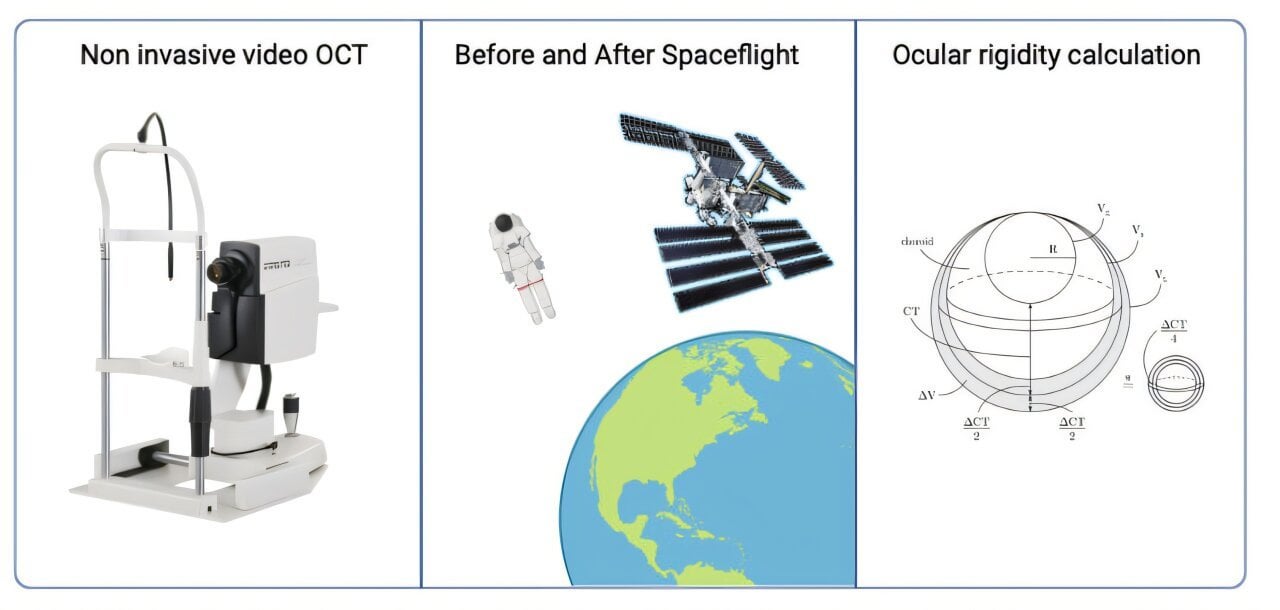
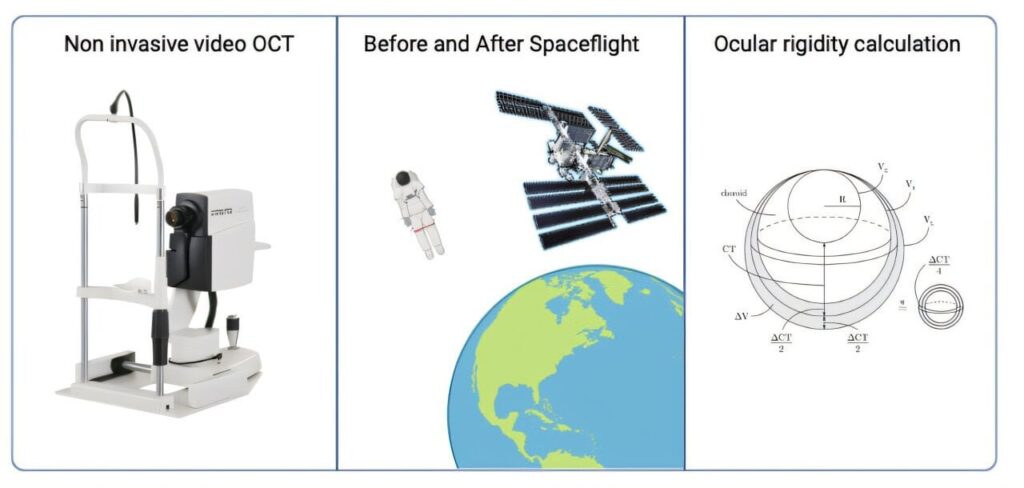
>The low levels of gravity (microgravity) in space cause significant changes in astronauts’ eyes and vision after six to 12 months aboard the International Space Station (ISS) […]
>According to the researchers, these ocular changes are generally not cause for concern when the space mission lasts six to 12 months. Although 80% of the astronauts they studied developed at least one symptom, their eyes returned to normal once back on Earth. In most cases, wearing corrective eyeglasses was sufficient to correct the symptoms developed aboard the ISS.
A typical ISS stay is ~6 months, with some astronauts staying longer, up to ~12 months. Nobody has gone blind from that, let alone died. A Hohmann transfer from Earth to Mars (and vice versa) takes only ~6-9 months (depending on the positions of Earth and Mars during the given transfer window). Even chemical rockets could speed that up to ~4-6 months.
Neither the paper linked, nor the quotes from researchers in the article, even mention Mars.
The many health issues with continuous, long-term exposure to microgravity are a good argument against proposals that initial crewed Mars missions should be flybys (as free return trajectories would last 18+ months), or orbiters with surface sorties by some of the crew like Apollo. And perhaps that would also argue against any single-window opposition class missions that involve only a ~1-3 month stay on Mars before returning to Earth. But, astronauts on the surface of Mars will experience significant gravity–almost 40% that of Earth’s surface–not anything close to microgravity.
To be sure, we do know little to nothing about the health effects of long-term exposure to gravity between microgravity and Earth-normal. And this research in microgravity adds nothing to that.
When Marcos Pontes traveled to the ISS in 2006, he always says in interviews that he gainned an ear problem and Pavel Vinogradov, the mission commander, gained a pair of glasses after returning to Earth.
If every nuclear weapon on Earth went off, every volcano erupted, and a meteor the size of the one that wiped out the dinosaurs struck, Earth would still be far more habitable than Mars could ever hope to be.
All fluids in the body tend to shift during space visits. Even water turns into a sphere.
How much evidence do we need that space is not the answer and we need to take care of our own damn planet