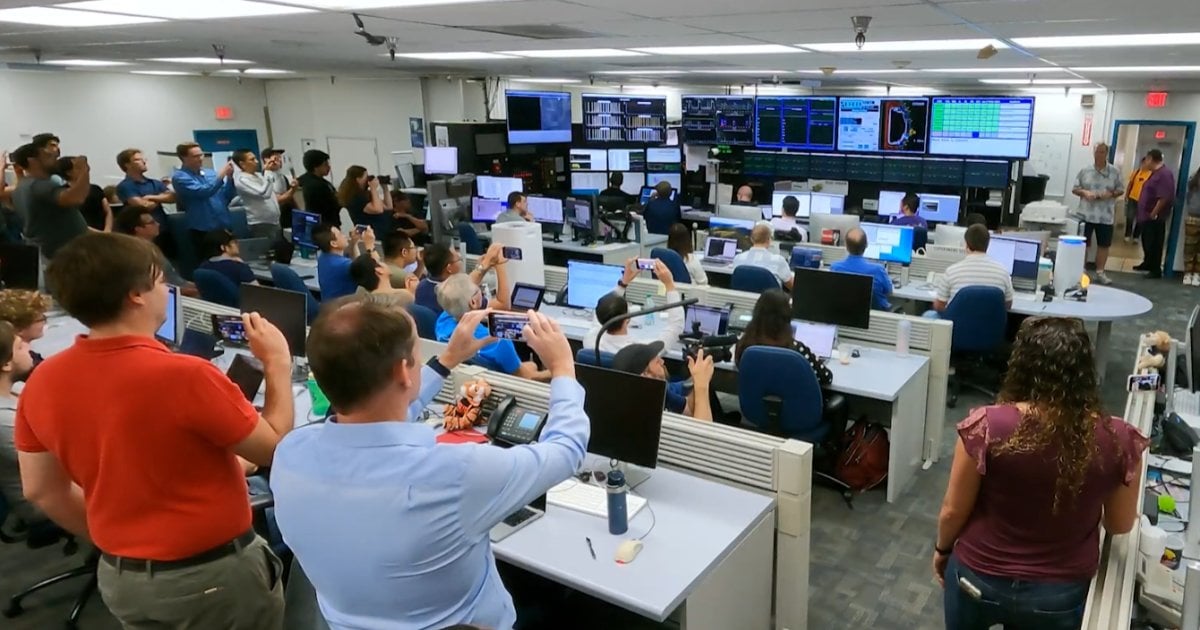
General Atomics sees an end to the long road toward nuclear fusion
https://www.kpbs.org/news/local/2025/01/30/general-atomics-sees-an-end-to-the-long-road-toward-nuclear-fusion

General Atomics sees an end to the long road toward nuclear fusion
https://www.kpbs.org/news/local/2025/01/30/general-atomics-sees-an-end-to-the-long-road-toward-nuclear-fusion
2 Comments
From the article
>Innovation and public policy professor David Victor co-directs UC San Diego’s energy decarbonization initiative. He said the old joke about fusion is that it’s the great energy source of the future and it always will be.
>Even so, Victor said that recent progress toward the goal is no joke.
>“There are a lot of improvements in technology that make several different strategies for fusion energy at least seem a lot more plausible than they did even five or ten years ago,” he said. “New kinds of lasers. In particular, new kinds of magnets, really, really powerful magnets that can contain a fusion plasma.”
>But he cautions us to know every new energy source has uncertainties. And as we consider fusion, don’t forget the potential for wind and solar. Even nuclear fission may have a future if the industry can build small modular units.
>Meanwhile, Buttery said private sector investment in fusion in the U.S. has increased hugely, from venture capitalists to philanthropic groups.
>“At the government level, the United States is investing strongly in fusion and so are our competitors. China is actually outspending the United States by a factor of two, in this government funding,” he said.
>Buttery adds that with increased investment, people in the fusion field believe we will have fusion power plants sometime in the 2030s. If that does happen, the question of whether you can draw power from one of them may depend on where you live.
They still have to solve the tritium problem. https://physicsworld.com/a/the-fusion-industry-must-rise-to-its-tritium-challenge/
Briefly, while deuterium is essentially unlimited, tritium is extremely rare.
Don’t get me wrong, I’m a big fan of fusion energy. But I’m also a realist, and I just don’t see fusion supplying grid energy anytime soon.
The title might be true, but with a different interpretation – the end of the long road might be, “Well, we tried really hard, but failed.”