The UK got rid of coal—where’s it going next? | The UK has transitioned to a lower-emission grid. Now comes the hard part.
https://arstechnica.com/science/2025/02/the-uk-got-rid-of-coal-wheres-it-going-next/

The UK got rid of coal—where’s it going next? | The UK has transitioned to a lower-emission grid. Now comes the hard part.
https://arstechnica.com/science/2025/02/the-uk-got-rid-of-coal-wheres-it-going-next/
7 Comments
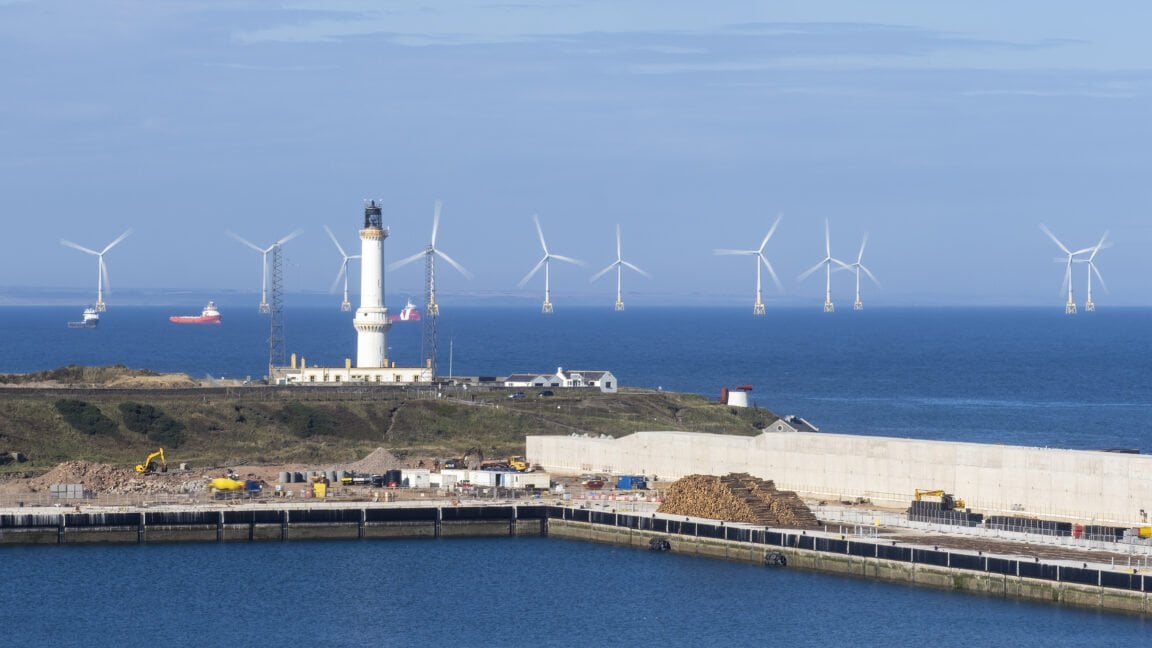
From the article: With the closure of its last coal-fired power plant, Ratcliffe-on-Soar, on September 30, 2024, the United Kingdom has taken a significant step toward its net-zero goals. It’s no small feat to end the 142-year era of coal-powered electricity in the country that pioneered the Industrial Revolution. Yet the UK’s journey away from coal has been remarkably swift, with coal generation plummeting from 40 percent of the electricity mix in 2012 to just two percent in 2019, and finally to zero in 2024.
As of 2023, approximately half of UK electricity generation comes from zero-carbon sources, with natural gas serving as a transitional fuel. The UK aims to cut greenhouse gas emissions by 42 percent to 48 percent by 2027 and achieve net-zero by 2050. The government set a firm target to generate all of its electricity from renewable sources by 2040, emphasizing offshore wind and solar energy as the keys.
What will things look like in the intervening years, which will lead us from today to net-zero? Everyone’s scenario, even when based in serious science, boils down to a guessing game. Yet some things are more certain than others, the most important of these factors being the ones that are on solid footing beneath all of the guesswork.
The closure of all UK coal-fired power stations in 2024 marked a crucial milestone in the nation’s decarbonization efforts. Coal was once the dominant source of electricity generation, but its contribution to greenhouse gas emissions made it a primary target for phase-out. The closure of these facilities has significantly reduced the UK’s carbon footprint and paved the way for cleaner energy sources.
With transition from coal, natural gas is set to play a crucial role as a “transition fuel.” The government’s “British Energy Security Strategy” argued that gas must continue to be an important part of the energy mix. It positioned gas as the “glue” that holds the electricity system together during the transition. Even the new Starmer government recognizes that, as the country progresses towards net-zero by 2050, the country may still use about a quarter of the gas it currently consumes.
We will definitely be a net zero country when no one can afford the insane electricity/gas prices. They wont even re-nationalise basic neccessities while handing out tax breaks and grants to all these rich companies milking their population dry.
Phasing out coal is very much a welcome step on the route to decarbonisation. Energy policy is one of the few areas where there is some meaningful government action to do, well, anything.
That does not mean that there will not be trouble ahead. A few weeks ago the UK came within a whisker of blackouts as energy demand surged, the wind died down and the skies clouded over. Let’s hope not to get that close again.
https://www.telegraph.co.uk/business/2025/01/09/britain-came-within-whisker-blackouts-national-grid/
Thorium? Why is nobody talking about it? The solution has been here for decades already..
https://en.m.wikipedia.org/wiki/Molten-Salt_Reactor_Experiment
Safe, green, abundant fuel source that will last thousands of years.. Every country on Earth has enough under their feet to be energy independent.
https://www.neimagazine.com/news/china-to-build-worlds-first-thorium-molten-salt-npp-in-gobi-desert/
All of the net zero chat is lip service at best, unfathomable corruption at worst.
As bad as Ratcliffe-on-Soar was, it wasn’t nearly the terror of Ratsaur-on-Cliff.
well I want the sector to keep doing well, we do have detractors*cough Farage and heartland institute* who want to disinformation the shit and fearmonger the population into not wanting this. the new SMRs will be prone to this I foresee unfortunately.
Edit: SMR is small modular reactor for users who may not know.
ChatGPT, as a percentage YOY, how much have energy prices increased for the average household?