
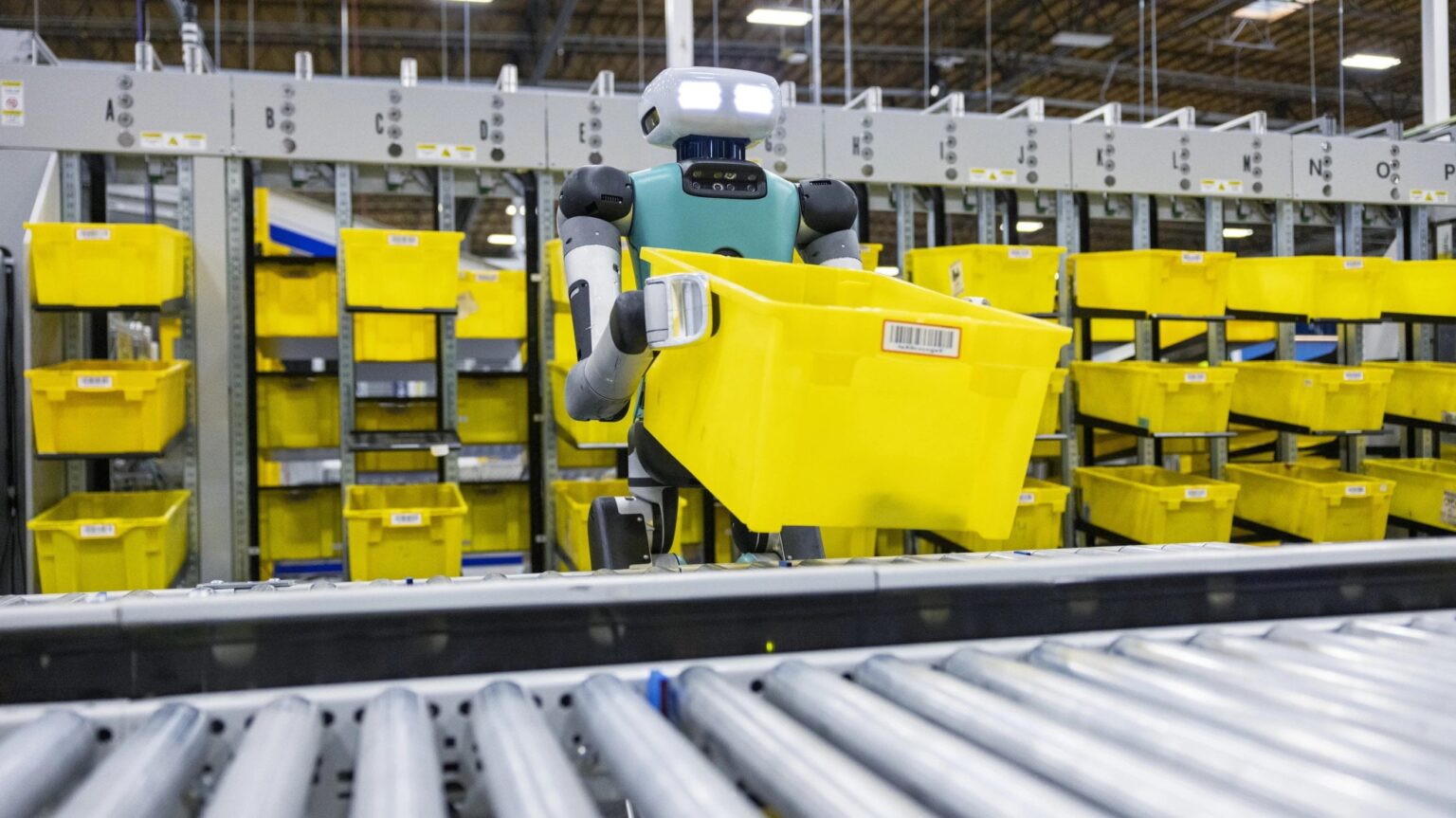
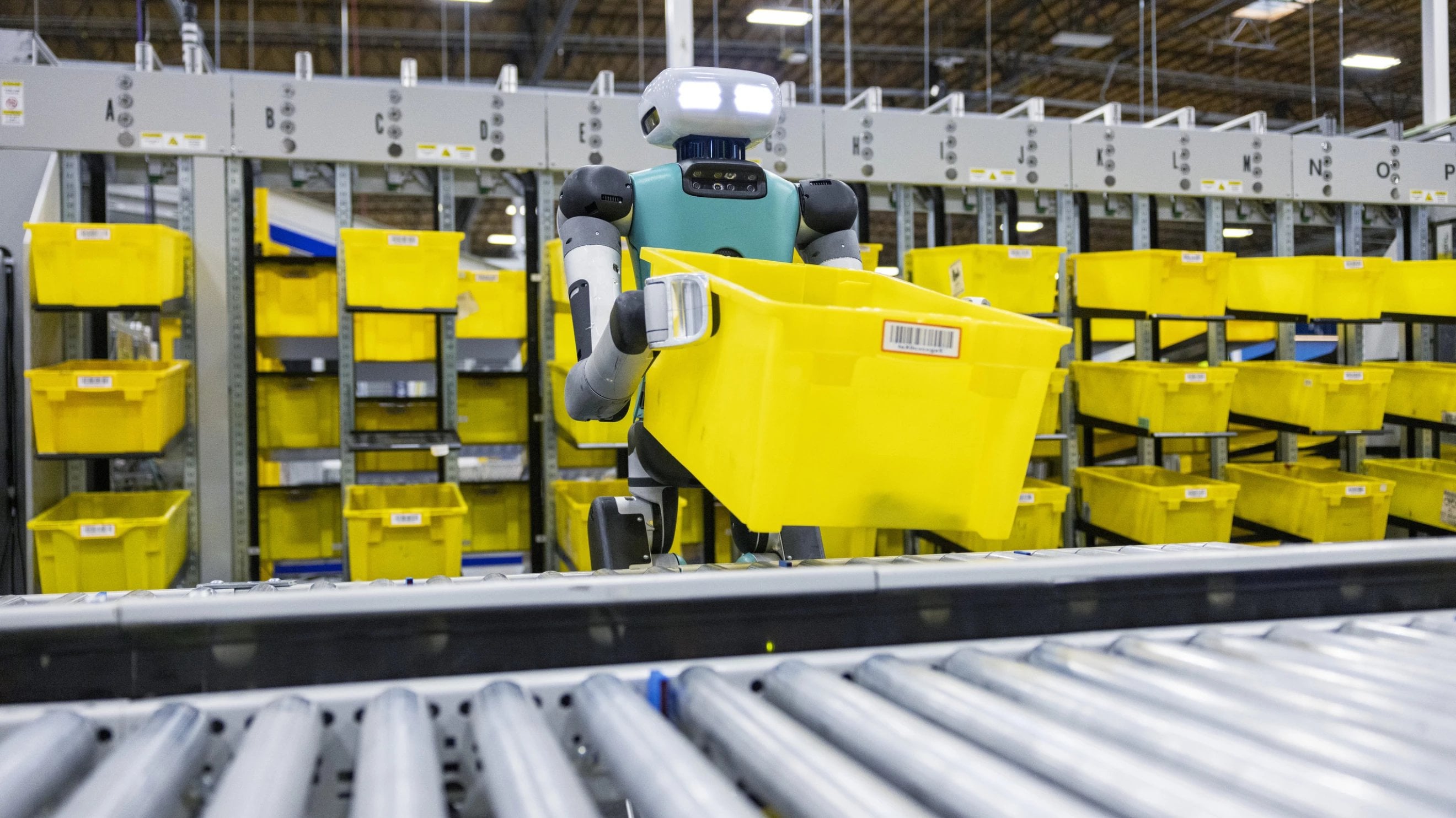
Their plans are separate, but what is significant is that they are just two companies, and the raw numbers can be so huge.
Amazon expects to soon save $10 billion a year replacing humans with robots. Amazon currently employs 1.1 million in the US. If we take the average cost of each as $50K – that's 200,000 jobs. Figure is talking about 100,000 robots.
For now, this issue is still relatively politically muted. But for how much longer?
Figure Robotics & Amazon talk about replacing 100,000s of human jobs with robots.
byu/lughnasadh inFuturology
17 Comments
We’re probably not getting UBi are we?. I guess I will look into robot repair for what’s left as a job. That should last a few more years. Until that taken away also
I guess the robots will buy Amazons goods as well.
Makes me wonder if this is a good thing then given the non-changing bad work conditions there?
It’s already happening in China [https://www.newsbytesapp.com/news/science/lights-out-factory-xiaomi-s-robots-take-over-24-7/story](https://www.newsbytesapp.com/news/science/lights-out-factory-xiaomi-s-robots-take-over-24-7/story)
The cost of a job doesn’t just equal the salary. From that 10 billion you are looking at training costs, costs associated with improving safety, insurance, advertising for the positions, maybe space if they have lockers etc, break rooms, unifroms if they supply them, and so on.
Not that that changes much, just to show that the calculation of savings/50,000=number of jobs isn’t accurate.
So wait, if my family buys 100,000 robots then we can duplicate a $2.4T company?
Welcome to the future: you no longer have to work, you just manage others.
It’s not going to become particularly politically salient until a statistically significant portion of the working population suddenly finds themselves out of work due to direct replacement.
For these robots, the implementation is likely to take an iterative and attritional path.
As in robots rolling out in batches to take over the rolls of workers who voluntarily left.
Amazon has a massive turnover rate (I’ve seen as high as 150% quoted) for low-tier employees in it’s DCs, meaning they can reduce their headcount by hundreds of thousands without directly firing anyone.
The sheer scale of the U.S. labor force will also help them.
We could lose 1 million jobs and the unemployment rate would only pick up by about 0.6%.
There’s also a long history of large groups of workers losing specific jobs (the deindustrialization of the Midwest, as an example) and replacing them with other, often lower quality ones without it leading to any kind of shocking political action.
We live in a house with a foundation made out of bacon.
All the monkeys keep eating the foundation. They know it will collapse at some point, nobody knows when, but there’s bacon, right now.
They better be careful. They’re forgetting that they need human customers. Not that losing me would be a loss. I already only go to stores
Who do they think will buy the products if humans are no longer earning money?
This is good. None one’s life affirming calling is to work in an Amazon warehouse.
If you think freeing the workers from that burden isn’t good, you need to re-examine your perspective on the world.
This isn’t necessarily a bad thing, providing that all those who are loosing their jobs can find a new one… which they won’t be able to
Robots don’t pay for the products you produce, humans do. Robots don’t pay taxes, humans do. Robots don’t have to eat, humans do. Robots don’t turn into “Luigi’s” when their livelyhood is threatened, humans do.
Honestly, I think this is a good thing. The more jobs we can replace with automated labor, the closer we get to a society where working won’t be mandatory.
I’d much rather live in a society where the only jobs are artistic jobs, and only because these people enjoy the work they do.
Instead of articles saying that x company will save x amount of money, they should frame it as Amazon withholding 10 billion from the economy
The future’s here, and ofc it’s dystopian as can be, I think I just want to become a druid at least until the robo druid is unveiled in quarter four.
Hopefully for humanity the robots actually suck and are more expensive. But most likely it won’t be the case. Still, I thought vertical farming was can’t miss and the reality has made it a commercial non-starter.