

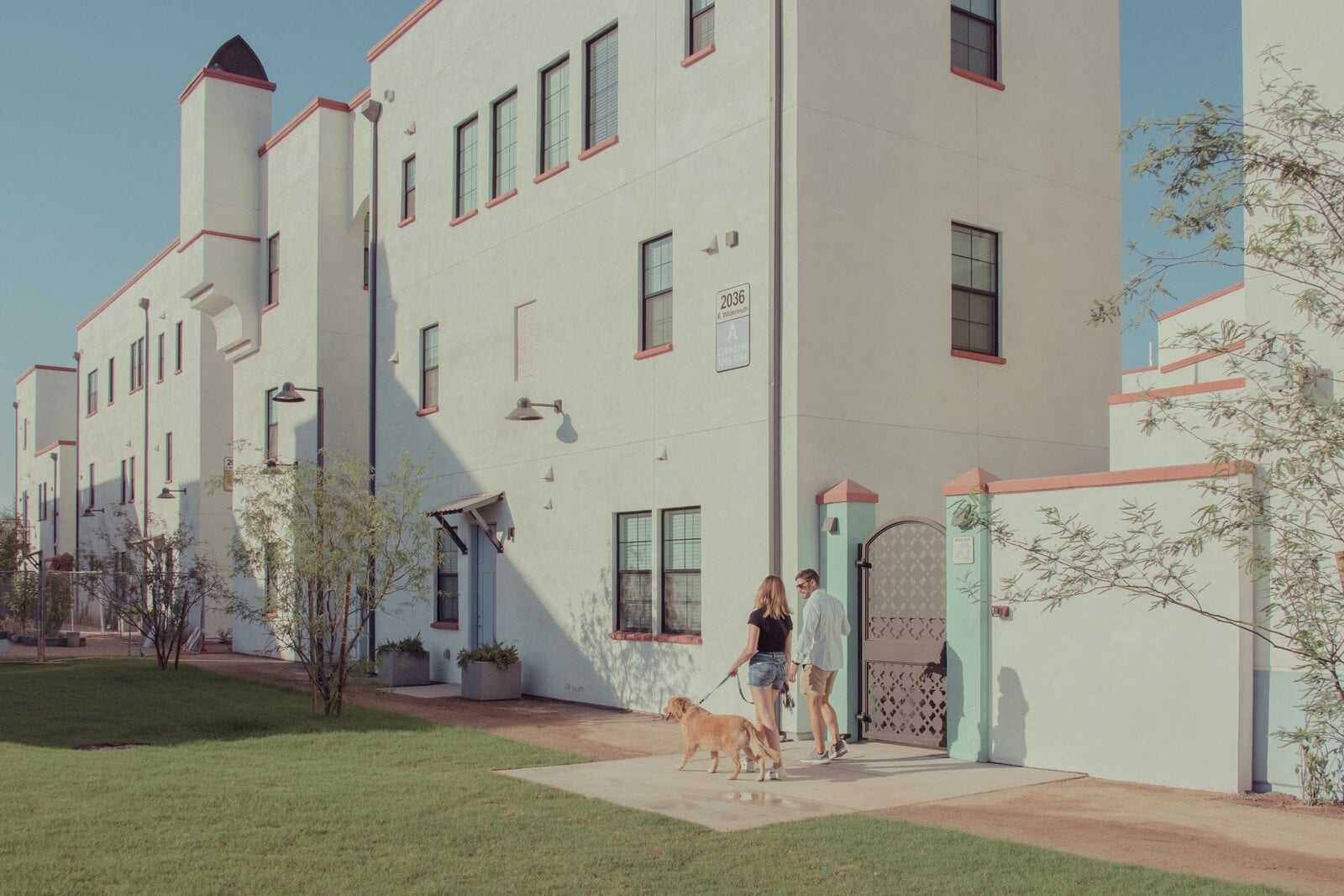
An overview of Culdesac Tempe, the car-free neighborhood.
Although tariffs might slow things down, the ultimate destiny of the world's robotaxis is probably to be cheap, electric and made in China. This week, BYD the maker of the $9,500 Seagull hatchback said it will make Level 2 self-driving standard on all its cars, including it.
When cars this cheap are self-driving and taxis, it will mean there is little point for many people to own a car. Why, if the few hundred kms/miles most people drive a month costs a fraction of car ownership?
Ryan Johnson, the developer of Culdesac, thinks this trend is already helping it, and will ripple out to change the way more and more people live in cities.
Current state of Waymo in Phoenix
-
Now regularly seeing my social circle, male and female, looking to it first
-
Parents now comfortable sending their kids to school and elsewhere. This is a major vibe shift. Early on, women solo riders were the loudest champions. But parents are overtaking that. Effusive praise e.g. “I have my freedom back!”
-
Biggest impediment to growth is that they go slower. Which of course is because they don’t speed and don’t run red lights
-
Perception that Waymo makes other drivers drive safer
-
Now regularly seeing Waymo convoys
-
First anecdote effect dissipating. When someone sees their first minor error from Waymo, it is jarring. But then a long time elapses until they see their second. And that builds intuition that it is rare, and points the finger at how much more common errors are from human drivers
-
People are asking when they can order Waymo via either Lyft or Uber
-
People seeing how fast the AI tools are improving is bringing the “Waymo right now is the worst it will ever be” conclusion
Phoenix is Waymo’s most mature market, now 8 years into public availability. It’s a big reason why we chose Phoenix (Tempe) for the first Culdesac.
The May 2023 launch of the Jaguar platform was a seminal moment in the history of AV Ridehail going mainstream. And AV Ridehail is going to drive the largest change to cities in decades.
In Phoenix, America's first car-free district is succeeding, and its founder thinks it is being helped by the city's early adoption of robotaxis.
byu/lughnasadh inFuturology
8 Comments
A some point when most cars are self driving, some Silicon Valley start up will come up with a crazy new idea.
Instead of expensive cameras/computer driving cars and expensive to maintain roads to drive on, we could install durable tracks and cars can go along the tracks cheaper and easier!
Then they can make it even cheaper and more efficient by having bigger cars fit more people!
Oops, we invented the train again…..
Like I jest, but a “car free city/neighborhood” relying on self driving cars just seems like an expensive waste compared to light rail for intercity traffic and high speed rail for intracity traffic. We already have the technology to move people around efficiently and without driving.
But that would be insane, a state trying to invest $1b in public transit will get push back at being unaffordable while simultaneously passing a $10b budget for road maintenance.
If it has robo taxis then it’s not car free. It’s just replacing the traffic of people who own and use their own vehicles with the traffic of vehicles owned by some company. That’s just a corporate takeover of our roads, which are public infrastructure built and maintained by the public, for the public.
That’s some Europe pandering and sounds like simping for Lyft and Uber (“people are asking to order Lyft and Uber”)
In America, we like drive thru banks, restaurants, coffee, everything. And I’m not using public transit. When I play Cities Skylines, I build all my cities with mega interchanges.
Self-driving taxis are interesting because the bar for using one is just believing that the self-driving taxi will drive more safely and comfortably than a normal taxi/Uber, and while I’ve been in some taxis/Ubers that have great drivers, I’ve also been in some awful ones.
Most people think they are good drivers so letting their car drive them is a bigger ask.
I feel like minor error is unacceptable for a self driving car though
I’m just waiting for robo-busses. I like that I can get away with not owning a car, but single-person robo-taxis are just way too expensive and inefficient. We really need to increase the number of people (and probably size) that robo-taxis carry so that instead of one person needing to pay for the entire round trip of the vehicle 5 or 10 people can. And yeah, busses exist, but the problem with busses is bus routes needing way too many stops to have passable service and a bus network that automatically adapts routes to demand can actually fix that.
* People seeing how fast the AI tools are improving is bringing the “Waymo right now is the worst it will ever be” conclusion
careful with that conclusion. Google home and Alexa users can tell you that the functionality was far better 4 years ago than it is now
The guy from Not Just Bikes was interested in the same question – and he figured the answer was going to be something like ‘it’ll be a mixed bag’. He ended up making a video basically being like ‘oh, megcorps aren’t going to let us get rid of cars. They’re instead going to push to dismantle public transit and move us to a subscription based model with self driving cars’. [ If you’re curious](https://www.youtube.com/watch?v=040ejWnFkj0&pp=ygUgbm90IGp1c3QgYmlrZXMgc2VsZiBkcml2aW5nIGNhcnM%3D). He shows his work/ cites his sources
I’m all for more car free villages and I’m glad that they were able to make it work in this context. Just, big picture, there are some major concerns