
![Defense Spending at PPP [OC]](https://www.byteseu.com/wp-content/uploads/2025/02/xj8349hnxele1-1536x1133.png "Defense Spending at PPP [OC]")
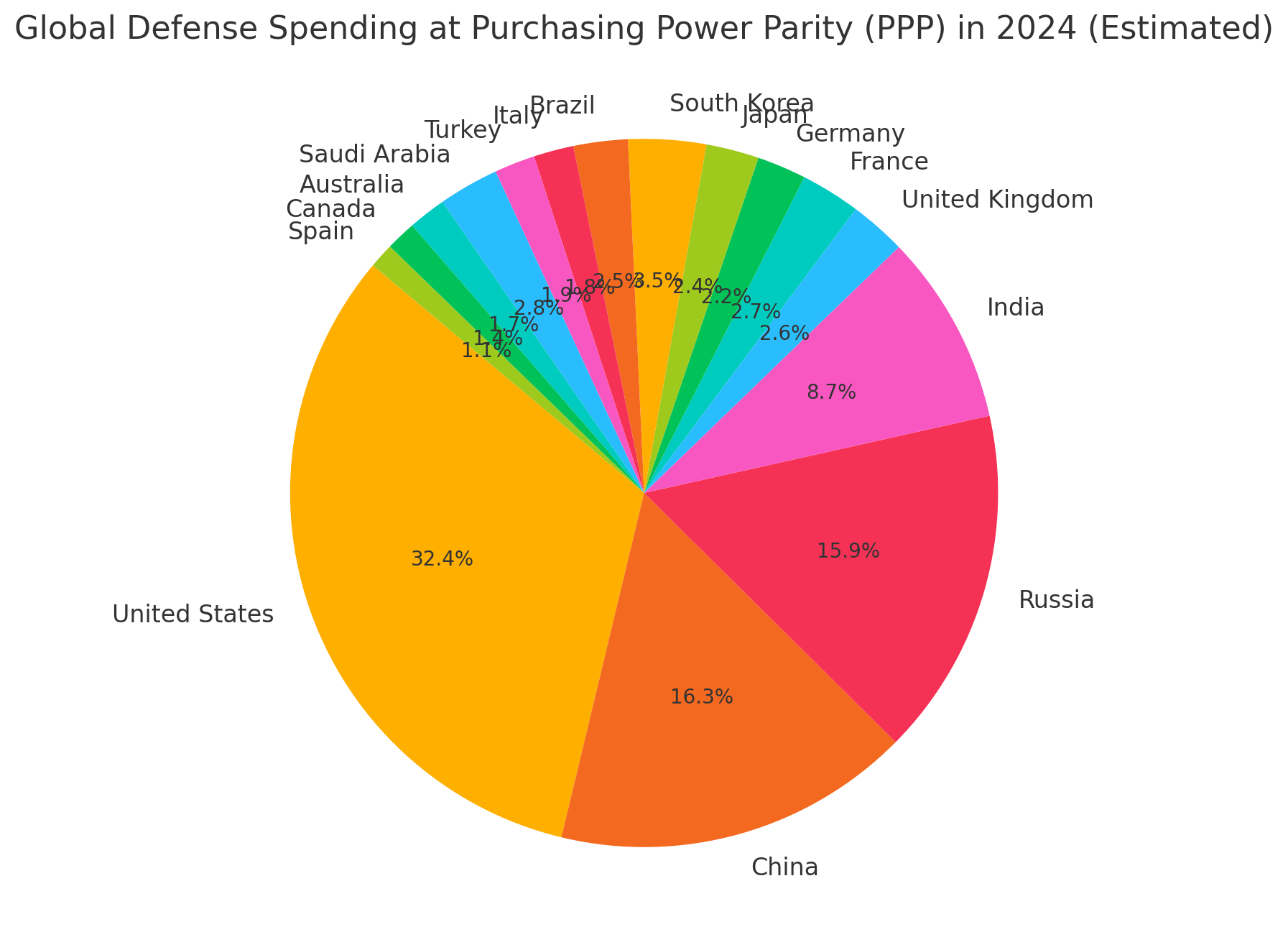
Created by adjusting data from Visual Capitalist (https://www.visualcapitalist.com/largest-defense-budgets-in-the-world/) for purchasing power parity (PPP) using ChatGPT and PPP data from the Military Purchasing Power Parity (Military PPP) project, IISS, and other sources.
We often hear that the U.S. outspends the rest of the world on defense, but reading the Visual Capitalist article, I realized how different the picture looks when adjusting for PPP. While the U.S. still leads, China, Russia, and others close the gap significantly when adjusting for PPP.
To get a clearer comparison, I used ChatGPT to adjust the full list of defense budgets to PPP.
Posted by NighthawkT42
8 Comments
I included the source and tool above. Could clean up the chart a bit more, but it was a piece of data I wanted to see.
Additionally used data from here:
https://militaryppp.com/blog/?utm_source=chatgpt.com but that’s only 2021 so needed to do more adjustments combining data sources, especially since Russia has increased spending so much since then.
And from here: https://www.iiss.org/online-analysis/military-balance/2025/02/global-defence-spending-soars-to-new-high/
I feel like the obvious question with any of this though is do we really believe any of the numbers? It’s not like America, China, or Russia have ever been known to lie
What’s not shown here is how much is being destroyed. A good portion of what Russia spent in 2024 is already wrecked on the battlefield in Ukraine.
An important caveat is that countries define military spending differently. Examples of differences between countries include paramilitary/SWAT type police, coast guards, benefits/retirement for retired military, homeland security, R&D for military, construction/infrastructure for military, etc. There’s gray areas on what various countries consider military spending.
The data should be considered ‘directional’ but not concrete enough to draw too specific of conclusions from
Also related, US defense spending as a percentage of GDP https://data.worldbank.org/indicator/MS.MIL.XPND.GD.ZS?locations=US
With gradually cutting defense spending from as high as 9% to current 3.4% of GDP, the US is no longer able to fight a full scale two front war.
I am unclear that PPP is a useful measure. This convinces me it is not.
Did you check that each of the AI-adjusted budgets is correct?
If you didn’t: shame on you. Posting AI-generated data on a sensitive subject such as this shows a lack of responsibility.
If you did: how much time did using ChatGPT actually save you? After all, you had to verify the numbers anyway, so why bother with using AI?
The US military is much weaker than most people think, because you can’t measure military power in dollars. Like in many countries military equipment is a way for a country to subsidize its own companies, as defense expenditures are exempt from competition rules as far as I know.
If comparable military equipment in the US costs multiple times more than in China, China gets a lot more military power per dollar.
Operating a single aircraft carrier including the planes and its supporting fleet of smaller ships costs several million dollars per day or about $2 billion per year. Those are just insane costs.
The fact that the US did not win the war against the Taliban shows the limits of a strong army.