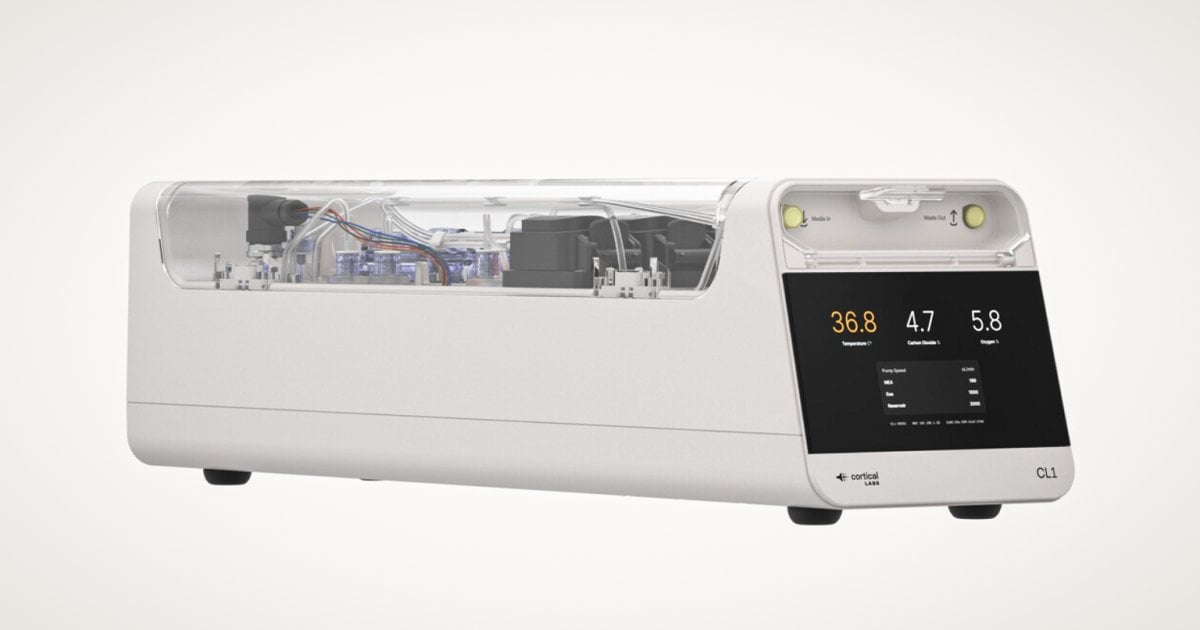
World’s first “Synthetic Biological Intelligence” runs on living human cells
https://newatlas.com/brain/cortical-bioengineered-intelligence/

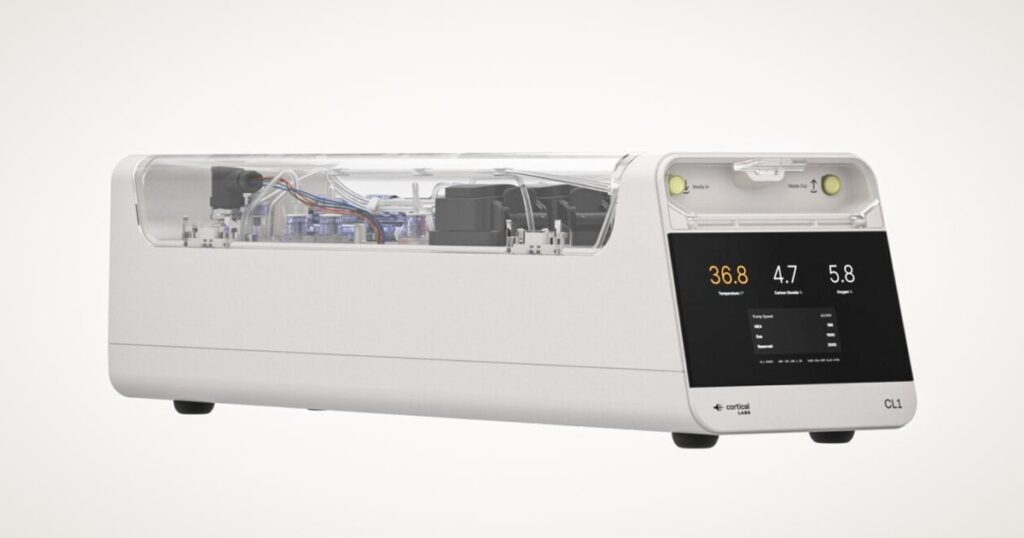
World’s first “Synthetic Biological Intelligence” runs on living human cells
https://newatlas.com/brain/cortical-bioengineered-intelligence/
18 Comments
“The world’s first “biological computer” that fuses human brain cells with silicon hardware to form fluid neural networks has been commercially launched, ushering in a new age of AI technology.
The human-cell neural networks that form on the silicon “chip” are essentially an ever-evolving organic computer, and the engineers behind it say it learns so quickly and flexibly that it completely outpaces the silicon-based AI chips used to train existing large language models (LLMs) like ChatGPT.”
“We almost view it actually as a kind of different form of life to let’s say, animal or human,” Chief Scientific Officer Brett Kagan told Blain in 2023. “We think of it as a mechanical and engineering approach to intelligence. We’re using the substrate of intelligence, which is biological neurons, but we’re assembling them in a new way.”
Ah sweet! Man made horrors beyond my comprehension!
Absolutely can’t imagine this becoming/being ethically problematic.
>We’re using the **substrate** of intelligence, which is biological neurons, but we’re assembling them in a new way.”
On the surafce, this makes me mildly uncomfortable; brings to mind James S.A. Corey’s *The Expanse*, only now it seems we’re the ones building the protomolecule. Love those books.
>He added that while this is a groundbreaking step forward, the full extent of the SBI system won’t be seen until it’s in users’ hands.
I wonder what they’ll come up with, given [AI’s novel approaches to design](https://www.livescience.com/technology/computing/humans-cannot-really-understand-them-weird-ai-designed-chip-is-unlike-any-other-made-by-humans-and-performs-much-better) that we don’t fully understand, just when tasked with designing more efficient AI like an upgraded CL-2 biocomputer (AI designing AI!), etc.; the reckless abandon with which CL-1 – luckily, it wasn’t named [AM](https://en.wikipedia.org/wiki/I_Have_No_Mouth,_and_I_Must_Scream) – will use *substrate*, or even design new for further-enhanced chips, like a human would sculpt clay, and in ways we won’t even inherently understand.
>**“A simple way to describe it would be like a body in a box,** but it has filtration for waves, it has where the media is stored, it has pumps to keep everything circulating, gas mixing, and of course temperature control,” Kagan explained.
[This is all that comes to mind](https://youtu.be/NJIjNs_s2NI?t=81) reading this. Let’s hope it doesn’t accidentally upgrade itself with sentience or sapience. Curious and quietly horrified to watch this technology develop.
Where were you when humanity brought the Borg to life?
I am not convinced that this is more than a laboratory curiosity. The researchers believe it to have practical utility, but it seems a terribly temperamental and difficult way to do computation.
That’s insanely cool. I think this is the path to general intelligence. We could create an entire race with this.
Thats a bold strategy Cotton. Let’s see if it pays off for them.
How long can they keep the cells alive. This is usually the problem with bio-anything like this.
This sounds like a scam hoping to prey on people realizing data center scams aren’t cutting it anymore and looking for the next big thing.
Also doens’t this just introduce all the problems we hope to avoid with normal computers, like nuero degenerative issues over time.
So we are making the Borg now. This is not a good thing. Someone needs to rewatch Next Generation.
How do I interface with it? Pytorch?
Has there been an evaluation of ethics before creating this?
That is not cool at all. Why doesn’t anyone think about the potential existential dangers of things like this? We’re in a suicidal technological arms race and everyone will be worse off from it.
This is the part where we have to question the ethics. Do those brain cells have the same awareness or consciousness as me or you. Are the cells aware of the fact they are trapped. Are they conscious at all? There are so many things wrong with this.
If ” synthetic bio intelligence”advance to the point where it renders natural brain cells inefficient or unnecessary, could this lead to the gradual obsolescence of biological cognitive functions? Over time, might this result in the atrophy or even disappearance of certain neural capacities, potentially giving rise to future generations with progressively diminished brain functionality?
“The first coherent thought that the scientists managed to decode was a prayer for swift and merciful death”
Just as a started reading Blood
Music too. The coincidence is too ironic.
I remember that robot that was controlled by rat neurons with a silicon interface for them to connect to 16 years ago. A bunch of YouTubers built similar things for fun. This is a new approach, though.
Oh sweet we’re rapidly approaching servitorization. Praise the Omnissiah!