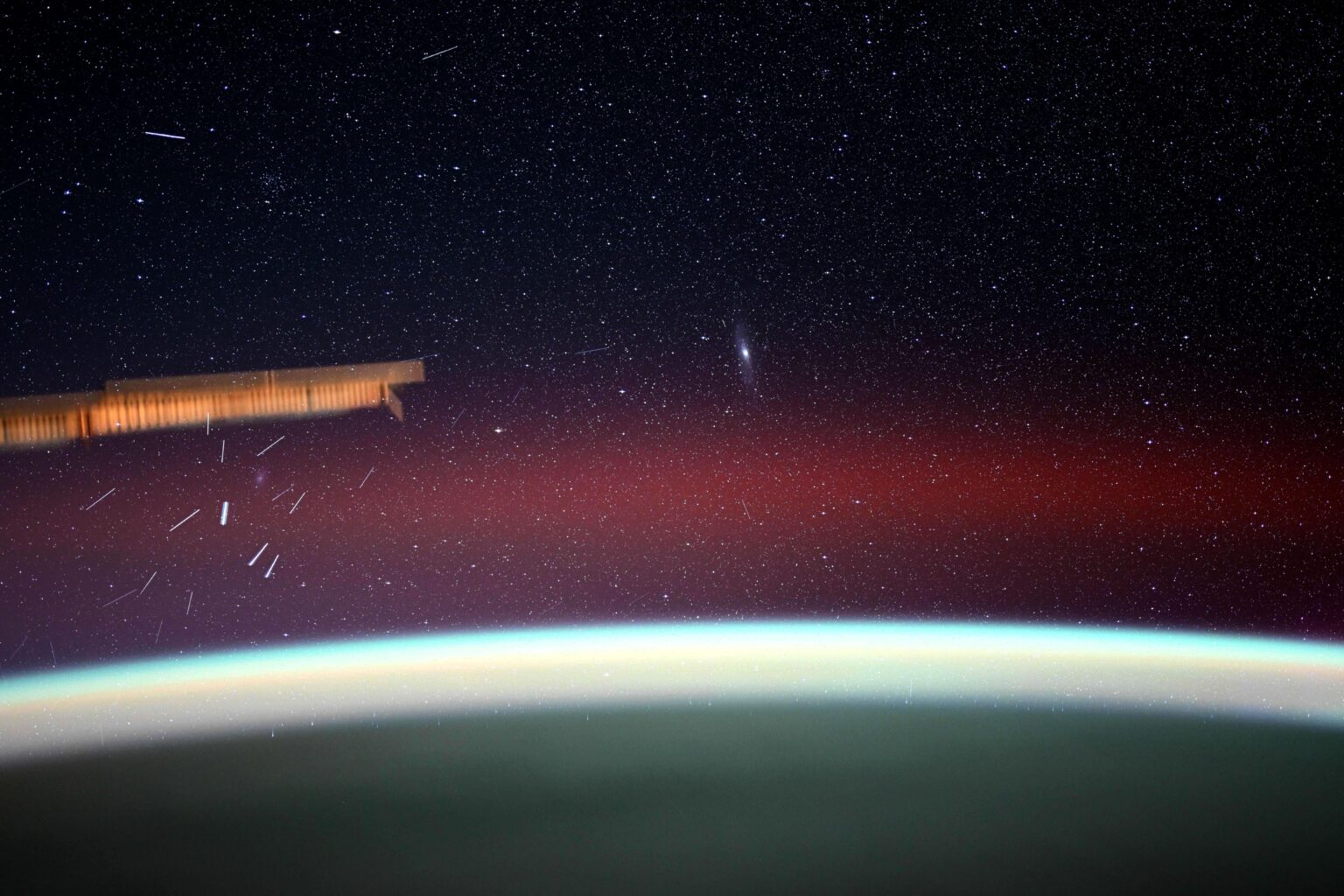
Love this shot. You managed to capture Andromeda’s dust lanes, and even the Triangulum galaxy nearby.
astro_pettit on
Lots to see in this single seemingly bland photo image. It was taken using my orbital sidereal tracker that compensates for orbital motion so the stars are points instead of streaks. Andromeda is centered with the red atomic oxygen 630nm emissions in the f-region of the atmosphere (300 to 600km altitudes, ISS is at 424 so we are flying through the red), while the horizon view of the atmosphere glows orange-green from atomic oxygen (557nm) and OH emissions. Due to the tracker motion, the Russian Service Module solar panel seen on the left hand side is blurry. Starlink satellites reflecting light off their solar panels from the soon to rise sun are see as streaks moving across the star points.
Nikon Z9, Nikon 50mm f1.2 lens, 15 seconds, f1.2, ISO 6400, modified Skywatcher Adventurer tracker, adjusted in Photoshop, levels, contrast.
GalNamedChristine on
im unsure on how to feel about the fact that satellites look so bright. On the one hand, satellites are essential and theyre improving the lives of billions of people with programs such as starlink. On the other, it can lead to stuff like this where the night sky is “obstructed” sotrof, and Idk what precedent that sets with the increasingly privatised Rocket industry, who’s to say we won’t see space billboards?
Stymus on
Very interesting. Curious how you know these are starlink and not other types of satellites? Are the streaks close to the top of the image satellites in higher orbits?
Vipitis on
Hey Don, are other satellites visible to the naked eye from orbit? Maybe when they flare near the horizon?
F9-0021 on
Remember when SpaceX promised to make Starlink satellites less visible years ago? I remember, and yet they’re still clearly visible and messing with photography.

6 Comments
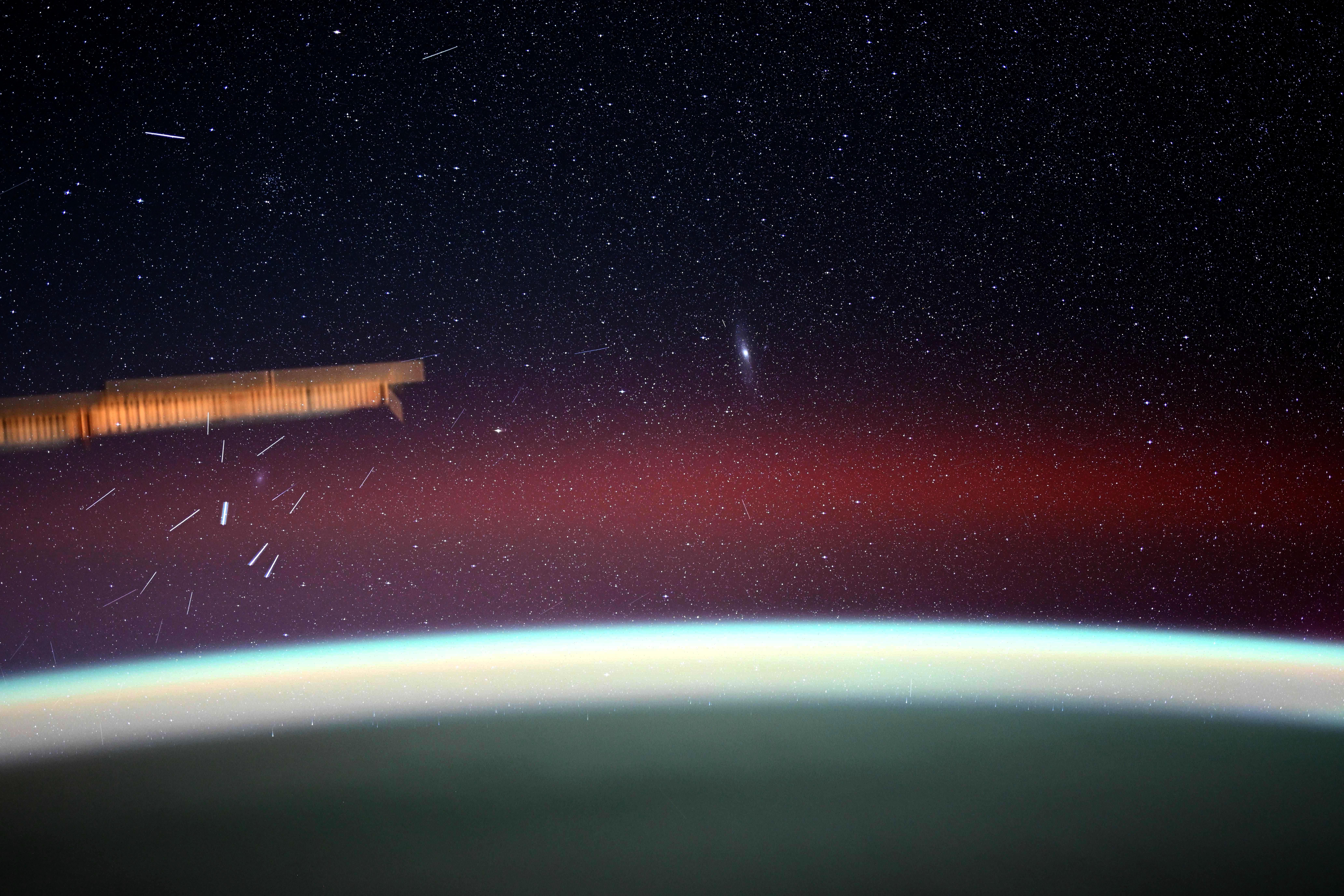
Love this shot. You managed to capture Andromeda’s dust lanes, and even the Triangulum galaxy nearby.
Lots to see in this single seemingly bland photo image. It was taken using my orbital sidereal tracker that compensates for orbital motion so the stars are points instead of streaks. Andromeda is centered with the red atomic oxygen 630nm emissions in the f-region of the atmosphere (300 to 600km altitudes, ISS is at 424 so we are flying through the red), while the horizon view of the atmosphere glows orange-green from atomic oxygen (557nm) and OH emissions. Due to the tracker motion, the Russian Service Module solar panel seen on the left hand side is blurry. Starlink satellites reflecting light off their solar panels from the soon to rise sun are see as streaks moving across the star points.
Nikon Z9, Nikon 50mm f1.2 lens, 15 seconds, f1.2, ISO 6400, modified Skywatcher Adventurer tracker, adjusted in Photoshop, levels, contrast.
im unsure on how to feel about the fact that satellites look so bright. On the one hand, satellites are essential and theyre improving the lives of billions of people with programs such as starlink. On the other, it can lead to stuff like this where the night sky is “obstructed” sotrof, and Idk what precedent that sets with the increasingly privatised Rocket industry, who’s to say we won’t see space billboards?
Very interesting. Curious how you know these are starlink and not other types of satellites? Are the streaks close to the top of the image satellites in higher orbits?
Hey Don, are other satellites visible to the naked eye from orbit? Maybe when they flare near the horizon?
Remember when SpaceX promised to make Starlink satellites less visible years ago? I remember, and yet they’re still clearly visible and messing with photography.