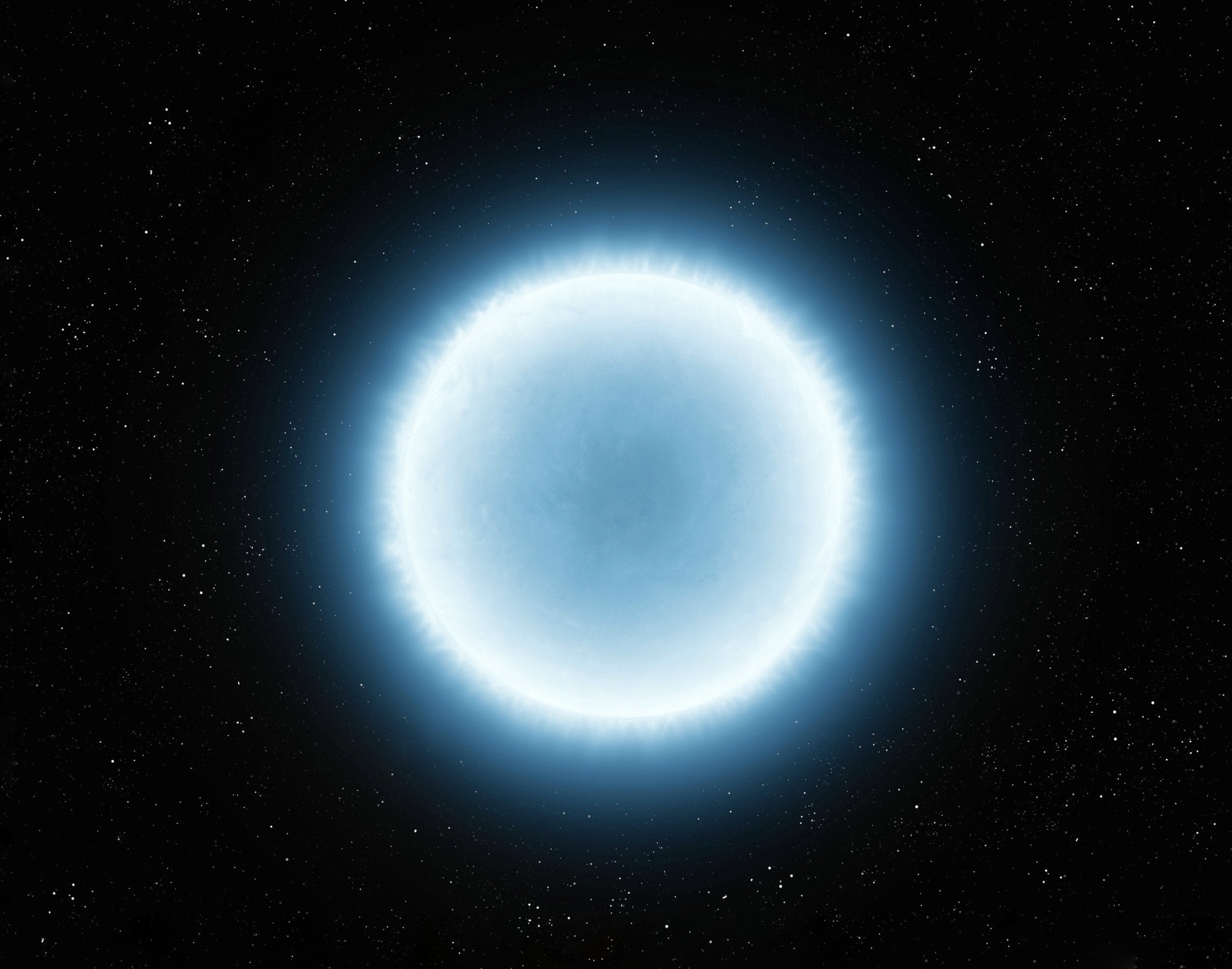
Astronomers discover pair of super-rare “two-faced” stars
https://www.newsweek.com/space-astronomy-stars-white-dwarf-two-faced-2059906

Astronomers discover pair of super-rare “two-faced” stars
https://www.newsweek.com/space-astronomy-stars-white-dwarf-two-faced-2059906
3 Comments
By Soo Kim — Life and Trends Reporter |
Scientists have discovered two rare white dwarfs—which are among the dimmest stars in the universe—that feature changes in their surface composition caused by magnetic fields. This brings the number of known “two-faced” white dwarfs to just seven.
White dwarfs are dense, core remnants of stars that have shed their outer layers and cool over billions of years as they steadily burn off their thermal energy.
The surface atmosphere of white dwarfs were originally thought to be composed mostly of hydrogen. However, in 2023, astronomers discovered an unusual white dwarf that had a surface made of hydrogen on one side and helium on the other.
Read more: [https://www.newsweek.com/space-astronomy-stars-white-dwarf-two-faced-2059906](https://www.newsweek.com/space-astronomy-stars-white-dwarf-two-faced-2059906)
if they wanted to find some two-faced stars they should talk to personal trainers in Hollywood
ha cha cha
Does gravity affect which element is shown on the dominant side?