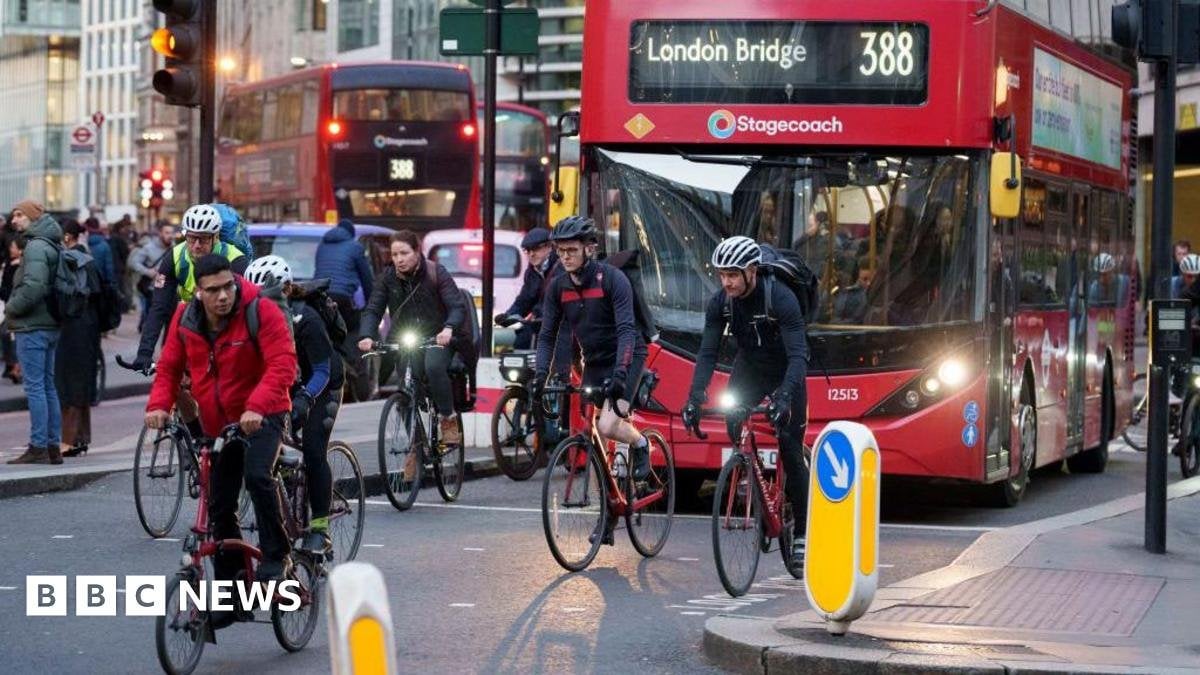
Cycling in City of London rises by more than 50%
https://www.bbc.co.uk/news/articles/ckgxek18z5eo
Posted by F0urLeafCl0ver

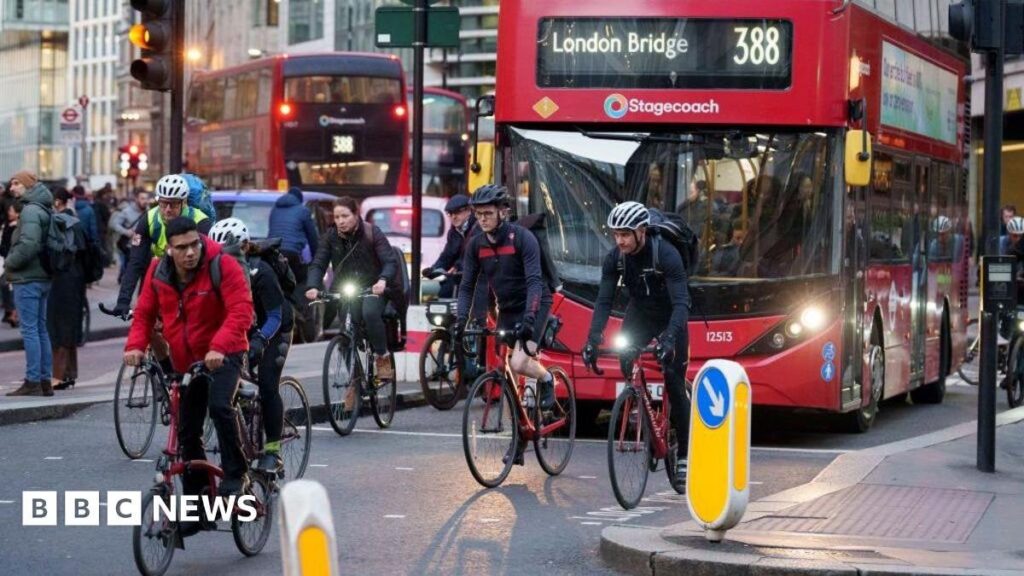
Cycling in City of London rises by more than 50%
https://www.bbc.co.uk/news/articles/ckgxek18z5eo
Posted by F0urLeafCl0ver
7 Comments
With driving being way too pricey and public transport fairly adding up each day… Yeah I’d cycle too
My friend used to cycle everywhere in London (very sensibly/considerately), and a few weeks ago smashed himself up and nearly died. It is now a statistical fact that a certain number of cyclists are going to die each year. We need to adapt to this change by blocking off more road for cyclists, and channeling motorists onto only a few roads. We can become more like Amsterdam if there is the will for it, with all the obvious benefits that entails.
Great! If only the rest of the country got the same.
And I’m sure all of them will also go through the red lights outside Sushisamba on Bishopsgate 😑
Cycling just might be the most Londoner activity of all time
The article omits quite a few important details:
* comparing 2022 is silly, because working from home was still huge
* the modal shift has been mostly from public transport to bikes, not from cars, because how many people commute to the square mile by car? It’s slow and incredibly expensive (and rightly so)
* The discourse is all too often framed as “too many people drive a car, they need to go from car to bike”. But this doesn’t apply to the Square Mile. The Square Mile has a lot of taxis, minicabs, vans, and through-traffic (not many alternatives to the embankment to travel between east and west London). These vehicles are not deterred by reducing parking or making it more expensive. Something else needs to be done – eg curb minicabs, which have doubled in a decade
* there can be some modal shift from taxis to Limes, but it’s hard to quantify
* Most policies of the City of London can be summarised as closing their roads and moving traffic elsewhere, making it other people’s problems (like closing London bridge to cars and forcing them to use Tower bridge).
Cycling is good. Not everyone can cycle, the elderly, the disabled, those carrying things, people with young children.
Goods and service vehicles still need to get around, making things difficult for them increases costs of goods and services.
Raising costs adversely affects those with the least money, it does not deter those with money. Forcing the poor into bikes leaving the roads free for the wealthy.