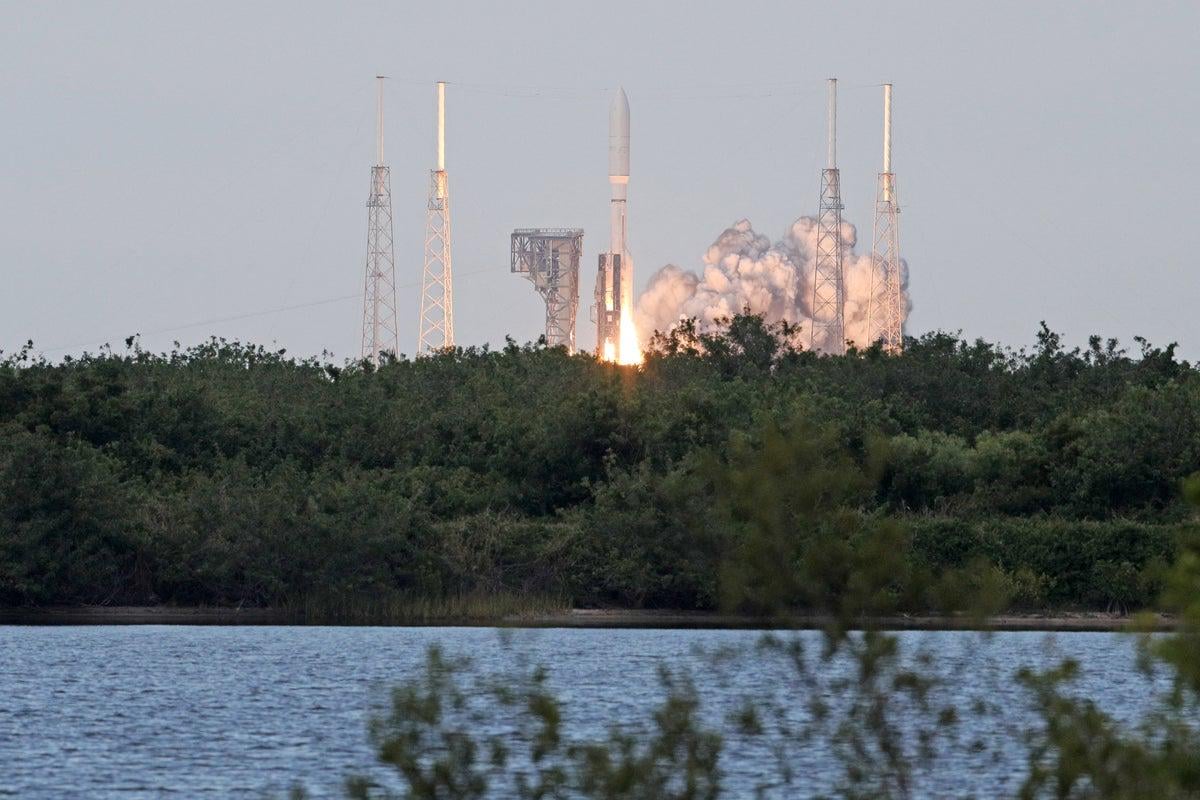
Outer Space around earth is already pretty crowded. Tech firms are racing to pack even more satellites in
https://www.independent.co.uk/space/satellite-wars-space-exploration-research-b2742463.html

Outer Space around earth is already pretty crowded. Tech firms are racing to pack even more satellites in
https://www.independent.co.uk/space/satellite-wars-space-exploration-research-b2742463.html
5 Comments
Amazon has to send up about 1,600 more Kuiper satellites by next July to keep its government licence, even though thousands of Starlink and other satellites are already crowding the same sky.
Scientists warn this rush could trigger “Kessler Syndrome,” where crashing satellites create a chain of space junk that makes low-Earth orbit too dangerous to use.
How many times will this type of article be published?
Space is not crowded. It is quite empty. Do we need to proceed with consideration on how we populate our near earth space? Of course, but it isn’t anywhere near crowded.
According to UNOOSA, there have been just under 21k objects launched into space ever. Assuming all of them were still in orbit, all at the same altitude, and spread equidistant on a sphere the size of the earth (169.9M mi^2), the average distance between any two neighboring satellites would be ~90 miles. Yes, they move quickly, but there are thousands and thousands of miles to separate them by altitude, let alone the average spacing.
Yes, Kessler syndrome is a thing to be cautious of, but drag is also proportional to the average size squared as opposed to mass, which varies with average size cubed. If two satellites run into each other, all of the individual pieces would also experience a linear *increase* in drag proportional to the decrease in size, drastically limiting the impact in LEO where most of our satellites are located anyway.
Reddit is pure cancer and this article is playing on uneducated emotions.
Not only tech firms. Militaries are responding to space warfare like jamming and stuff with a “replace our big expensive satellites with hundreds of cheap ones in case they get taken out” strategy.